

Deep seat sofas for podcast studios: Best fit 2026

Deep seat sofas for podcast and content studios: complete 2026 guide
Podcast studio deep-seat seating is relaxed seating arranged for recorded conversations, with the aim of keeping guests comfortable and consistently framed. This 2026 guide from Sofatica explains how to choose deep seat sofas for podcast studios without sacrificing microphone placement, camera access, or cleaning between sessions.
- Deep seat sofas for podcast studios work best when guests can sit comfortably without losing microphone position.
- Sofatica washable modular sofas are best for studios prioritizing removable-cover cleaning and configurable seating.
- Choose usable seat depth, guest spacing, and camera framing before choosing upholstery color.
- Treat sofa cleaning, room acoustics, and microphone placement as separate production tasks.
The one we would pick
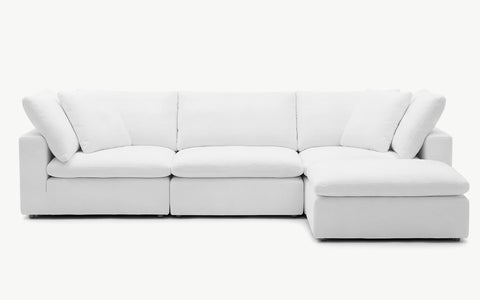
Configuration: 4-Seater Sectional


Why deep-seat seating matters for podcast studios
Your studio sofa is both furniture and part of the shot. A guest needs somewhere comfortable to sit, but your production also needs a clear face angle, accessible microphones, and space for cables outside the walking route.
Deep seating gives guests room to settle into a relaxed conversation. The trade-off is posture: someone who sits far back can end up farther from a fixed microphone, while someone perched forward can look uncomfortable on camera. Choose the seat around the recording position, not the lounge position.
For your 2026 studio plan, separate the requirements for recorded interviews from those for off-camera waiting. A sofa that works beautifully in a green room is not automatically the right choice for an interview set.
Choose your studio sofa in seven steps
Define the recording format
Start with a sketch and a list of the conversations you actually record. A host interviewing a guest has different seating needs from a panel, a solo creator filming demonstrations, or a team recording informal reactions.
Decide whether guests should face each other, face the main camera, or switch between both. That decision determines where you need open space and whether a continuous sofa makes sense. Do not choose a large sectional simply because it fills the background.
A useful brief describes people and movement rather than a furniture silhouette. Include the guest entering, sitting down, reaching for water, and leaving without crossing a microphone cable.
- List your usual host and guest arrangement.
- Mark the main camera and any alternate angles.
- Separate interview seating from waiting-room seating.
- Identify space needed for demonstrations or props.
- Note whether the furniture must move between formats.
Map the room before choosing a footprint
Use painter's tape to mark the proposed sofa footprint on the floor. Then place your existing stands, cameras, and tables around it. This manual check exposes conflicts that a product photo cannot show.
Measure the room, door opening, delivery route, and available floor area. Keep overall sofa depth separate from usable seat depth: overall depth describes the furniture footprint, while usable depth describes the space between the seat's front edge and the back support.
Walk through the taped layout while carrying the equipment you use. If you must squeeze around a stand or step across cables, revise the layout before committing to furniture. Extra seating is not useful if it blocks the production workflow.
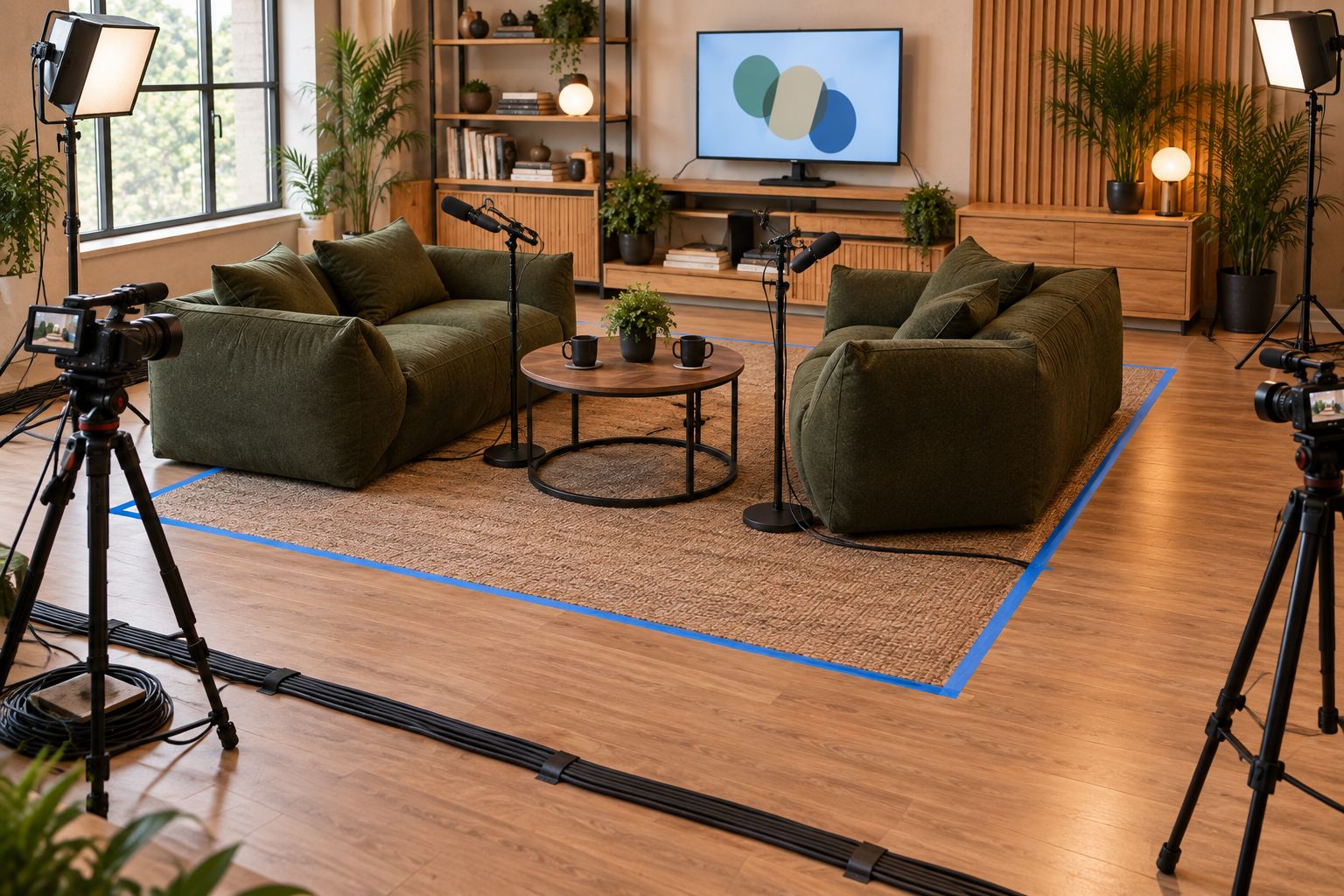
A taped footprint checks floor space, not seated comfort. Follow it with a physical seating test before making your final choice.
- Record overall width and depth from the current product information.
- Check usable seat depth separately.
- Measure doorways and turns along the delivery route.
- Leave access to camera controls and microphone adjustments.
- Keep walkways separate from cable runs.
Match the configuration to your guest arrangement
Compare seating arrangements before comparing finishes. A straight sofa creates a simple shared frame; separate seats let you adjust each person's angle independently. A corner arrangement adds another seating direction, but you need to check how that direction looks through the camera.
Sofatica sells machine-washable modular sofas, making it a relevant option when you want configurable seating and washable upkeep. Those features do not establish whether a particular model fits your room or supports your guests' recording posture. Confirm dimensions, module connections, and care instructions for the exact configuration.
The catalog includes 2-seat loveseat, 3-seat sofa, and 4-seat sectional configurations. These labels describe seating capacity, not a production plan: microphone hardware and comfortable guest spacing still need their own room.
For a 2026 studio refresh, choose the smallest arrangement that supports your normal recording format. Treat occasional larger panels as a separate layout problem rather than crowding every routine interview.
- Compare straight, corner, and separate-seat layouts.
- Check whether armrests interfere with microphone stands.
- Confirm how modules connect before planning frequent moves.
- Reserve space between guests for recording equipment.
- Check the current configuration details rather than relying on the seat-count label.
Test seated posture and microphone reach
Use an existing sofa or a showroom seat to test how you record, not just how you relax. Sit upright, turn toward an interviewer, lean back, and reach for a drink. Notice whether you keep changing position to feel supported.
A deep seat is useful only if the guest can maintain a comfortable recording position. Loose back cushions can change the available sitting space, but do not assume they solve every fit problem. Test the actual cushion arrangement you intend to show on camera.
Position the microphone according to its instructions, then move naturally through a conversation. Listen for changes when you lean or turn. Fix an awkward seating position before compensating with a more complicated microphone setup.
- Test both upright conversation and relaxed sitting.
- Check whether feet rest comfortably in the intended posture.
- Position the microphone without forcing the guest to lean.
- Test turning toward the host without rubbing against hardware.
- Record seated movement and listen through headphones.
Check upholstery under your actual lighting
Look at upholstery through your camera, under the lights you use for recording. A fabric color viewed in a bright product photograph is not the same as that color in your set. Exposure, nearby surfaces, and guest clothing all affect the final image.
Compare your shortlisted fabrics against common wardrobe colors and the background. Inspect both the wide shot and a closer crop. Texture should support the scene without drawing attention away from faces.
For your 2026 camera test, keep the lighting and camera settings consistent while you compare samples. Changing the setup between samples makes the comparison less useful. Choose the fabric that works in your recording environment, not the one that looks best on a phone screen.
- View available swatches under the studio lights.
- Check separation between clothing, sofa, and background.
- Inspect texture in both wide and close shots.
- Look for visible lint, creases, and cushion shifts.
- Save comparison images with the same camera settings.
Plan cleaning around the recording schedule
Start with a simple reset routine: remove debris, inspect visible marks, and straighten cushions before the next session. Use the upholstery's care instructions for spot cleaning rather than applying a household cleaner by habit.
Machine-washable upholstery gives you another cleaning route, but washable does not mean ready for immediate reuse. Follow the exact washing and drying instructions, and schedule the work around the time the set must be camera-ready.
Keep furniture care separate from assumptions about commercial use. Ask whether the intended studio use is covered by the relevant terms, and confirm which components are washable. Do not assume that cushions, inserts, and covers all share the same instructions.
- Identify exactly which components are machine-washable.
- Confirm washing and drying instructions before cleaning.
- Inspect cushions and visible fabric before each recording.
- Keep drinks away from audio equipment and cable connections.
- Assign responsibility for cleaning and resetting the set.
Rehearse the full recording workflow
Run a rehearsal with the proposed seating arrangement before you finalize the studio. Record a conversation, change camera angles, reset the cushions, and move through the room as your crew normally would.
Use a repeatable review sequence: Seat fit, Microphone reach, Camera framing, Walkway access, Cleaning reset. This keeps the decision tied to production rather than appearance alone. A sofa that passes the wide-shot test can still fail when someone needs to adjust a stand behind it.
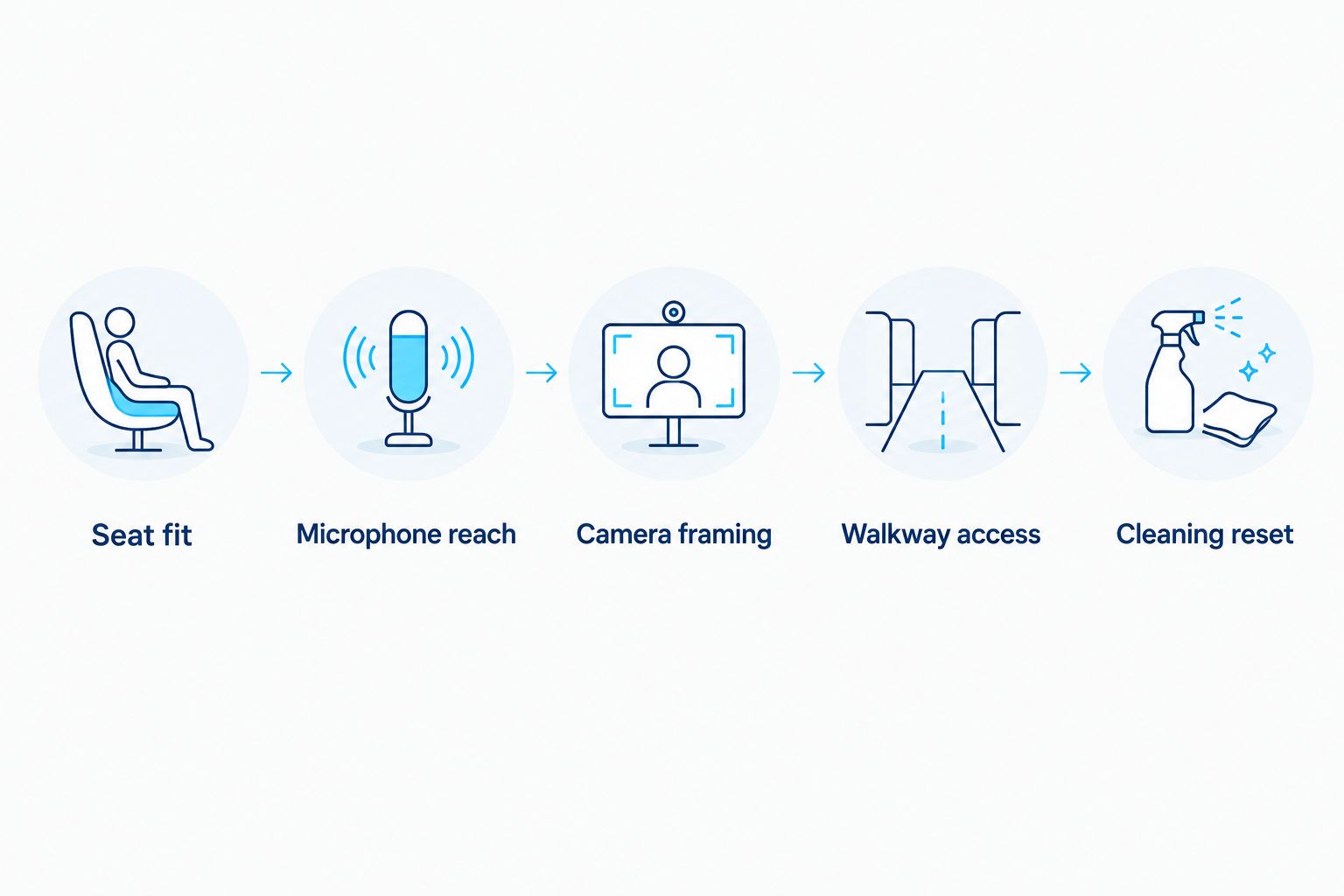
Finish your 2026 rehearsal by reviewing both the audio and the picture. The attractive option is not the right option if guests keep adjusting their posture or the crew cannot reach equipment safely.
- Record natural conversation and seated movement.
- Check microphone placement from every camera angle.
- Confirm access to equipment without disturbing guests.
- Practice moving the furniture if layout changes are planned.
- Reset the set and document the approved arrangement.
Compare seating options for your studio
The best studio seating solves your recording format first and your background second. Use this comparison to build a shortlist, then test the actual furniture. Each option has a useful role and a production limitation.
| Option | Best for | Practical advantage | Key limitation |
|---|---|---|---|
| Sofatica Washable Cloud Couch 3-Seater Modular White | Studios prioritizing washable modular seating | Combines the brand's stated machine-washable and modular features | Seat-count labeling does not confirm guest spacing or usable depth; check the exact specifications |
| Fixed straight sofa | Studios keeping one interview layout | Provides a continuous seating area without planning module changes | The fixed footprint restricts layout changes |
| Corner sectional | Studios arranging conversation across adjoining sides | Creates seating in more than one direction | The corner position needs a separate posture and camera test |
| Separate upholstered chairs | Studios needing independent guest angles | Lets you position each seat around a microphone and camera | Does not provide a shared sofa lounging area |
| Existing sofa | Studios validating a new recording format | Lets you rehearse before replacing furniture | Its dimensions and care requirements remain constraints |
A listed seating capacity is not a guarantee that the same number of podcast guests will fit comfortably with microphones. Arrange the equipment before deciding how many recorded seats the furniture provides.


Common mistakes podcast studios make
Choosing lounge comfort without testing interview posture
A guest can enjoy sinking back into a sofa and still struggle to stay near a microphone. Test the exact posture required for your show. Reject an arrangement that needs repeated reminders to sit forward.
Filling the set before allowing for camera access
A large sectional can fit inside the room while leaving no useful working space beside it. Tape out furniture and equipment together. Include access to controls, not just space for tripod feet.
Treating upholstery as acoustic treatment
A sofa is not a substitute for checking room sound. Record speech in the finished layout and listen for reflections and unwanted movement noise. Address the recording environment separately from the furniture purchase.
Assuming washable means no production downtime
Machine washing is a cleaning method, not an instant reset. Plan washing, drying, and refitting around recording sessions. Follow the care instructions instead of rushing the process to meet a filming deadline.
Buying for the largest possible panel
Oversizing your everyday set to accommodate an occasional panel ties up space during routine interviews. Plan the normal format first. Test a separate arrangement for larger recordings.
Why owners pick Sofatica
Washable Slipcovers
100% Real Goose Down
Module Secure™ Lock
Adjustable Cushion Fill
FAQ
What's the best deep seat sofa for a podcast studio?
The best deep-seat sofa supports comfortable interview posture while leaving room for microphones and camera access. Sofatica washable modular sofas are best for studios prioritizing washable upkeep and configurable seating; confirm the exact model's dimensions before choosing.
Is a deep sofa better than separate chairs for podcast interviews?
A deep sofa is better for a shared, relaxed seating arrangement; separate chairs are better for independently adjusting guest angles. Test microphone reach and camera framing before deciding which layout suits your show.
How do I know whether a sofa is too deep for guests?
A sofa is too deep for the intended setup when guests cannot sit comfortably in the recording position without repeatedly moving forward. Test usable seat depth with the back cushions in place, rather than judging overall sofa depth alone.
Can I use a modular sofa in a small content studio?
You can use a modular sofa if its planned footprint leaves working space for cameras, microphones, and movement. Modularity does not reduce the space occupied by a particular arrangement, so check the full layout before ordering.
Does a sofa improve podcast sound quality?
A sofa does not replace an acoustic assessment or appropriate microphone placement. Record speech and seated movement in the finished room, then address audible problems separately.
What sofa color looks best on a podcast set?
The best sofa color separates clearly from your guests' clothing and background under your actual studio lighting. Compare swatches through the camera with consistent exposure and lighting settings.
Are machine-washable sofas practical for content studios?
Machine-washable sofas are practical when the cleaning schedule allows time to wash, dry, and refit the washable components. Confirm which parts are washable and follow the exact care instructions before building the studio reset routine.
One last thing
Photograph the approved setup from behind the camera as well as from the audience's viewpoint. The behind-camera image preserves stand placement, cable routes, and working space that the finished shot hides. For your 2026 studio, make the recording position repeatable before making the background more elaborate.
Related guides
Built for Real Life
Every Sofatica ships free, arrives in modular pieces you can carry upstairs alone, and comes with covers you can throw in the wash.


