Modular Sofa Buying Guide

Buying a modular sofa is one of the most important furniture decisions you’ll make. This guide breaks down everything that actually matters, from comfort and size to materials, washability, and long-term value.

What Is a Modular Sofa?

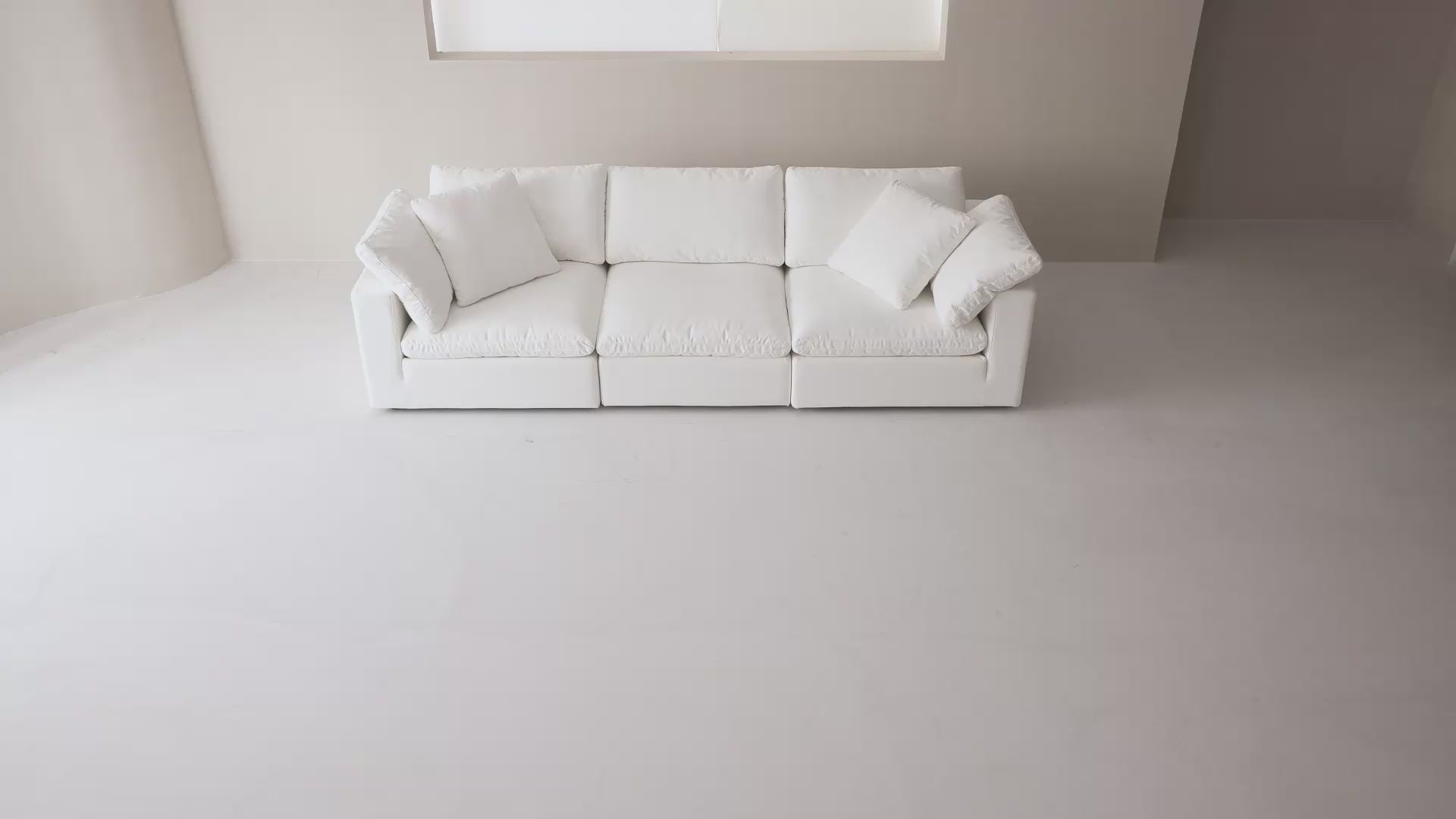
A modular sofa is a seating system made up of individual, self-contained units that can function independently or be combined in multiple configurations. Each module is designed to connect structurally to others, allowing the layout to be rearranged, expanded, or reduced without replacing the entire sofa. True modular sofas are built with consistency in height, depth, and connection points so that every piece works as part of a flexible system rather than a single fixed form.

This differs from a sectional sofa, which is often mistaken for modular. Sectionals are typically composed of two or three large pieces that connect in only one or two predefined layouts. While they may arrive in separate sections for delivery, their configuration is fixed by design. Changing the layout usually requires replacing major components or purchasing an entirely new sofa.

Fixed sofas represent the least flexible category. These sofas are constructed as a single frame with no interchangeable elements. Their size, shape, and seating capacity are permanent. While fixed sofas can offer strong structural integrity, they provide no adaptability when room layouts change, households grow, or seating needs evolve.

The term “modular” is frequently misused in furniture marketing. In many cases, sofas are labeled modular simply because they ship in pieces, include a detachable ottoman, or offer left-facing and right-facing versions. These features alone do not constitute true modularity. Without standardized modules and repeatable connection systems, the sofa cannot be meaningfully reconfigured over time.

True modularity matters because living spaces are rarely static. Moves, renovations, family changes, and shifting daily habits all affect how seating is used. A genuine modular sofa allows owners to adjust layouts, add or remove sections, or reassign modules to different rooms. Buyers often misunderstand this category by focusing on appearance or short-term layout options, rather than evaluating whether the sofa is built as a long-term adaptable system.

Why Choosing the Right Modular Sofa Matters

A sofa is one of the most used pieces of furniture in any home, yet it is also one of the most frequently regretted purchases. Common complaints include discomfort over time, cushions losing shape, sizes that do not fit the space as expected, or layouts that no longer work as households change. Unlike decorative furniture, a sofa is interacted with daily, often for years, which makes early decision mistakes costly and difficult to correct.

Modular sofas have gained popularity largely because they address some of these long-term issues. Instead of a single fixed form, modular designs are built from individual components that can be arranged, expanded, or reduced. This flexibility allows homeowners to adapt their seating to room size, lifestyle changes, and future moves. However, modular does not automatically mean better. Poor construction, incorrect configuration, or prioritizing appearance over function can lead to the same problems found in traditional sofas.

One of the most common mistakes buyers make is choosing based on visual appeal alone. Showroom photos and styled interiors rarely reflect real daily use, such as extended sitting, lounging, hosting guests, or cleaning. Factors like seat depth, cushion structure, modular connections, and fabric performance tend to matter more over time than initial aesthetics.

This guide is designed to provide a practical, structured framework for evaluating modular sofas. It focuses on how these sofas are built, how they perform in everyday use, and how to assess suitability based on space, comfort, and longevity. The goal is to help readers make informed decisions grounded in use, not trends.

Modular sofas for families

Built for everyday messes, movement, and moments together

Family life is dynamic. From movie nights to playtime to unexpected spills, your sofa needs to handle constant use without becoming a source of stress. A family-friendly modular sofa focuses on durability, washable materials, safe cushioning, and layouts that support togetherness.

In our family-focused guide, you will learn how to choose a modular sofa that supports daily routines, handles wear and tear, and still feels comfortable and inviting at the end of the day.

Modular sofas for pets

Designed for fur, claws, and shared comfort

Pets are part of the family, which means your sofa should work for them too. A pet-friendly modular sofa prioritizes scratch-resistant fabrics, easy-clean surfaces, removable covers, and cushion structures that maintain their shape over time.

Our pet-specific guide goes deeper into fabric choices, maintenance tips, and layout strategies that help your sofa stay fresh while keeping your pets comfortable.

Modular sofas for apartments

Smart solutions for smaller spaces and flexible living

Apartment living often comes with tighter layouts, narrow doorways, and changing needs. A well-designed modular sofa makes moving easier, maximizes seating without overwhelming the space, and adapts as your apartment changes.

In this guide, we cover how to choose the right configuration, scale, and modular setup to make the most of apartment living without compromising comfort or style.

Comfort Comes First

Comfort is the primary reason people keep or regret a sofa, yet it is also the hardest quality to judge at the time of purchase. Showroom testing often gives a false sense of confidence because it reflects only initial feel, not long-term performance. Brief sitting favors softness and surface comfort, while long-term use reveals how a cushion responds to repeated weight, movement, and daily habits. Understanding how cushion construction works helps explain why some sofas remain supportive for years while others lose comfort quickly.

Showroom comfort is misleading because new cushions have not yet undergone compression. Materials are at their fullest volume, covers are taut, and structural fatigue has not begun. A sofa that feels plush for five minutes may lack the internal structure needed to support the body after months of daily use. Over time, gravity, body heat, and repeated pressure alter how a cushion behaves. This is why comfort should be evaluated by construction method rather than first impression.

Common cushion constructions:

  • Down and feather blends: Soft, conforming feel, require reshaping, less structural support over time
  • Foam-only seating: More consistent posture support, varies by foam quality
  • Hybrid constructions: Foam core with softer top layers to balance recovery and comfort

Compression and recovery determine how a sofa feels after extended ownership. Compression occurs when materials lose height under repeated pressure. Recovery refers to how well they return to their original shape once weight is removed. Cushions with poor recovery feel flatter and less supportive over time, regardless of how comfortable they felt initially. Materials that distribute weight evenly and recover consistently provide more reliable long-term comfort.

Seating posture also affects how cushion construction performs. Lounging positions place more weight on fewer contact points, increasing compression in specific areas. Upright sitting distributes weight more evenly and relies more on structural support than softness. In multi-user households, different body weights and sitting habits accelerate uneven wear if cushions are not designed to handle varied use.

Some manufacturers address these tradeoffs by using hybrid cushion systems designed to balance softness and recovery. Sofatica, for example, uses a layered approach intended to provide initial comfort while maintaining structure over time. This illustrates how construction choices directly influence long-term comfort outcomes.

Understanding cushion construction helps buyers move beyond surface feel and evaluate how a modular sofa will perform in daily life. Comfort is not just about how a sofa feels on day one, but how consistently it supports real use over years.

Sofatica uses real goose down layered with structured support, designed for relaxed seating without collapse.

Size, Depth, and Proportion Matter More Than You Think

Many sofas fail not because of poor materials or construction, but because their size and proportions do not match how people actually live. Issues with seat depth, arm thickness, and overall scale often become apparent only after the sofa is placed in a real home and used daily. These factors directly affect comfort, circulation, and how usable the seating feels over time.

Factor Practical Impact
Seat Depth Affects posture, leg support, and lounging comfort
Arm Thickness Reduces or preserves usable seating width
Overall Scale Influences circulation, layout flexibility, and room balance
Visual Perception Online images often misrepresent true proportions

Proportion influences long-term satisfaction because it determines how naturally a sofa fits into daily routines. A well-proportioned sofa supports comfortable sitting, easy movement, and flexible layouts. When proportions are wrong, even a high-quality sofa can feel uncomfortable and inconvenient, leading to regret despite good materials or craftsmanship.

Sofatica offers a balanced Classic size today, with a larger Luxe scale launching soon for customers who prefer deeper, more expansive seating similar to high-end brands.

3. Washable Fabric Is Non-Negotiable

Cleaning is one of the most overlooked factors in sofa ownership, yet it plays a major role in how long a sofa remains usable and presentable. Spills, body oils, dust, and everyday wear accumulate gradually. When a sofa cannot be cleaned properly, these factors shorten its lifespan regardless of how well it is built. In real homes, maintenance often determines whether a sofa is kept for years or replaced early.

What washability actually means in practice:

  • Fully removable covers allow even cleaning
  • Machine washing enables immediate maintenance
  • Professional-only cleaning delays care
  • Certified fabrics maintain color and structure over time

Washability has a direct impact on households with families and pets. Children and pets introduce a higher frequency of spills, dirt, and friction. A washable sofa allows owners to maintain hygiene and appearance without special treatments or ongoing professional services. Over time, this reduces stress around everyday use and makes the sofa easier to live with.

Some modular sofa systems, including Sofatica’s, are designed with fully removable, machine washable covers to address these realities. This approach reflects a practical understanding that sofas are used daily. In long-term ownership, the ability to clean easily often matters more than initial appearance, making washability a functional requirement rather than a convenience. Adding to that, Sofatica uses OEKO-TEX® certified fabrics for safety.

Learn more about fabric performance on our Care & Maintenance page.

4. Modularity Should Be Secure, Not Slippery

Not all modular sofas are built the same. Poor connection systems lead to shifting, gaps, and instability.

Common modular sofa stability issues:

  • Sections sliding apart during use
  • Gaps forming between modules
  • Constant need for realignment
  • Uneven wear due to shifting weight

Some manufacturers balance flexibility and stability by designing connection systems that are secure in use but disengage when deliberate changes are needed. Sofatica takes this approach by prioritizing everyday stability while preserving the ability to adapt layouts over time. Readers interested in the engineering principles behind this balance can explore further details on the Innovations page.

Sofatica uses proprietary systems like ModuleSecure™ and CushionSecure™, designed to keep sections aligned while remaining easy to reconfigure.

Read more about our engineering approach on the Innovations page.

5. Common Modular Sofa Buying Mistakes

Most modular sofa regrets come from predictable decision mistakes rather than poor products. These mistakes are common because sofas are difficult to evaluate without long-term context.

Common mistakes include:

  • Choosing firmness based on the first sit
    Initial softness feels appealing but does not reflect long-term support. Sofas that feel very soft at first may compress faster and lose comfort over time. Evaluating recovery and posture support is more reliable than short-term comfort.
  • Ignoring seat depth
    Seat depth affects how a sofa supports upright sitting versus lounging. A depth that works for one posture may cause discomfort for others, leading to constant repositioning or added pillows.
  • Prioritizing appearance over function
    Styled images often hide practical issues such as arm thickness, usable seating width, or cushion height. A sofa that looks balanced may feel awkward in daily use if proportions do not match real habits.
  • Underestimating cleaning needs
    Sofas that are difficult to clean accumulate wear faster, especially in homes with children or pets. When maintenance feels inconvenient, stains and odors tend to become permanent.
  • Buying fixed layouts “just in case”
    Many buyers assume flexibility will not be needed. In reality, spaces and routines change. Fixed layouts limit adaptability, while modular systems allow adjustments without full replacement.

Recognizing these mistakes early helps buyers make decisions based on long-term use rather than short-term certainty.

6. Delivery, Assembly, and Long-Term Ownership

Delivery, Assembly, and Ownership Experience

The ownership experience of a modular sofa begins before delivery. Scheduling, handling, and setup influence first impressions and long-term satisfaction.

Because modular sofas arrive in multiple components, delivery clarity matters. Predictable timeframes, clear placement terms, and careful handling reduce early issues. Buyers should review what delivery includes, such as in-home placement or packaging removal, typically outlined in Shipping & Delivery details.

Assembly affects stability and long-term performance. Some systems are designed for simple self-assembly, while others benefit from professional setup to ensure proper alignment. Reviewing Assembly & Scheduling options helps buyers choose the right approach for their space and comfort level.

Long-term ownership also depends on service and support. Replacement covers, additional modules, and warranty coverage shape how easily a sofa can be maintained over time. Understanding Warranty terms upfront helps set realistic expectations and avoid surprises.

7. Living With a Modular Sofa Over Time

The true value of a modular sofa becomes clear only after extended ownership. While most buying decisions are made based on initial appearance and comfort, long-term satisfaction depends on how the sofa performs as daily use accumulates. Viewing ownership through a timeline helps set realistic expectations and explains why modular sofas often outlast fixed alternatives.

In the first six months, most modular sofas still feel new, but early performance patterns begin to appear. Cushions settle slightly, fabrics relax, and users establish preferred seating positions. This stage often reveals build quality. Well-designed modular systems stay aligned, cushions recover evenly, and covers respond well to routine cleaning. Poorly constructed sofas may already show shifting modules, uneven compression, or areas that are harder to maintain.

Around two years, wear becomes more noticeable. High-use seats show increased compression, and favorite lounging spots are clearly defined. In fixed sofas, this often leads to localized sagging and reduced support. Modular sofas allow sections to be rotated or repositioned, helping distribute wear more evenly. Cleaning also becomes more important as oils and dust affect fabric feel and appearance, making washable covers easier to manage long term.

By five years, the difference between adaptability and replacement is clear. Fixed sofas are often replaced due to permanent wear or layout limitations. Modular sofas can be reconfigured, expanded, or partially refreshed, extending their usable life without full replacement.

Daily life also plays a role throughout ownership. Regular sitting, occasional rearranging, and routine cleaning place ongoing demands on a sofa. Modular systems designed for stability and maintenance handle these demands more predictably. Over time, this reduces the need for frequent replacements and supports longer ownership cycles.

Looking at modular sofas through the lens of long-term living clarifies their practical advantage. When designed and maintained well, they evolve with use rather than deteriorate, aligning more closely with how homes and households change over time.

8. Direct-to-Consumer Value

Direct-to-consumer furniture brands are often associated with lower prices, but the reason behind those prices is frequently misunderstood. The direct-to-consumer model changes how a sofa reaches the buyer, not necessarily how it is built.

In a traditional retail model, furniture pricing includes multiple cost layers that do not directly improve product quality, such as:

  • Physical showrooms and retail leases
  • Sales commissions and in-store staffing
  • Regional distributors and wholesale markups

Direct-to-consumer brands remove many of these layers by selling directly to customers. This reduces overhead and simplifies logistics without automatically affecting materials or construction.

What the model does not inherently compromise includes:

  • Frame integrity and internal structure
  • Cushion construction and long-term comfort
  • Functional design and modular capability

Lower pricing alone does not indicate lower quality. Outcomes depend on how cost savings are used. Some brands reinvest reduced overhead into better internal materials, modular systems, or long-term service rather than retail presentation.

Transparency is what separates value from being perceived as cheap. Clear explanations of pricing, materials, and ownership terms allow buyers to understand trade-offs and evaluate long-term cost more confidently. When durability, adaptability, and maintenance are prioritized, direct-to-consumer models often support better value over time than lower-priced sofas that require early replacement.

Frequently asked questions

  • Is a modular sofa worth it?

    Yes. Modular sofas adapt as your space and needs change, making them more future-proof than fixed sofas.

  • Are washable sofas durable?

    When designed correctly, washable covers extend the life of your sofa by keeping it clean and fresh.

  • Is Sofatica good for families and pets?

    Sofatica is designed specifically for real homes, including families, pets, and daily use.

  • How does Sofatica compare to other modular brands?

    Sofatica focuses on comfort, scale, washability, and long-term value. You can explore detailed comparisons on pages like Sofatica vs Anabei and Sofatica vs 7th Avenue.

  • Does Sofatica offer a trial or warranty?

    Yes. Visit our Returns & Warranty page for full details.

Ready to Choose Your Modular Sofa?

Choosing a modular sofa is ultimately about aligning the sofa with how it will be used over time. Comfort, proportion, stability, and maintenance all play a role in whether a sofa supports daily life or becomes a source of regret. By focusing on construction, fit, and adaptability rather than short-term appearance, buyers can make decisions that remain satisfying years after purchase.

A well-chosen modular sofa offers flexibility without sacrificing stability, comfort that holds up beyond the first sit, and materials that support real living. It adapts to changes in space, routine, and household needs, reducing the pressure to replace furniture prematurely. These factors together define long-term value more reliably than trends or styling alone.

For readers who want to see how these principles are applied in practice, exploring modular collections designed around adaptability and maintenance can be a helpful next step. Sofatica’s approach is grounded in everyday use, with systems intended to evolve alongside the homes they live in. Understanding how different modular designs interpret these fundamentals can help finalize a choice with confidence.

Explore our collections or learn more on the Why Sofatica page.