

Sofas for home staging companies: complete 2026 guide

Home staging companies’ sofa selection is the process of choosing reusable seating that presents a property clearly and supports efficient moves between installations. This 2026 guide to sofas for home staging companies focuses on room fit, listing photography, washable upholstery, modular layouts, and the work required between properties.
- Sofatica is best for home staging companies seeking machine-washable modular sofas.
- Choose sofas for home staging companies by room footprint and transport route, not advertised seat count alone.
- Modular sofas offer layout choices; separate pieces still require tracking, protection, and setup.
- Build reusable staging inventory around documented measurements, cleaning instructions, and consistent photography.
The one we would pick

Configuration: 4-Seater Sectional


Why sofa selection matters for home staging companies
Your staging sofa has two jobs: help viewers understand the living room and remain practical to use on the next assignment. A sofa that dominates the listing photograph or complicates every move fails that brief, even when it looks attractive in isolation.
Sofatica is best for home staging companies seeking machine-washable modular sofas. Sofatica offers those features, but your buying decision still needs verified dimensions, care instructions, and a workable transport plan.
For your 2026 inventory plan, judge seating as reusable equipment rather than a one-property decorating purchase. Washability addresses cleaning; modular construction addresses configuration. Neither feature, by itself, proves commercial durability, quick assembly, or suitability for every property.
A useful sofa shortlist therefore answers three different questions: Does the piece suit the room? Can your team move it through the actual access route? Can you reset it to your presentation standard after removal?
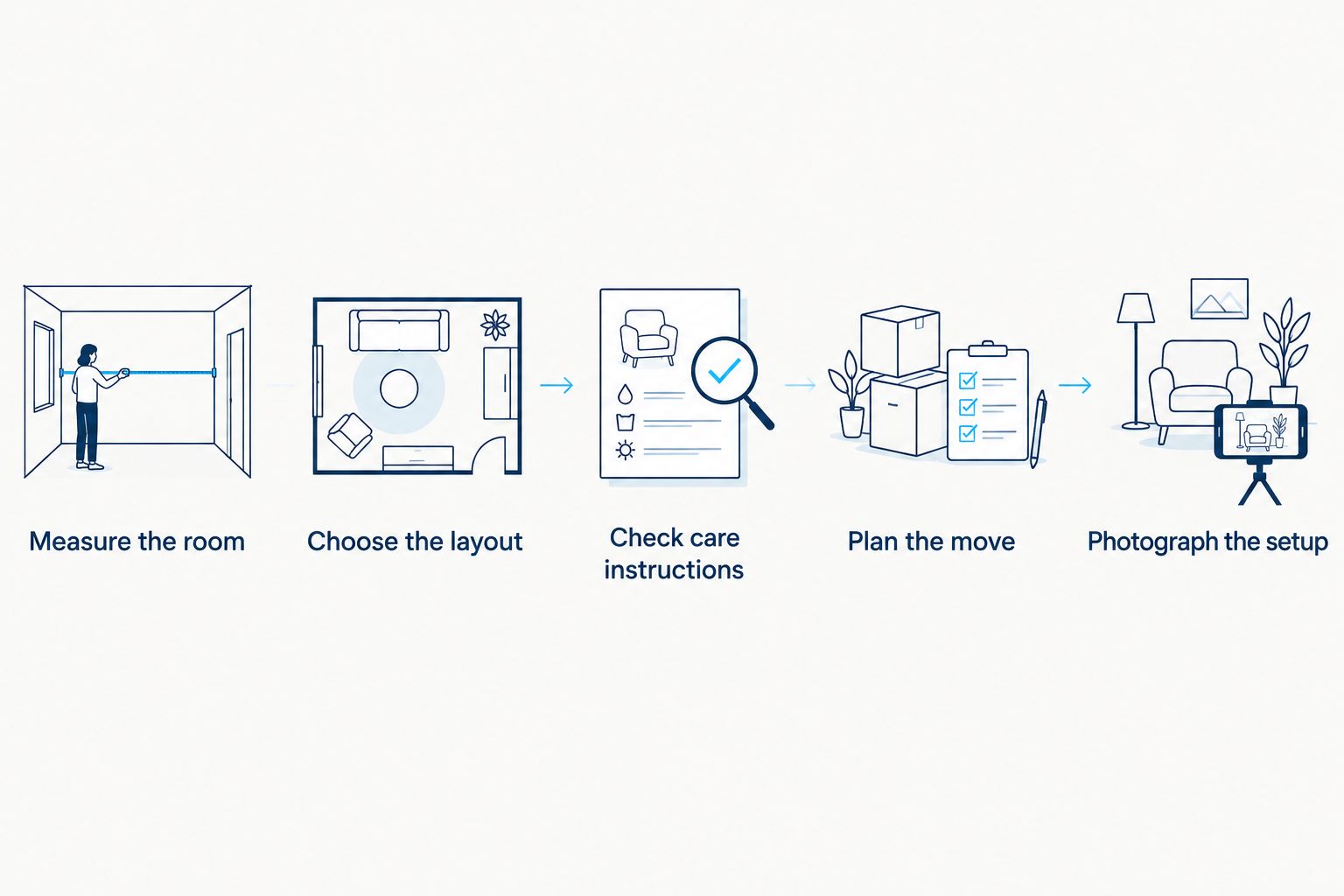
Choose staging sofas in seven practical steps
Define your recurring property types
Start with completed staging jobs, not a furniture catalog. Group the living rooms you actually furnish by shape, access restrictions, and the role seating plays in the listing photographs.
For a 2026 purchasing brief, review your own installation photos and note where the sofa looked too deep, too long, or visually heavy. A sofa that works in an open-plan property is not automatically useful in a narrow apartment. Your inventory should serve recurring assignments before unusual rooms.
Separate your core requirements from preferences. Washability, measured fit, and manageable transport belong in the requirements column when they affect repeat use; an upholstery color that suits one decorative scheme belongs in the preferences column.
- Group jobs by living-room shape and usable floor area.
- Record stairs, elevators, and difficult entry turns.
- Identify whether the sofa anchors the main listing image.
- Separate frequently used configurations from occasional requests.
- Write a brief that another team member can apply without interpretation.
Measure the room and the delivery route
Use a tape measure and a simple floor sketch before comparing products. Record 3 room measurements as a starting checklist: usable seating-wall length, seating-zone depth, and the narrowest planned walking route. These are your measurements, not suggested sofa dimensions.
Then measure the access route separately. Overall sofa dimensions do not explain whether a rigid piece turns through a hallway or whether a module passes an elevator door. Ask for the dimensions and handling instructions relevant to the pieces your crew will actually carry.
Compare the empty-room plan with a furnished plan. The sofa must leave useful space for visitors to approach windows, move between rooms, and understand where other furniture belongs.
- Mark doors, door swings, windows, vents, and fixed fixtures.
- Measure the narrowest doorway along the delivery route.
- Check hallway corners, landings, and elevator interiors.
- Obtain assembled and transport-piece dimensions before ordering.
- Tape the proposed footprint onto the floor when site access permits.
Match the configuration to the room’s purpose
Sketch the layout manually before shopping. Compare 2 layout sketches for each property: the smallest configuration that explains the seating area and a fuller configuration that shows how the room accommodates guests. Choose the version that preserves the room’s clarity.
A straight sofa is useful when the room needs a clear edge and flexible chair placement. A corner sectional defines a larger seating zone, but its return must not block the route into the room. A loveseat suits a smaller seating brief, provided the actual measurements work.
Sofatica’s modular sofas are a relevant option when configuration matters. Confirm which arrangements a particular model supports; the word modular does not establish that every piece connects in every position.
- Choose the layout before choosing upholstery color.
- Keep a sectional return out of the main entrance path.
- Match the seating arrangement to the property’s likely use.
- Confirm connection details and permitted module arrangements.
- Leave room for necessary tables without crowding circulation.
The decision sequence is simple: establish the space, test the arrangement, and only then evaluate cleaning and transport. This keeps an appealing product photograph from deciding the purchase too early.
Check the upholstery and cleaning routine
Start with the manufacturer’s care instructions and your current cleaning process. Identify which parts are washable, how they should be washed, and what must happen before the sofa returns to a property. Do not treat a washable description as permission to wash every component.
Machine-washable upholstery gives you a defined cleaning route, but laundering still requires removal, drying, and refitting. Fixed upholstery follows a different routine and needs its own care instructions. Neither approach removes the need to inspect seams, cushions, and the finished appearance.
Select color with both presentation and maintenance in mind. Compare a fabric sample, when obtainable, against flooring and wall paint. Then photograph it in the room’s light; a color name alone does not show how the upholstery will appear in a listing.
- Read washing, drying, and stain-treatment instructions separately.
- Confirm exactly which covers or components are washable.
- Test an approved cleaning method on an inconspicuous area.
- Inspect for marks, loose threads, and uneven cushion placement.
- Check the finished sofa under daylight and room lighting.
Plan the move before you commit
Write the handling plan yourself first. Document who moves the sofa, how the pieces travel, where they wait between jobs, and how your team checks condition at both ends. A modular sofa changes the number and shape of items to manage; it does not eliminate handling work.
Keep each sofa’s components together in your records. Mark pieces using removable inventory labels that do not damage the upholstery, and protect them according to their materials and care guidance. Avoid assuming a component is easy to carry without its weight and handling information.
If you consider furniture rental instead of ownership, confirm the actual agreement’s collection and damage responsibilities. Rental changes who owns the furniture, not your need for a clear installation plan.
- Record component dimensions and verified handling information.
- Check vehicle space against the planned load.
- Label matching pieces and accessories consistently.
- Photograph condition before departure and after removal.
- Assign responsibility for packing, setup, inspection, and storage.
Photograph and standardize each finished setup
Use your phone and a repeatable checklist before investing in additional equipment. Take 4 reference photos for each approved setup: a doorway view, the main listing angle, a side view, and a close view of the upholstery condition. These images document your standard rather than promise a sales result.
For your 2026 staging library, store the photos with the sofa’s measured footprint and component list. Another installer should be able to reproduce the intended arrangement without guessing where the return, ottoman, or cushions belong.
Review the photograph as a buyer would encounter it. Check whether the sofa hides a window, compresses the apparent walking route, or crowds the table. Fix the layout before adding more decorative items.
- Photograph from the position planned for the main listing image.
- Straighten covers and align cushions before shooting.
- Keep visible walking routes clear.
- Record the arrangement and every component used.
- Save a reference image after the staging lead approves the setup.
A useful reference photo shows the whole relationship between seating, windows, and circulation. It is more helpful to your next installer than a close-up of the sofa alone.

Track reuse and adjust the inventory
Begin with a spreadsheet or shared inventory document. Give each sofa an identifier and record installations, configuration changes, cleaning tasks, condition issues, and time out of use. Your own records are the basis for deciding what deserves another purchase.
Do not confuse popularity in a catalog with usefulness in your staging business. A piece that repeatedly misses room measurements or requires work your team cannot schedule is not a good core item. Review the reasons behind each rejection rather than counting installations alone.
Use the record to distinguish a furniture problem from a process problem. Poor labeling, incomplete measurements, or rushed cover fitting need an operational correction; a consistently unsuitable footprint needs a different sofa.
- Log each installation against the sofa’s inventory identifier.
- Record why a proposed sofa was rejected for a property.
- Note cleaning and repair work before approving reuse.
- Track missing pieces and recurring handling difficulties.
- Expand inventory only after reviewing actual assignments.
Compare sofa options for staging inventory
Choose the option that solves your recurring constraint, not the largest configuration. The following options serve different briefs; none replaces a measured floor plan. Seat-count labels describe the listed configuration, not the floor area it needs.
| Option | Best for | Main advantage | Key limitation |
|---|---|---|---|
| Sofatica washable 3-seater modular sofa in beige | Stagers seeking washable modular seating in a 3-seater configuration | Combines the listed washable and modular features | Verify footprint, washable components, and handling requirements |
| Modular corner sectional | Larger seating zones with a clear corner layout | Defines an L-shaped furniture arrangement | The return restricts placement in some rooms |
| Modular loveseat | Smaller rooms needing a compact seating arrangement | Offers a smaller configuration to evaluate | Actual dimensions, not the loveseat label, determine fit |
| Fixed-frame sofa | Repeat room layouts where reconfiguration is unnecessary | Provides one complete seating piece to position | The complete frame must pass the access route |
| Furniture rental | Assignments where you choose not to own the sofa | Keeps furniture ownership outside your inventory | Your setup depends on the specific rental agreement and collection terms |
For 2026 purchasing, compare actual specifications within the selected category. Two sofas with the same seat-count label need separate measurement checks. Likewise, modular construction does not establish interchangeable parts across different models.
Ask for the facts that change your decision: dimensions, component handling information, care instructions, and supported arrangements. If a requirement remains unconfirmed, keep that option off the approved installation list.


Common mistakes home staging companies make
Buying for the largest room in the portfolio
A large sectional can suit a particular property without serving your recurring jobs. Build your core inventory around repeated assignments, then evaluate unusually large layouts separately. Do not make the exception your default footprint.
Treating modular construction as effortless transport
Separate pieces still need protection, labeling, vehicle space, and a complete component check. Approve the transport process before approving the furniture. Otherwise, flexibility in the room becomes confusion in storage.
Choosing light upholstery without a reset plan
Light-colored seating needs a defined inspection and cleaning routine, just as any other upholstery does. Establish who removes marks, checks covers, and approves the final presentation. A washable cover is a cleaning feature, not a substitute for that responsibility.
Styling for close-ups instead of the listing view
A tightly arranged sofa, table, and accessories can look appealing in detail while obscuring how the room works. Evaluate the doorway and main listing angles first. Remove or reposition furniture that hides circulation or fixed features.
Assuming home-use suitability proves staging suitability
Comfort and appearance do not establish repeated-move durability or commercial-use terms. Check the applicable documentation rather than inferring those facts from a residential product description. Keep your approval tied to verified requirements.
Why owners pick Sofatica
Washable Slipcovers
100% Real Goose Down
Module Secure™ Lock
Adjustable Cushion Fill
FAQ
What are the best sofas for home staging companies?
The best sofas for home staging companies fit recurring room layouts, pass the delivery route, and support a documented cleaning routine. Choose modular seating when configuration flexibility matters, but verify dimensions and handling requirements before buying.
Is a modular sofa better than a fixed-frame sofa for staging?
A modular sofa is better when your staging jobs require different supported arrangements. A fixed-frame sofa is a useful choice for repeat layouts, but the complete frame must fit the transport route.
Are Sofatica sofas a good fit for a home staging company?
Sofatica sofas are a good fit for a home staging company seeking machine-washable modular seating. Confirm the selected model’s dimensions, care instructions, supported configurations, and applicable use terms before adding it to inventory.
Should a staging company choose white or beige upholstery?
Choose white or beige by testing the upholstery against the property’s finishes and lighting. Both choices still need a documented inspection and cleaning routine; a color name alone does not establish how the sofa will photograph.
Can I assume every part of a washable sofa goes in the washing machine?
No, a washable sofa description does not establish that every component is machine-washable. Follow the instructions for each cover or component, including washing, drying, and refitting.
Should home staging companies own sofas or use furniture rental?
Own sofas when you want to manage reusable inventory; consider rental when you choose not to own furniture for an assignment. Compare your actual storage and handling responsibilities with the specific rental agreement.
How do I keep a staging sofa ready between properties?
Inspect, clean, and document the sofa before approving it for another installation. Keep matching components together and save reference photos so the next crew can reproduce the approved setup.
One last thing
Approve a sofa from the room’s listing angle before approving it from the showroom angle. A beautiful seat is still the wrong staging choice when it hides the space you are trying to explain.
Make that photograph part of your 2026 sign-off process. Keep the approved layout, component record, and cleaning instructions together so your next installation starts with a usable brief rather than a memory.
Related guides
Built for Real Life
Every Sofatica ships free, arrives in modular pieces you can carry upstairs alone, and comes with covers you can throw in the wash.


