

Basement Living Room Sofa Ideas That Resist Moisture


Basement living room with moisture-resistant sofa
A basement living room is a trickier sofa environment than a main-floor room. Humidity is usually higher. Temperature is cooler. Ventilation is often limited. Light is scarce. A regular sofa placed in a basement can mildew within a year, develop musty odors, or have foam break down from dampness. The right sofa and the right moisture-management setup makes a basement living room fully comfortable and durable.
The one we would pick
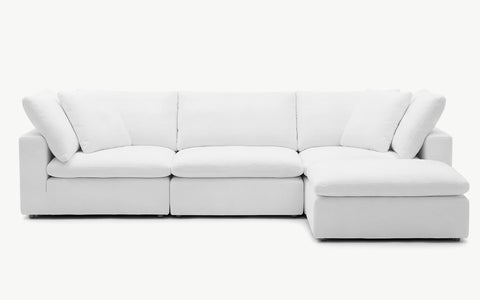
Configuration: 4-Seater Sectional


Basement Challenges
- Higher humidity causes mildew
- Cooler temperatures feel uncomfortable
- Low natural light makes dark colors feel oppressive
- Limited ventilation traps odors
- Flood risk in some basements
Moisture-Resistant Fabrics
- Performance polyester and Crypton (primary choice)
- Solution-dyed acrylic (Sunbrella, usually overkill but effective)
- Synthetic microfiber (resists moisture, cleans easily)
- Faux leather (wipes clean, resists moisture)
Skip:
- Untreated linen (absorbs moisture, mildews)
- Untreated cotton (same issue)
- Silk and velvet (delicate in humid environments)
- Anything with down or feather fill (mildews)
For fabric context, see our fabric protectors guide.
Frame Choices
- Hardwood frames with sealed joints: best for basements
- Metal frames: rust-resistant if powder-coated
- Particleboard: avoid entirely; absorbs moisture and breaks down fast
For frame durability, see our faulty sofa frame guide.


Fill for Basements
- High-density foam (closed-cell preferred for moisture resistance)
- Polyester fiberfill (resists mildew)
- Performance foam with anti-microbial treatment
Avoid feather, down, and memory foam without moisture treatment.
Why owners pick Sofatica
Washable Slipcovers
100% Real Goose Down
Module Secure™ Lock
Adjustable Cushion Fill
Moisture Management
- Run a dehumidifier to maintain 40 to 55 percent humidity
- Use moisture-absorbing bags (DampRid or similar) in corners
- Elevate the sofa on legs; avoid floor-level platforms
- Do not block HVAC vents with the sofa
- Consider a moisture barrier between carpet and subfloor
The Basement Sofa Shortlist
- Performance fabric sectional: durable, moisture-resistant, comfortable
- Faux leather sofa: wipe-clean, resists humidity
- Modular cloud couch in performance fabric: flexibility plus moisture resistance
- Gaming or media sectional: basements often become theater or game rooms
For media room setups, see our home theater sofa setup guide. For gaming applications, see our gaming sofa guide.
Performance Fabric Cloud Couches for Basements
Sofatica performance fabric cloud couches resist moisture, release stains, and handle the humidity swings of a basement living room.
Shop Performance Cloud CouchesFAQ
What is the best sofa for a basement?
Do basement sofas get mildew?
Can I use a regular sofa in my basement?
What is the biggest basement sofa mistake?
Should I put my basement sofa on risers?
Built for Real Life
Every Sofatica ships free, arrives in modular pieces you can carry upstairs alone, and comes with covers you can throw in the wash.


