

Best Leather Sofas That Age Beautifully


Full-grain leather look sofa in a modern living room
Leather is the only sofa material that looks better at year 10 than at year 1. That is, if you buy the right kind. Genuine top-grain leather develops a patina that synthetic materials cannot fake. Bonded leather, the cheap alternative often sold as real leather, flakes off in sheets. Knowing the difference is the single most important skill when shopping for leather.
This guide covers the grades that age beautifully and the ones to avoid entirely.
The one we would pick
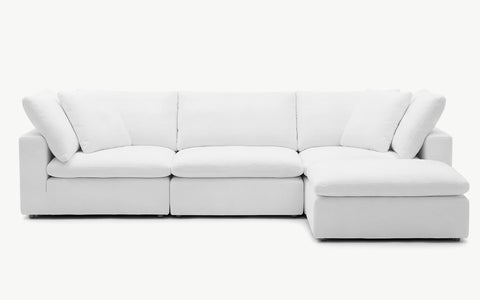
Configuration: 4-Seater Sectional


Leather Grades Explained
| Grade | Quality | Lifespan |
|---|---|---|
| Full-grain | Premium | 25+ years |
| Top-grain | High | 15 to 25 years |
| Split leather | Mid | 7 to 12 years |
| Genuine leather (marketing term) | Low | 3 to 7 years |
| Bonded leather | Poor | 1 to 3 years before flaking |
| PU leather (faux) | Poor | 2 to 5 years |
Full-Grain Leather
Full-grain is the top layer of the hide, uncorrected and uncovered. Natural marks, scars, and grain variation are visible. It is the strongest, most breathable, and most patina-developing leather on the market.
A full-grain sofa at 20 years old looks better than a new leather sofa at year 1. The leather darkens, softens, and develops a hand-burnished sheen from daily use. Plan on $3,500 and up for a full-grain 3-seat sofa.
Top-Grain Leather
Top-grain is the second layer of the hide after the surface imperfections are sanded off. It is more uniform in appearance than full-grain and accepts dye and protective finishes more evenly. It still develops patina, just at a slower pace.
For most buyers, top-grain is the practical premium choice. You get 85 percent of the beauty of full-grain at 60 percent of the price.


Genuine and Bonded Leather
"Genuine leather" as a marketing term often means the lowest grade of real leather. It may be leather-backed fabric, or split leather heavily coated. Quality varies widely. Ask for a specific grade name.
Bonded leather is leather scraps glued together and sprayed with a plastic finish. It looks fine at purchase and starts to peel within 1 to 3 years. Avoid unless the sofa is under $600 and you are okay with short lifespan.
Why owners pick Sofatica
Washable Slipcovers
100% Real Goose Down
Module Secure™ Lock
Adjustable Cushion Fill
Styles That Age Well
- Chesterfield: tufted back, classic, ages beautifully in cognac and oxblood
- English roll-arm: traditional, full-grain works perfectly here
- Mid-century modern leather: slim profile, tapered legs, looks sharper with patina
- Modern track-arm: clean lines, understated aging
- Italian 70s lounge: thick cushions, deep seats, full-grain leather
Leather Care Basics
- Vacuum or dust weekly. Removes grit that scratches the surface.
- Wipe spills immediately. Leather is more forgiving than fabric if you act fast.
- Condition every 6 to 12 months. Leather conditioner prevents cracking.
- Keep out of direct sunlight. UV fades and dries leather.
- Avoid harsh cleaners. Use leather-specific products only.
For compare-and-contrast on leather vs fabric, see our related content on cloud couch colors that hold up best.
Colors That Develop Patina
- Cognac: the classic; lightens at stress points, darkens elsewhere
- Saddle brown: warms into a rich reddish tone
- Oxblood: deepens to near-black at contact points
- Natural tan: the most dramatic aging; lightens at stress, darkens under hands
- Dark chocolate: minimal aging, holds original tone longest
Black leather is the least patina-friendly. Any aging looks like wear rather than character.
Cloud Couch Performance Leather Alternative
If you like the leather aesthetic but want machine-washable easy care, Sofatica performance fabric mimics leather patina without the maintenance. Worth a look alongside traditional leather.
Explore Sofatica Cloud CouchesFAQ
What is the difference between full-grain and top-grain leather?
Is bonded leather real leather?
How do I tell real leather from fake?
Does leather crack over time?
Built for Real Life
Every Sofatica ships free, arrives in modular pieces you can carry upstairs alone, and comes with covers you can throw in the wash.


