


How to Place a Sofa in Front of Stairs

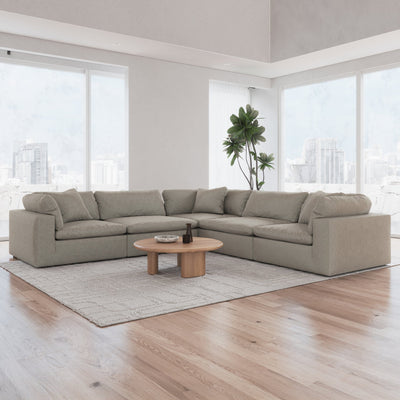

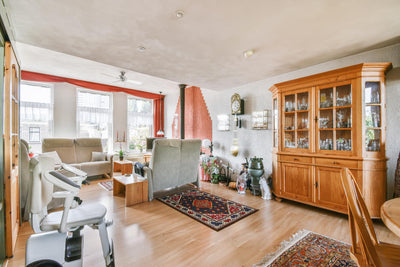
Placing a sofa in front of stairs is one of the trickiest furniture moves in home design. Done right, it turns an awkward transition space into a useful seating area that flows naturally from one level to another. Done wrong, the sofa blocks the stairs visually, blocks the flow physically, or simply looks like it was plopped down with no plan. The difference comes down to back height, clearance, and what is happening behind the sofa.
This guide covers every common stair configuration and the sofa placement that works for each.
When It Works and When It Does Not
Sofa-in-front-of-stairs works when:
- The stairs are at the rear of an open-plan living room
- The sofa back is lower than the top of the first or second stair
- There is at least 36 inches of clearance between the sofa back and the stair base
- The stairs descend (from the living room level going down, not up)
It does not work when:
- The stairs ascend right behind the sofa (stairs visually tower over the sofa back)
- The sofa is taller than 32 inches at the back (blocks sightlines)
- The room is too narrow to leave stair clearance
- A safety concern: small children or older adults using the stairs
Back Height Rule
A sofa placed in front of stairs must have a back height under 32 inches, preferably under 28 inches. The goal is to see over or through the sofa to the stairs beyond. A 38-inch high-back sofa placed in front of stairs makes the stairs disappear visually.
Low-profile sofas, mid-century modern designs, and armless modulars all fit this rule naturally. For a deeper dive on low-profile silhouettes, see our low-profile sofas guide.
Clearance from the Stairs
Leave at least 36 inches between the sofa back and the base of the stairs. This matters for three reasons:
- Safety: people using the stairs need walking space without squeezing past the sofa
- Cleaning: vacuum and dust reach both the sofa back and the stair carpet
- Visual breathing room: the sofa stops feeling crammed
Open Staircases
An open staircase with no wall on the side creates a beautiful layout opportunity. The sofa sits perpendicular to the stair run. Light and sightlines flow through both spaces. Add a console table behind the sofa to complete the line.
Works best with a low-profile sofa and a minimalist railing (cable or glass). Bulky railings plus a tall sofa back creates visual clutter.
Half-Wall Staircases
A half-wall (knee wall) between the living room and the stairs is the ideal case. The half-wall conceals the stair structure below while allowing sightlines above. Place a sofa in front of the half-wall. The top of the sofa back and the top of the wall create a single horizontal line.
This works in any room size. The half-wall does the heavy lifting design-wise. Add a console or bookshelf on top of the wall for extra utility.
Landing-Level Living Rooms
In a split-level or tri-level home, the living room often sits between an up-staircase and a down-staircase. Placing the sofa in front of the down-staircase is the cleaner choice. Your eye moves down and away, which feels natural. Avoid placing a sofa in front of an up-staircase unless the back is very low.
Split-Level Homes
Split-level layouts often have an entryway opening directly into the living room with stairs descending nearby. A floated sofa with its back toward the descending stairs creates a clean boundary between the entry and the living area. Add a runner on the stairs that picks up a color from the sofa for visual continuity.
This is also a common configuration in mid-century modern homes. Lean into the era with a mid-century sofa style to honor the architecture.
Console Tables Behind the Sofa
A console table behind a sofa that sits in front of stairs serves multiple purposes:
- Acts as a safety barrier preventing stepping off the sofa onto the stairs
- Holds lamps, plants, and decor that soften the transition
- Hides the back of the sofa if the fabric looks less finished
- Creates a surface for keys, phones, or a small bar setup
Choose a console taller than the sofa back by 4 to 8 inches for best proportion. A 34-inch console with a 30-inch sofa back looks intentional.
Safety Considerations
- Baby gates: can still be installed with a sofa in front; just add brackets to the sofa or use freestanding gates
- Railing height: should not be compromised by sofa placement
- Lighting: stairs need their own lighting; the sofa should not block it
- Fall risk: prevent pets and kids from climbing the sofa and falling down the stairs
- Smoke detector: check that sofa placement does not block airflow to nearby detectors
For broader living room layout principles, see our small living room layout guide. If your stairs adjoin a fireplace, read our furniture around a corner fireplace guide. For rooms with two focal points, our two focal points guide covers the layout strategies.
Low-Profile Cloud Couches for Stair-Adjacent Rooms
Sofatica's low-back armless cloud couch modules fit naturally in front of open staircases and half-walls. Sightlines stay clear, the silhouette stays modern.
Shop Low-Profile Cloud Couches


