

Is a cloud sectional sofa prone to mold in humid climates?

A cloud sectional sofa can develop mold in a humid climate when its upholstery, cushions, or frame stay damp; the cloud shape alone does not establish a higher mold risk. Washable upholstery helps with routine cleaning, but it does not make the cushion interior mold-proof. In 2026, the practical rule is to control indoor humidity, address leaks promptly, and dry wet materials before moisture becomes trapped.
- Cloud sectional sofa humid climate care starts with moisture control, not a particular upholstery color or cushion shape.
- EPA guidance recommends indoor humidity below 60%, ideally 30–50%, to help prevent mold.
- Washable upholstery does not make a sectional’s cushions, filling, or frame mold-proof.
- Sofatica sells machine-washable modular sofas; washing does not replace thorough drying.
The one we would pick
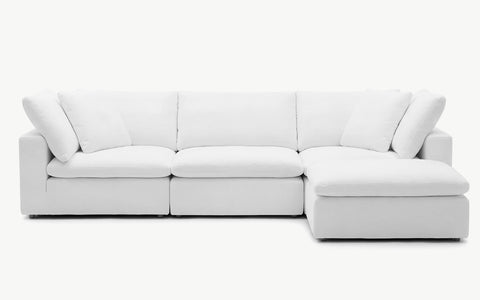
Configuration: 4-Seater Sectional


Is a cloud sectional sofa prone to mold in humid climates?
A cloud sectional is vulnerable to persistent dampness, but its name is not evidence that it molds more readily than other upholstered sofas. Mold needs moisture. A dry sectional in a humidity-controlled living room presents a different situation from one sitting against a damp wall or holding water inside its cushions.
Indoor conditions matter more than the weather forecast. A humid location does not automatically mean a damp living room, and a roof does not turn an outdoor seating area into a controlled interior. See the separate guide to using a cloud sectional sofa on a covered patio if your planned location is outside.
| Sofa conditions | What helps | What remains a concern | Best next move |
|---|---|---|---|
| Dry, humidity-controlled room | Moisture is managed before it accumulates | Leaks and spills still need attention | Monitor humidity and inspect after spills |
| Persistently humid room | Dehumidification addresses airborne moisture | A fan alone does not remove moisture | Correct humidity before relying on cleaning |
| Washable upholstery over wet cushions | Cleaning access helps with surface maintenance | Water can remain beneath a dry-feeling cover | Assess and dry the inner materials |
| Sofa beside a damp wall | Moving the sofa allows inspection | The wall’s moisture source remains | Fix the leak or condensation problem |
Why this matters
A sofa can feel dry on its seating surface while moisture remains underneath. Cushion undersides, seams, and the space behind the sectional deserve attention because you do not see them during everyday use. A clean-looking cover is not proof that every layer is dry.
This distinction changes your buying decision. Washability addresses cleaning; humidity control addresses the room; drying addresses water already inside the furniture. You need all three functions, not a cleaning feature presented as protection against every moisture problem.
For a 2026 sofa purchase, start by checking the room where the sectional will live. If windows regularly collect condensation or a wall already smells musty, solve that problem before bringing in more upholstered furniture. A new sofa cannot correct an existing moisture source.
Why mold risk varies
Mold risk varies with how moisture reaches the sectional and how long it remains there. These factors deserve more attention than the cloud label:
- Indoor humidity: Persistently elevated relative humidity makes moisture control harder. Measure conditions instead of judging them by how warm the room feels.
- Leaks and condensation: Water from windows, plumbing, walls, or air-conditioning equipment can repeatedly wet the same hidden area.
- Spill depth: A damp cover and a saturated cushion require different responses. Check beneath the visible stain.
- Drying conditions: Humid air and enclosed cushion arrangements slow drying. Moving air helps evaporation, but moisture still needs somewhere to go.
- Care restrictions: A removable cover does not establish that the filling, liner, or complete cushion is machine-washable. Follow each component’s instructions.
- Hidden contact areas: Cushion undersides and furniture positioned against damp surfaces can conceal moisture. Leave access for inspection rather than treating those areas as permanently out of sight.
These factors work together. Washing a cover while leaving a wet insert enclosed does not resolve the original problem, and deodorizing a room does not repair a leak.
What indoor humidity should you aim for?
Aim for 30–50% relative humidity where practical, and keep indoor humidity below 60%. The U.S. Environmental Protection Agency recommends these levels in its household mold-prevention guidance. They are room-management targets, not a guarantee that a wet sofa cannot develop mold.
Use a hygrometer in the living area rather than relying only on a thermostat elsewhere. Check the room under normal conditions, including when doors and windows are closed. If condensation or a leak is wetting the sofa, an acceptable humidity reading does not cancel that direct water exposure.
For your 2026 care routine, respond to repeated high readings by addressing moisture sources and using suitable air conditioning or dehumidification. Follow the equipment instructions and keep its drainage arrangement working. Running equipment without removing collected water or correcting a blocked drain defeats the purpose.
Opening windows is not automatically the answer. Outdoor air can bring additional moisture into the room when it is more humid than the indoor air. Use measured conditions to guide ventilation instead of assuming that every breeze helps furniture dry.
How quickly should you dry a wet sectional?
The EPA’s general prevention guidance is to dry water-damaged materials within 24–48 hours to help prevent mold growth. That window is not a promise that a thick cushion will dry completely in that time, nor is it a safe waiting period before you act. Start addressing the water immediately.
Use this sequence for an ordinary clean-water spill, following the sofa’s care instructions throughout:
- Find the source. Stop the spill or leak before cleaning. If the water came from sewage or contaminated flooding, do not treat the sofa as a routine home-cleaning project.
- Check the layers. Blot accessible liquid and examine the cover, liner, insert, cushion underside, and surrounding floor. Do not assume the visible patch marks the full wet area.
- Follow care labels. Remove and wash only the components approved for that treatment. Do not put an entire cushion into a washer because its outer cover is removable.
- Dry separately. Where the construction and care instructions allow, keep damp components exposed rather than stacked together. Control room humidity while providing airflow.
- Check before reassembly. Do not replace covers over damp inserts. If deep layers remain wet or you cannot assess them, contact an upholstery-cleaning or water-damage professional.
A fan supports drying; it does not certify that an insert is dry inside. Likewise, a dry exterior and a fresh scent are not reliable substitutes for checking the affected materials. Do not zip damp components back together simply to make the room look finished.


Do washable covers prevent mold inside a sofa?
Washable covers help you remove everyday dirt and clean approved fabric components. They do not control indoor humidity, drain a saturated cushion, or treat growth inside porous filling. Their benefit is easier maintenance, not immunity to moisture damage.
Sofatica machine-washable modular sofas are best for buyers who prioritize washable upholstery and modular seating. That benefit does not remove the need to follow component-specific care instructions or keep the furniture dry. Treat washability as a useful cleaning feature, not evidence of mold resistance.
Before choosing washable upholstery, ask which pieces are washable, how they must dry, and whether the cushion inserts have separate instructions. Also check whether you have enough suitable space to dry the approved components without stacking them. A washing routine that leaves you with damp fabric and nowhere to dry it is unfinished care.
For a Sofatica sectional, use the current instructions for the exact model and component you own. Do not transfer a washing temperature, detergent choice, or dryer setting from a different sofa’s label.
Why owners pick Sofatica
Washable Slipcovers
100% Real Goose Down
Module Secure™ Lock
Adjustable Cushion Fill
How do you recognize a moisture problem before it spreads?
Look beyond the seat tops. Check the rear of the sofa, the underside of loose cushions, the floor underneath, and any nearby wall showing condensation or staining. Inspect after known water exposure rather than waiting for the next scheduled cleaning.
A musty odor is a reason to investigate, not proof of a particular mold species. Visible discoloration also needs assessment: dirt, dye transfer, and mold are not interchangeable diagnoses. Avoid identifying growth by color alone.
For your 2026 room check, look for a pattern. Moisture repeatedly appearing beside the same window points to a different problem from a single spilled drink. Record where dampness returns so you can address its source instead of repeatedly washing the nearest cover.
If you find suspected growth, stop treating the problem as routine stain removal. Keep children and pets away from the affected furniture while you arrange appropriate assessment. Avoid brushing, beating, or blowing air directly across suspected mold, which can disturb it.
What should you do if the sectional already smells musty?
Find the moisture source before trying to remove the smell. Check for damp cushions, wet flooring, wall leaks, and condensation. Fragrance can mask an odor without removing either the water or contaminated material.
EPA mold-cleanup guidance distinguishes washable hard surfaces from porous materials that can be difficult or impossible to clean thoroughly. Upholstered furniture belongs in the latter discussion when contamination extends into absorbent layers. Cleaning a removable outer cover does not establish that the inner furniture is clean.
Do not soak the sofa with a homemade treatment or assume household bleach is appropriate for its upholstery and filling. Follow the manufacturer’s restrictions and seek professional advice when growth is visible, dampness persists, or the affected interior cannot be inspected. Floodwater and sewage exposure require a different response from an ordinary drink spill.
If anyone develops breathing symptoms around the furniture, avoid further exposure and seek medical advice. Cleaning recommendations do not diagnose symptoms or establish that a contaminated sofa is safe to keep.
What should you check before buying in a humid region?
In 2026, evaluate the room and the care instructions together. A sofa’s upholstery description cannot tell you whether your living room has an unresolved leak or enough humidity control.
Use these questions before ordering:
- Can you keep the room dry? Address recurring condensation, leaks, and persistent high humidity first.
- Which components are washable? Ask separately about outer covers, liners, filling, and the frame.
- Can you inspect underneath? Choose a layout that lets you reach the areas most likely to hide dampness.
- Where will washed components dry? Plan for the actual care instructions rather than assuming outdoor drying is suitable.
- What happens after a deep spill? Know when the instructions call for professional cleaning instead of washing at home.
Sofatica’s machine-washable modular sofa offering addresses the cleaning side of this checklist. You still need to establish suitable indoor conditions and a drying routine. Choose for maintainability, but fix a damp room before placing any upholstered sectional in it.
FAQ
Can a cloud sectional get mold even if I never spill anything?
Yes. Persistent humidity, condensation, and leaks can supply moisture without a drink spill. Inspect nearby walls, cushion undersides, and the floor when dampness or a musty odor appears.
What humidity level is best for preventing sofa mold?
Aim for 30–50% indoor relative humidity where practical and keep it below 60%, following EPA household mold-prevention guidance. Directly wet cushions still need drying even when the room reading is acceptable.
Does machine-washable mean a sofa is mold-resistant?
No. Machine-washable describes a cleaning method for approved components, not resistance to mold throughout the furniture. Check the instructions for covers, liners, and cushion inserts separately.
Can I put damp cushion covers back on to help them stretch?
Do not reassemble damp upholstery unless the manufacturer explicitly directs that method for the component. Keep the insert dry and follow the stated drying instructions rather than copying advice for another fabric.
Will a fan remove moisture from my living room?
A fan moves air but does not remove water from the room. Drying damp furniture also requires suitable humidity control and a way to remove the moisture released into the air.
How long do I have to dry a sofa after a spill?
EPA general guidance calls for drying water-damaged materials within 24–48 hours to help prevent mold growth. Act immediately, and do not assume a thick cushion is dry because its surface feels dry.
Can a professional always save a moldy sectional?
No. Mold contamination inside porous upholstery or filling can be difficult or impossible to remove thoroughly. A qualified professional can assess whether cleaning is appropriate or affected materials need replacement.
One last thing
Check the cushion underside, not just the seat. After a spill or a period of condensation, the hidden contact surface can reveal moisture that the top fabric no longer shows. That simple inspection helps you decide whether you are finishing routine cleaning or still dealing with trapped water.
Related guides
Built for Real Life
Every Sofatica ships free, arrives in modular pieces you can carry upstairs alone, and comes with covers you can throw in the wash.


