

Is feather down filling hard to maintain?

Feather down filling is manageable to maintain if you accept regular fluffing and keep cleaning instructions separate for covers and filled inserts. It needs more hands-on reshaping than a cushion that holds a fixed shape, and a machine-washable cover does not automatically mean the filling is machine-washable.
- Feather down filling maintenance centers on reshaping cushions, controlling moisture, and following each component’s care label.
- Sofatica sells machine-washable modular sofas; confirm which components the washing instructions cover before cleaning.
- Fluffing redistributes compressed filling; it does not clean a cushion or repair damaged construction.
- Choose feather down if you accept cushion upkeep, not if you expect a permanently tailored seat.
The one we would pick

Configuration: 4-Seater Sectional


Is feather down filling hard to maintain?
Feather down filling is not maintenance-free, but its everyday care is straightforward: reshape compressed cushions, remove surface debris, and handle spills promptly. The more demanding job is cleaning a filled insert without leaving moisture trapped inside.
Keep these separate. A wrinkled cover, displaced filling, and a wet insert need different responses; washing everything is not a universal fix.
| Component | Main maintenance task | Practical advantage | Main limitation |
|---|---|---|---|
| Removable cover | Clean according to its fabric label | Separates surface cleaning from filling care | Washability does not establish how to clean the insert |
| Feather down insert | Redistribute filling and follow its own cleaning instructions | You can reshape loose filling | Compression returns with use |
| Cushion seams and casing | Inspect when handling the cushion | You can catch openings before filling escapes | Fluffing cannot repair a torn casing |
If you are considering a Sofatica modular sofa in 2026, assess the maintenance instructions alongside the seating layout. A washable design addresses cleaning, but you still need to understand the cushion’s reshaping routine.
Why this matters
A sofa can be easy to clean without being hands-off to maintain. That distinction matters when your household includes children, pets, or a favorite seat that gets most of the use.
Think about what bothers you. If you dislike crumbs and marks, accessible cleaning matters most; if you dislike creases and uneven cushions, regular reshaping deserves equal attention.
For your 2026 sofa purchase, ask whether the care routine fits your habits, not just whether the fabric looks practical. Washability and shape retention answer different questions.
Removable covers: easier surface cleaning, separate instructions
A removable cover lets you address surface dirt without automatically treating the filling underneath. That is useful after everyday messes, provided you follow the instructions for the specific fabric.
Read the label before choosing detergent, water temperature, or a drying method. Do not borrow instructions from another sofa, even if the materials look similar.
Before removing a cover, note its orientation and how the cushion sits inside it. Support the insert while easing the fabric off; pulling hard at a tight corner or zipper puts unnecessary strain on the construction.
Once the cover is clean, follow its instructions for drying and refitting. Do not assume that a care method approved for the cover also applies to the cushion casing, filling, or upholstered frame.
Filled inserts: moisture needs more attention than wrinkles
A compressed cushion usually needs redistribution, not washing. A wet cushion needs a cleaning and drying plan that matches its construction.
Down and feathers are natural materials, but that alone does not establish whether a particular sofa insert can go into a washing machine. The casing, internal structure, and manufacturer’s instructions also matter.
Never use a cover’s machine-washable label as permission to wash a filled insert. If the insert’s instructions are unclear, ask the manufacturer before adding water or using a cleaning machine.
An exterior that feels dry does not prove that the center is dry. Persistent dampness or a musty smell calls for attention rather than simply putting the cover back on and hiding the problem.
Why feather down filling maintenance varies
Your maintenance workload depends on the cushion and how you use it, not just the words feather down.
- Use patterns: The seat you use most needs closer attention for compression and displaced filling.
- Cushion construction: Loose fill, internal compartments, and any supporting core affect how a cushion responds to reshaping.
- Cover access: A removable cover separates fabric care from insert care, but each still needs its own instructions.
- Spill exposure: A surface mark and liquid that reaches the insert require different responses.
- Drying conditions: Restricted airflow makes drying a wet cushion more difficult.
- Appearance expectations: A relaxed cushion suits someone comfortable with visible settling better than someone who wants an untouched, tailored surface.
These factors explain why another owner’s routine is not automatically right for your sofa. For a 2026 purchase, request component-specific care instructions rather than relying on a general easy-care description.
How do you clean feather down sofa cushions safely?
Start with the affected component, not the strongest cleaning method. You want to remove the mess without spreading it into the filling or using a treatment the material cannot tolerate.
Identify what needs cleaning
Check whether the problem sits on the cover, has reached the insert, or involves the upholstered base. Remove loose debris gently before introducing any cleaning product.
For liquid spills, blot with a clean absorbent cloth instead of scrubbing. Avoid pressing liquid farther into the cushion while trying to make the surface look dry.
Read the relevant care instructions
Find the directions for the actual component you intend to clean. A fabric label is not an instruction sheet for everything beneath it.
Where the manufacturer permits a cleaning product, follow the required testing and application directions. Do not assume that a homemade mixture is safer simply because its ingredients are familiar.
Separate cover care from insert care
Remove the cover only if the design permits it. Keep the insert supported and avoid leaving exposed filling accessible to children or pets.
If liquid reached the insert, follow the insert’s approved cleaning method. Stop and seek manufacturer guidance when the directions do not address the situation; repeated soaking is not a substitute for a clear care method.
Complete drying before normal use
Follow the approved drying instructions for every cleaned component. Keep a damp insert out of an enclosed storage space, and do not mistake a dry cover for a dry cushion.
The machine-washable couch guide addresses the distinction between a washable sofa description and the components you actually clean. Use that distinction when assessing any sofa in 2026.
How do you fluff feather down cushions without damaging them?
Fluffing means redistributing loose filling, not striking the cushion as hard as possible. Work with the cushion’s construction and stop if you notice an opening, damaged seam, or unusual resistance.
Lift, loosen, reshape, and inspect is a practical sequence for cushions whose care instructions permit manual fluffing. Lift the cushion away from the seat, gently loosen compressed areas through the casing, reshape it evenly, and inspect it before returning it.
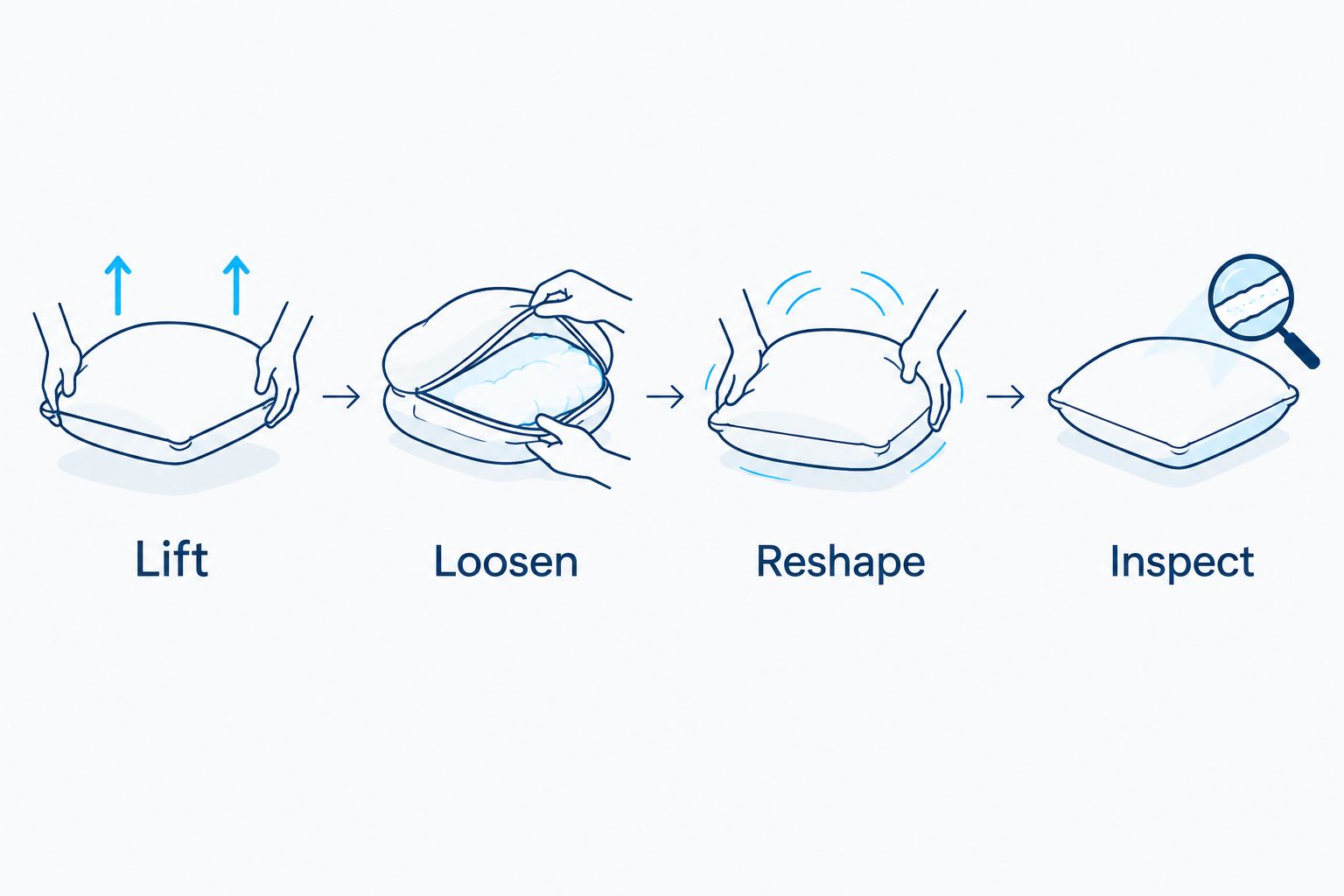
Work across the cushion rather than repeatedly pushing the same spot. Where the design allows rotation or reversal, follow the manufacturer’s guidance to vary which surfaces receive the most use; not every cushion is reversible.
The distinction between fluffing and re-lofting pillows and cleaning also applies to loose-fill sofa cushions: reshaping redistributes filling, while cleaning addresses dirt and spills. Neither task replaces the other, and pillow washing instructions should not be transferred to a sofa insert.
Judge the result by the cushion itself. If filling redistributes but the seat still feels uneven, the issue deserves inspection rather than more forceful fluffing.


When does a cushion need more than fluffing?
Routine settling and a construction problem are not the same thing. Compare the cushion’s condition before and after gentle redistribution, then look at the casing, seams, and support underneath.
Seek care guidance when you notice:
- A seam opening or a visible tear in the casing.
- Persistent dampness or a musty odor after cleaning.
- A concentrated hollow that does not change when you redistribute the fill.
- Repeated feather escape from the same damaged area.
- A change in support that reshaping does not address.
Do not open the inner casing or add loose filling unless the manufacturer provides a method for doing so. Extra filling does not repair a damaged support layer, and opening the casing creates another job to manage.
For your 2026 care routine, use changes in condition as the trigger for inspection. A calendar reminder cannot tell you whether a cushion is dry, damaged, or simply compressed.
Why owners pick Sofatica
Washable Slipcovers
100% Real Goose Down
Module Secure™ Lock
Adjustable Cushion Fill
Is feather down a good fit for your household?
Sofatica machine-washable modular sofas are best for shoppers who prioritize washable seating and accept cushion upkeep. The cleaning benefit is practical; the limitation is that washability does not eliminate reshaping or replace component-specific care instructions.
Choose a feather down seat because you enjoy a cushion that settles around you, not because you expect it to look untouched after use. Before committing, ask for the fill composition, whether covers and inserts have separate labels, and the approved method for restoring cushion shape.
For a busy household, also consider access. You need space to handle a cushion, manage a removed cover, and keep any cleaned component out of use until its approved drying process is complete.
How often should I fluff feather down sofa cushions?
Fluff feather down sofa cushions when use leaves compressed areas or uneven filling. Inspect your favorite seat more closely than a cushion that rarely gets used, and follow any schedule supplied by the manufacturer.
There is no reason to wash a clean cushion just because it needs reshaping. Treat flattening and dirt as separate maintenance issues.
Can I put feather down sofa inserts in the washing machine?
Put feather down sofa inserts in the washing machine only when their own care instructions explicitly permit it. A removable, machine-washable cover does not establish that permission.
Check the approved drying method before washing, too. Starting a wash without a suitable drying plan turns a cleaning task into a moisture problem.
Does feather down always go flat permanently?
Feather down compression does not automatically mean permanent damage. Loose filling can redistribute, but fluffing does not repair a damaged casing, worn support component, or other structural problem.
Check what changes after reshaping. A persistent hollow deserves a closer look rather than an assumption that all the filling has failed.
FAQ
Is feather down filling maintenance difficult for a busy family?
Feather down filling maintenance is manageable if your family accepts reshaping cushions and responding promptly to spills. A washable cover helps with fabric care, but the insert still needs its own cleaning instructions.
Can I wash the whole sofa cushion if the cover is washable?
No, a washable cover does not establish that the whole sofa cushion is washable. Check the filled insert’s separate care instructions before putting it in a machine or adding cleaning solution.
How do I know when a feather down cushion needs fluffing?
A feather down cushion needs reshaping when filling feels displaced or the surface stays compressed after use. Redistribute it gently using the manufacturer’s approved method.
Does fluffing remove stains from down cushions?
No, fluffing redistributes filling; it does not remove stains. Clean the affected cover or insert according to its own care instructions.
Should I put a damp insert back inside its cover?
Do not enclose a damp insert and return it to normal use. Complete the approved drying process first, because a dry exterior does not establish that the center is dry.
Are Sofatica modular sofas maintenance-free?
No, Sofatica machine-washable modular sofas still require care. Confirm which components the washing instructions cover, and keep fabric cleaning separate from cushion reshaping.
What should I check before buying a feather down sofa in 2026?
Before buying a feather down sofa in 2026, check the fill composition, cover instructions, insert instructions, and permitted reshaping method. Choose a care routine you will actually follow.
One last thing
Photograph the care labels before you need them. Save separate images for the cover and insert so a hurried spill cleanup does not turn into guesswork.
The most useful maintenance shortcut is knowing what you are allowed to clean before the cushion gets wet.
Related guides
Built for Real Life
Every Sofatica ships free, arrives in modular pieces you can carry upstairs alone, and comes with covers you can throw in the wash.


