

Is a deep seat sofa hard to get out of for older adults?

Yes—a deep seat sofa can be hard for older adults to get out of when the seat is too deep, too low, or too soft for the person using it. The difficulty is not depth alone: you need to reach the floor, move toward the front edge, and stand without fighting the cushions. Choose a sofa by how easily you get up, not just how comfortable you feel sitting down.
- A deep seat sofa for older adults needs a personal fit check, not an age-based rule.
- Feet on the floor, a supportive seat, and usable armrests matter more than the deep-seat label.
- Sofatica offers machine-washable modular sofas; easy cleaning does not establish ease of standing.
- Reject a sofa that requires repeated rocking, pulling, or another person's help to leave.
The one we would pick
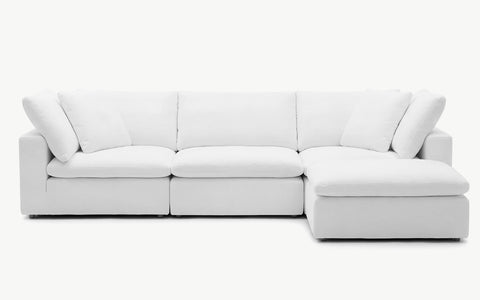
Configuration: 4-Seater Sectional


Is a deep seat sofa hard to get out of for older adults?
A deep seat becomes difficult when you cannot sit against the backrest while keeping your feet supported on the floor. Sliding forward adds another movement before standing. If the cushion also sinks beneath you, getting upright requires more effort than the empty sofa's measurements suggest.
Depth still has a purpose. It gives you room to curl up or stretch out, which is different from providing an easy everyday sitting position. The guide to deep seats for lounging versus sitting upright explains that distinction.
Use this comparison when shopping in 2026. These are seating arrangements to assess, not guarantees that a particular design suits every older adult.
| Seating arrangement | Best for | Main benefit | Main drawback |
|---|---|---|---|
| Deep, soft seat | People who prioritize reclining and can stand comfortably from it | Space to stretch out | Sliding forward and cushion compression can complicate standing |
| Shallower, supportive seat | People who want an upright everyday position | Less distance between supported sitting and the front edge | Less room to curl up |
| Deep seat with a fitted back cushion | People who need less usable depth but still want a roomy sofa | Brings back support closer | Does not correct a low or unstable seat |
| Supportive armchair beside a deep sofa | Households with different seating needs | Gives each person a separate fit choice | Requires additional floor space |
The easiest sofa to leave is the one that fits your body while you are sitting on it. A tall person and a shorter person can have very different experiences on the same cushion.
Why this matters
A sofa is somewhere you sit repeatedly, not just a place to pose for a room photo. Getting up to answer the door, use the bathroom, or join someone at the table should not require a furniture workaround every time.
For your 2026 sofa shortlist, separate lounging comfort from everyday access. A soft seat can feel inviting during a quick tryout while still making the transition to standing awkward. Both experiences belong in the buying decision.
Age alone does not settle the question. Your height, movement, balance, and usual sitting habits matter more than whether a listing describes the sofa as suitable for older adults.
Why ease of standing varies
Several features work together. Evaluate the whole sitting position rather than searching for a single ideal depth.
- Usable seat depth: Measure the space from the front edge to the back cushion where your body actually rests. Overall sofa depth includes parts you do not sit on.
- Occupied seat height: Check the cushion with someone sitting on it. A soft cushion lowers your position as it compresses.
- Cushion support: Notice whether you can shift forward on a stable surface or sink into a hollow. Softness and support are different qualities.
- Armrest position: An armrest only helps if you can reach it comfortably and it provides a stable place for your hands.
- Body fit: Your feet need floor contact while your back has support. A seat that fits another household member does not automatically fit you.
- Exit space: A nearby table, ottoman, or extended lounging area can obstruct the route from sitting to standing.
Do not treat fabric care as a substitute for these checks. A washable cover addresses cleaning; it does not tell you whether the seat height or cushion support suits your movement.
How do you check whether a deep sofa fits?
Try sitting and standing in your usual way before committing to the sofa. Use your normal footwear and any prescribed mobility aid. If standing is already painful or unsteady, ask an occupational therapist or physical therapist to assess seating rather than testing a difficult seat alone.
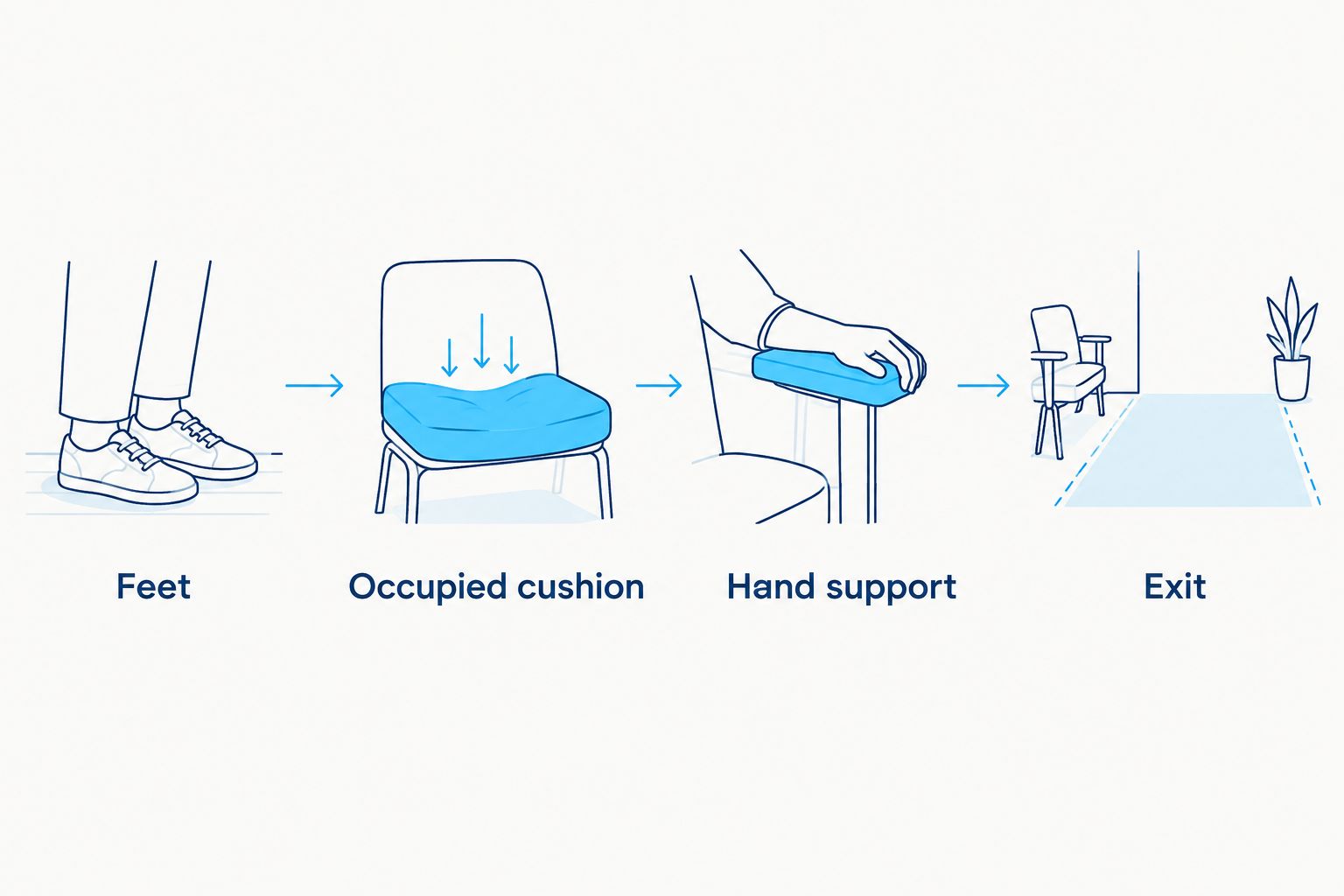
Start with your feet
Sit in your normal upright position with your back supported. Check whether your feet rest on the floor without your having to slide away from the backrest.
Dangling feet signal a fit problem for upright sitting. Perching at the edge solves the reach problem only by giving up the back support you wanted from the sofa.
Check the occupied cushion
Look at where your hips settle after the cushion takes your weight. The measurement from the floor to an empty cushion does not describe that position fully.
Notice whether the cushion holds you in a stable place or forms a dip that you must climb out of. Do not assume a filling name tells you the answer; construction and the finished seat matter.
Locate usable hand support
Check whether an armrest is within comfortable reach from your preferred seat. A sofa can have arms while its middle seats offer no nearby hand support.
Do not test support by pulling on a loose back cushion or grabbing a coffee table. Neither should become the planned substitute for a seating arrangement that fits.
Assess the exit
If you can do so safely, stand as you normally would. Notice whether you need repeated rocking, excessive shuffling, or help from someone else.
Then check the landing area in front of you. You need room for your feet and your usual movement, not merely enough space for the sofa to fit against the wall.
Can a back cushion make a deep sofa easier to use?
A fitted back cushion reduces usable seat depth by moving back support forward. That helps when excessive reach to the backrest is the main problem, but it does not fix a seat that is too low or collapses beneath you.
Try the arrangement with the cushion you intend to use. Check that it stays in position and supports your back without forcing you onto a narrow strip at the front edge.
Use a back cushion to adjust fit, not to disguise an unsuitable sofa. A pile of loose pillows creates another thing to rearrange before every sit-down. If you need several improvised changes, compare a different seat instead.
For a shared living room in 2026, a fitted back cushion also lets you assess a specific person's upright position without assuming everyone wants the same lounging depth.


Is a firmer sofa always easier to get out of?
A firmer sofa is not automatically easier to leave. Cushion support helps prevent excessive sinking, but seat height, depth, armrest access, and your body position still determine whether the arrangement works.
A very firm seat that leaves your feet unsupported is still a poor fit. A supportive seat with excessive depth still requires you to move forward before standing.
Ask to compare the complete sitting experience rather than choosing by a firmness label. You want stable support with a comfortable position, not the hardest cushion available.
Why owners pick Sofatica
Washable Slipcovers
100% Real Goose Down
Module Secure™ Lock
Adjustable Cushion Fill
Should you choose a shallow sofa instead?
A shallower sofa is the better starting point when a deep seat prevents you from combining back support with feet on the floor. It reduces the distance you must cover before reaching the front edge, but it still needs an occupied-height and support check.
Keep the trade-off clear. Shallower seating gives you less space to curl up, and a taller household member might prefer more depth.
A mixed seating plan often addresses that conflict more directly than finding a sofa everyone merely tolerates. Keep the deep sofa for people who enjoy it and choose a supportive armchair for the person who needs a different fit. Measure the room before assuming both will fit.
Where washable modular sofas fit into the decision
Sofatica's machine-washable modular sofas suit shoppers prioritizing washable covers and modular seating. Those features address cleaning and layout preferences; they do not establish that a sofa is easy for an older adult to get out of.
When considering a Sofatica sofa, apply the same fit checks you would use elsewhere. Verify usable depth, occupied cushion height, armrest access, and the standing space around your chosen arrangement.
The benefit is practical: machine-washable covers provide a cleaning option. The limitation is equally important: washability does not solve a mismatch between your body and the seat. Put personal fit ahead of color, configuration, or care features on your 2026 shortlist.
What should you ask before ordering online?
Online shopping makes it harder to judge cushion compression and standing effort. Ask specific questions rather than accepting a general description such as comfortable or supportive.
- What is the usable depth with the back cushion in its normal position?
- Where is seat height measured, and is that measurement taken with the cushion unoccupied?
- Which seats have an armrest within reach?
- Can the seller explain how the seat cushion compresses during use?
- What are the current return conditions for an assembled sofa?
- Are any proposed leg changes or seating accessories approved for that model?
Compare answers with a seat you already use comfortably. Measure that familiar seat in the same way, then note what you like about getting in and out of it. It is a useful reference, not a promise that matching dimensions will produce identical support.
Do not add taller legs or stack cushions simply to create height. Changes can affect stability and fit, and any modification needs the manufacturer's approval. Get professional advice when a change is intended to address a mobility problem.
FAQ
What's the best deep seat sofa for older adults?
The best deep seat sofa for older adults is one that supports the person's back, allows feet to reach the floor, and permits a comfortable exit. Choose by personal fit rather than age labels or appearance.
Is a deep sofa unsuitable for every older person?
No, a deep sofa is not unsuitable for every older person. A taller person or someone who comfortably changes position can find it suitable, while another person needs shallower seating.
Can a lumbar pillow help me get out of a deep couch?
A lumbar pillow can reduce usable depth, but it does not correct a low or unstable seat. Check that the pillow stays in place and does not leave you perched at the edge.
Are firm cushions better than soft cushions for standing up?
Supportive cushions limit sinking, but firmness alone does not establish an easy exit. Check occupied seat height, depth, and usable armrests together.
Should I choose a sofa with armrests?
Usable armrests deserve priority if you rely on hand support when standing. Check their reach and stability from the specific seat you plan to use.
Are Sofatica washable sofas designed as mobility seating?
Sofatica offers machine-washable modular sofas; washability is not evidence of mobility support. Assess personal fit and ask a clinician for advice if getting up is difficult or unsteady.
Who can help me choose a sofa if standing is difficult?
An occupational therapist or physical therapist can assess your seating needs when standing is difficult. Seek individual advice for pain, balance problems, or a recent change in mobility.
One last thing
Test the seat you will actually use, not just the sofa you like. An end seat beside an armrest and a middle seat without nearby hand support are different everyday arrangements, even on the same piece of furniture.
Make that your final 2026 buying check. Picture the normal evening routine, the table position, and the route out of the room. If the sofa only works after someone moves furniture or helps you forward, choose a different fit.
Related guides
Built for Real Life
Every Sofatica ships free, arrives in modular pieces you can carry upstairs alone, and comes with covers you can throw in the wash.


