

How do you spot a good deep-seat sofa from a bad one?

You spot a good deep-seat sofa by checking usable seat depth, support in your usual sitting position, cushion recovery, construction, and cleaning instructions—not softness alone. For your 2026 shortlist, reject any sofa that feels comfortable only when you slouch or add cushions you do not want to use. A removable cover is not automatically machine-washable, and a plush surface does not prove the support underneath is sound.
- How to spot a good deep seat sofa: check usable depth, cushion support, construction, and cleaning instructions.
- A good deep-seat sofa supports your preferred posture without forcing you to slide forward.
- Sofatica offers machine-washable modular sofas; confirm the selected sofa’s dimensions and care instructions before choosing.
- Reject unexplained movement, uncomfortable pressure points, and vague answers about materials or maintenance.
The one we would pick

Configuration: 4-Seater Sectional


Why this matters
A deep seat gives you space to curl up, but extra room is not the same as a better fit. If you spend evenings sitting upright, the distance between the front edge and back cushion matters more than the sofa’s overall depth.
Start with how you actually relax. The guide to deep-seat sofas for lounging versus sitting upright helps separate a posture preference from a quality problem. A well-made sofa can still be the wrong sofa for you.
How do you spot a good deep-seat sofa from a bad one?
A good deep-seat sofa feels supported beneath the softness and suits the way you sit. Use this 2026 inspection checklist to separate features you can verify from descriptions that only sound reassuring.
| Check | Good sign | Warning sign | What to do |
|---|---|---|---|
| Usable depth | You can settle into your preferred position | You slide forward to find back support | Sit with the back cushions in place |
| Seat support | Your weight feels supported across the seat | You feel a hard edge or an uncomfortable low spot | Compare the center and front edge |
| Cushion recovery | Cushions respond consistently after normal use | A cushion remains visibly uneven after adjustment | Ask how the filling should be maintained |
| Frame and joints | The structure feels steady during ordinary sitting | Joints shift or movement produces unexplained noise | Ask for construction details |
| Seams and covers | Stitching looks even and closures work cleanly | Open seams, strained stitching, or catching zippers | Inspect accessible edges and closures |
| Cleaning | Written instructions explain what you can wash | “Easy care” appears without a clear method | Read the care label before ordering |
| Modular connections | Sections stay aligned during ordinary use | Modules separate or connectors are unclear | Check the connection method |
No single row proves long-term durability. Together, these checks give you specific reasons to keep a sofa on your shortlist—or remove it.
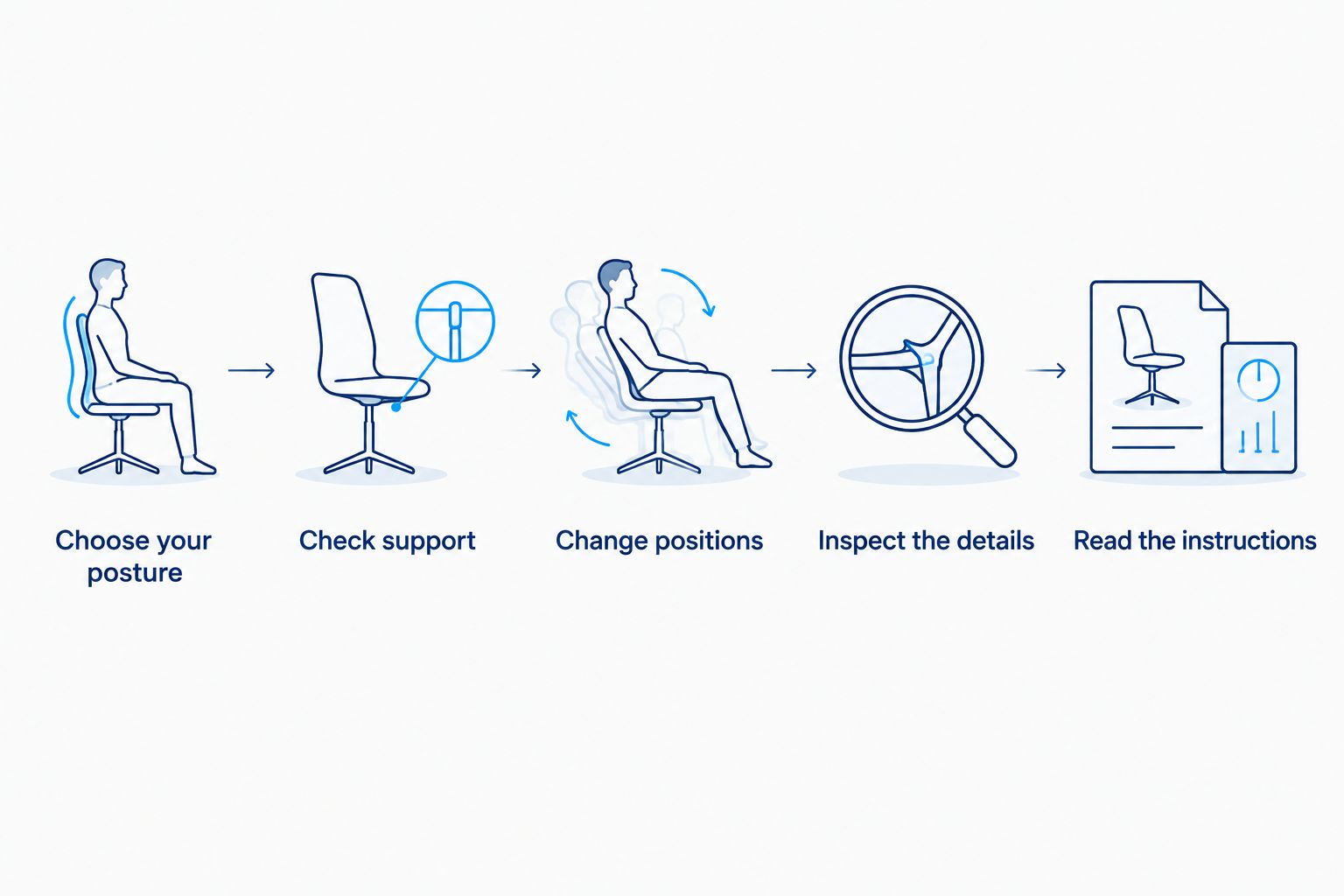
Follow a repeatable inspection sequence
- Choose your posture. Sit as you would while watching television, reading, or talking. Do not start with the pose that makes the display look most comfortable.
- Check support. Settle against the back cushion, then notice your lower back, thighs, and feet. Identify where you feel supported and where you compensate.
- Change positions. Try the center, the edge, and your preferred lounging position. Compare the feel rather than judging the first impression alone.
- Inspect the details. Look at seams, cushion closures, accessible joints, and modular connectors without dismantling anything.
- Read the instructions. Confirm the dimensions, filling description, cleaning method, and maintenance requirements in writing.
Check usable depth, not just overall depth
Overall depth includes parts you do not sit on, such as the back structure. Usable seat depth describes the space available between the front of the seat and the back cushion where your body rests. Ask which measurement the seller provides.
Compare 2 measurement types: overall depth and usable seat depth. Neither replaces a sitting test, but confusing them makes online comparisons unreliable. Keep the back cushions in their normal position when you assess the seating space.
A deeper seat gives you room to tuck your legs up. The trade-off is that reaching the back cushion while keeping your feet on the floor becomes harder for some users. That is a fit issue, not automatic evidence of poor construction.
Check the sofa with any support pillow you genuinely plan to use. If an upright position works only after you stack loose pillows behind your back, decide whether that arrangement suits everyday life rather than treating it as a temporary showroom fix.
Look for support beneath the plush surface
Softness describes the first sensation when you sit down. Support describes what happens as your weight settles. You need to judge both, because an inviting top layer can distract you from an uncomfortable base or uneven seating area.
Try 3 seated positions: upright, curled up, and near the front edge. These are inspection positions, not a technical performance standard. Notice whether each position feels controlled or whether you keep shifting to escape pressure.
Ask what is inside the cushion and how its layers are arranged. A filling name alone does not tell you how the whole cushion behaves; the support beneath it and the way it is built also matter.
Do not equate firm with durable or soft with badly made. Keep the sofa that supports your preferred posture, then check whether its maintenance needs fit your routine. Comfort that depends on constant adjustment is a poor match if you want minimal upkeep.
Inspect construction where you can actually see it
Look along seams, around corners, and beneath loose cushions where access is allowed. Check for open stitching, uneven tension, and closures that catch. Decorative folds and relaxed upholstery are not the same thing as a seam coming apart.
Sit down and stand up normally. If you notice movement or noise, identify its source rather than assuming every sound means failure. A loose module connection requires a different answer from movement at a structural joint.
Ask the seller to explain the frame, seat support, and connection method in plain language. “Premium construction” is not a material description. You should be able to understand what supports the cushion and how separate sections stay together.
For a shared sofa, ask 2 people to sit in adjacent seats during an authorized showroom test. Notice whether one person’s movement disrupts the other’s position or opens a gap between modules. Do not jump, force the arms, or perform improvised load tests.
Separate washable covers from easy-care claims
A zip tells you a cover opens; it does not tell you how to clean it. Check whether the written instructions permit machine washing, which pieces those instructions cover, and how the fabric must dry before you put it back on.
For your 2026 comparison notes, record the actual care method rather than copying “family-friendly.” That phrase does not explain how you will deal with a drink spill, muddy paws, or a cushion cover that needs a full wash.
Ask practical questions before you commit:
- Removal: Can you take off the relevant covers without dismantling the sofa?
- Washing: What does the care label permit for each removable piece?
- Drying: How should you dry the cover before refitting it?
- Refitting: How do you align the seams and close the cover correctly?
- Routine care: What adjustment or cleaning does the cushion filling require?
Machine-washable does not mean stain-proof or maintenance-free. It describes a cleaning method. You still need to follow the instructions and decide whether the removal, washing, drying, and refitting process works for your household.


Why deep-seat sofa quality and comfort vary
Deep-seat sofas feel different because their dimensions and construction work together. Use these factors to explain what you notice during an inspection, rather than assuming a single feature decides quality.
- Usable seat depth: More seating space changes how easily you reach the back cushion and where your legs rest.
- Seat height: The height changes your sitting position and how you move from sitting to standing.
- Cushion construction: The filling arrangement affects the initial feel and the maintenance instructions you need to follow.
- Underlying support: The structure beneath the cushion contributes to how the seat carries your weight.
- Back-cushion shape: The cushion’s thickness and position change the space available for your body.
- Upholstery and connections: Cover construction, seams, and module attachments affect cleaning access and everyday use.
Use the same questions for every sofa on your 2026 shortlist. A detailed answer is useful; an attractive description that avoids the question is not a substitute.
Why owners pick Sofatica
Washable Slipcovers
100% Real Goose Down
Module Secure™ Lock
Adjustable Cushion Fill
Where does a washable modular sofa fit?
Sofatica is best for shoppers who want machine-washable modular sofas. Those features are relevant when you want a configurable seating arrangement and a defined way to wash covers. They do not replace a fit or construction check.
When considering Sofatica, apply the same inspection standards you would use elsewhere. Confirm the selected configuration’s measurements, cover-care instructions, and connection method. Do not assume every arrangement has identical dimensions or suits the same room.
The benefit of modular seating is the ability to arrange separate sections. The trade-off is that you need to understand their connections and available configurations; modular does not mean every layout works. Washable covers also require time for removal, cleaning, drying, and refitting.
Is a deeper sofa always better for lounging?
A deeper sofa is better for lounging only when the usable space suits your preferred position. Extra depth is useful for curling up, but it is not a quality score and does not guarantee comfortable back support.
Test your normal activity. If you read upright more often than you stretch out, judge the sofa while reading rather than choosing solely for its sprawling appearance.
How can you judge a deep-seat sofa online?
You judge a deep-seat sofa online by checking dimension diagrams, written construction details, care instructions, and the seller’s answers to specific questions. Photos help you understand shape, but they cannot establish how the seat supports your body.
Save the relevant product information with your 2026 shopping notes. Compare the exact configuration you intend to order, and read the current purchase and return terms before making a decision.
Should you reject a sofa that needs cushion adjustment?
You should reject a sofa that needs cushion adjustment only if that care routine does not suit you or fails to restore an acceptable seating surface. Routine reshaping and a persistent uncomfortable hollow are different issues.
Ask the seller to demonstrate the recommended maintenance. Then decide whether you will realistically do it, rather than buying for an appearance you do not want to maintain.
FAQ
What is the easiest way to spot a good deep-seat sofa?
The easiest way to spot a good deep-seat sofa is to test your normal sitting position, then inspect support, seams, connections, and care instructions. Softness alone does not establish quality.
How do I know whether a sofa is too deep for me?
A sofa is too deep for your upright sitting preference if you cannot reach comfortable back support without sliding, slouching, or adding support you do not want. Check it with the back cushions in their normal position.
Does a firm cushion mean a sofa will last longer?
A firm cushion does not establish that a sofa will last longer. Ask about cushion construction and underlying support instead of treating firmness as a durability rating.
Are removable sofa covers always machine-washable?
Removable sofa covers are not always machine-washable. Follow the care label for the specific cover, including its washing and drying instructions.
Is Sofatica a good fit if washable covers matter to me?
Sofatica offers machine-washable modular sofas, making it relevant when washability and modular seating are priorities. Confirm the selected sofa’s fit and care instructions before choosing.
What should I ask before buying a deep-seat sofa in 2026?
Before buying a deep-seat sofa in 2026, ask for usable seat depth, overall dimensions, cushion construction, support details, connection instructions, and cover-care requirements. Read the current purchase terms for the exact configuration.
One last thing
Write down your rejection reason before you leave the showroom or close the product page. “Too deep for upright reading” is useful; “not sure” is not. A specific reason protects your decision from a beautiful photograph that makes you forget the fit problem.
Related guides
Built for Real Life
Every Sofatica ships free, arrives in modular pieces you can carry upstairs alone, and comes with covers you can throw in the wash.


