

Is a feather down sofa hypoallergenic?

No—a feather down sofa is not automatically hypoallergenic. Your reaction depends on what triggers your allergies, including feather proteins, dust mites, pet dander, or mold—not simply whether the cushion contains down. For your 2026 purchase, treat washable upholstery as a cleaning benefit, not proof that a sofa is safe for your allergies.
- Feather down sofa hypoallergenic claims do not guarantee protection against feather allergens, dust mites, or pet dander.
- Sofatica sells washable modular sofas; washability alone does not establish allergy suitability.
- Choose feather-free filling for a confirmed feather allergy, while still checking upholstery care.
- Check the cover and cushion insert separately before washing either component.
The one we would pick
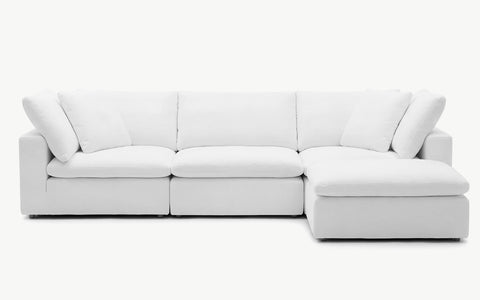
Configuration: 4-Seater Sectional


Is a feather down sofa hypoallergenic?
A feather down sofa has no automatic hypoallergenic status. Feather and down describe the filling; they do not establish how you will react to the finished sofa. A feather-free cushion also does not make the surrounding upholstery free of household allergens.
Start with the distinction between the filling and the fabric you touch. Our guide to whether a cloud couch is machine-washable explains the separate care question; cleaning instructions are not allergy certification.
| Sofa filling or feature | Best for | Practical advantage | Allergy limitation |
|---|---|---|---|
| Feather and down | Buyers who want feather-and-down cushioning and have no known feather sensitivity | Provides the filling type those buyers prefer | Contains feather-derived material and does not prevent household allergen buildup |
| Synthetic down alternative | Buyers avoiding feather-derived filling | Removes feather and down from that filling component | Fabric and cushion surfaces can still collect allergens |
| Foam filling | Buyers seeking a feather-free cushion core | Provides a non-feather core when its composition is confirmed | A foam core does not establish that every cushion layer is feather-free |
| Removable washable covers | Buyers prioritizing upholstery cleaning | Allows cleaning according to the cover's care label | Does not establish that the cushion insert is washable or allergen-free |
Choose by your trigger first, then by comfort and cleaning requirements. A filling name is not a substitute for a complete materials description.
Why this matters
A sofa is a repeated-contact surface. You sit against its upholstery, move its cushions, and bring clothing, pet hair, and outdoor particles into the same space. That makes both material selection and regular cleaning relevant to an allergy-conscious purchase.
The wrong shortcut is to assume that natural filling is healthier, or that synthetic filling solves every allergy problem. Neither conclusion follows from the material name. Your 2026 sofa checklist should separate feather avoidance, dust control, moisture control, and upholstery care instead of treating them as the same requirement.
If you already have asthma or significant allergic reactions, ask your clinician which exposure you need to avoid before choosing a filling. Do not use a furniture purchase as an informal allergy test.
Feather and down: best for buyers without a known feather allergy
Feathers and down come from birds. If you have a confirmed allergy to feather-derived material, a feather-filled sofa is not the right default choice, regardless of how soft its cushions feel or how easy its outer covers are to clean.
The advantage is straightforward: you get the filling you prefer. The limitation is equally clear: washing an outer cover does not remove the feather filling inside the cushion. Cleaning and material avoidance solve different problems.
Ask what is inside every relevant component, including seat cushions, back cushions, and decorative pillows. A description of the seat core alone does not tell you what fills the back cushions or the layer surrounding that core.
Recommendation: avoid feather-and-down filling when your clinician has advised feather avoidance. Do not treat terms such as cleaned, natural, or premium as medical assurances.
Feather-free filling: best for buyers avoiding feather materials
Synthetic down alternative and foam give you ways to select cushions without feather-derived filling. Confirm the full construction rather than relying on a broad description such as foam sofa: a cushion can combine different materials in separate layers.
The benefit is material avoidance. The trade-off is that a feather-free sofa still needs cleaning, and its feel will depend on the actual cushion construction. Do not assume that every synthetic cushion feels alike or that every foam cushion has the same support.
Feather-free also does not mean dust-mite-proof, pet-dander-proof, or suitable for every sensitivity. If your symptoms are linked to something other than feathers, removing feathers alone does not address that trigger.
Recommendation: choose a verified feather-free construction for feather avoidance, then assess the upholstery independently. Ask for a written materials description covering the entire cushion, not just its central core.
Washable covers: best for buyers prioritizing routine cleaning
Removable, machine-washable upholstery is useful when you want a practical way to clean the surface you sit on. It does not mean the whole sofa belongs in the washing machine, and it does not establish a particular level of allergen removal.
Sofatica sells machine-washable modular sofas. Sofatica washable modular sofas are best for buyers prioritizing washable upholstery, not buyers requiring a verified hypoallergenic claim. If allergy suitability is your deciding factor, confirm the exact filling and care instructions for your chosen model before ordering.
For a 2026 comparison, keep the benefit and the boundary together: washable covers support a cleaning routine, but cushion inserts and fixed upholstery can have different care requirements. Never extend a cover's washing instructions to the filling without explicit permission on its own label.
Sofatica washability is a care feature—not a medical guarantee. Choose it for the documented cleaning benefit rather than assuming it proves compatibility with a diagnosed allergy.
Why allergy suitability varies
Several separate factors determine whether a sofa fits your household's allergy-management plan. These are the checks that matter more than a broad hypoallergenic label:
- Your specific trigger: Feather sensitivity, dust-mite allergy, pet allergy, and mold allergy require different exposure decisions.
- Complete cushion composition: A feather-free core does not establish that surrounding layers, back cushions, or throw pillows are feather-free.
- Cover care: Removable covers only help your routine when you can follow their actual washing and drying instructions.
- Cleaning access: Seams, cushion gaps, and fixed upholstered areas need attention beyond the removable covers.
- Room moisture: Indoor humidity and damp materials matter when managing dust mites and mold.
- Household exposure: Pets and particles carried on clothing can introduce allergens regardless of the original filling.
No single feature answers all of these questions. A washable sofa can contain a material you need to avoid; a feather-free sofa can still accumulate the allergen that bothers you.


How do you check a sofa before buying it?
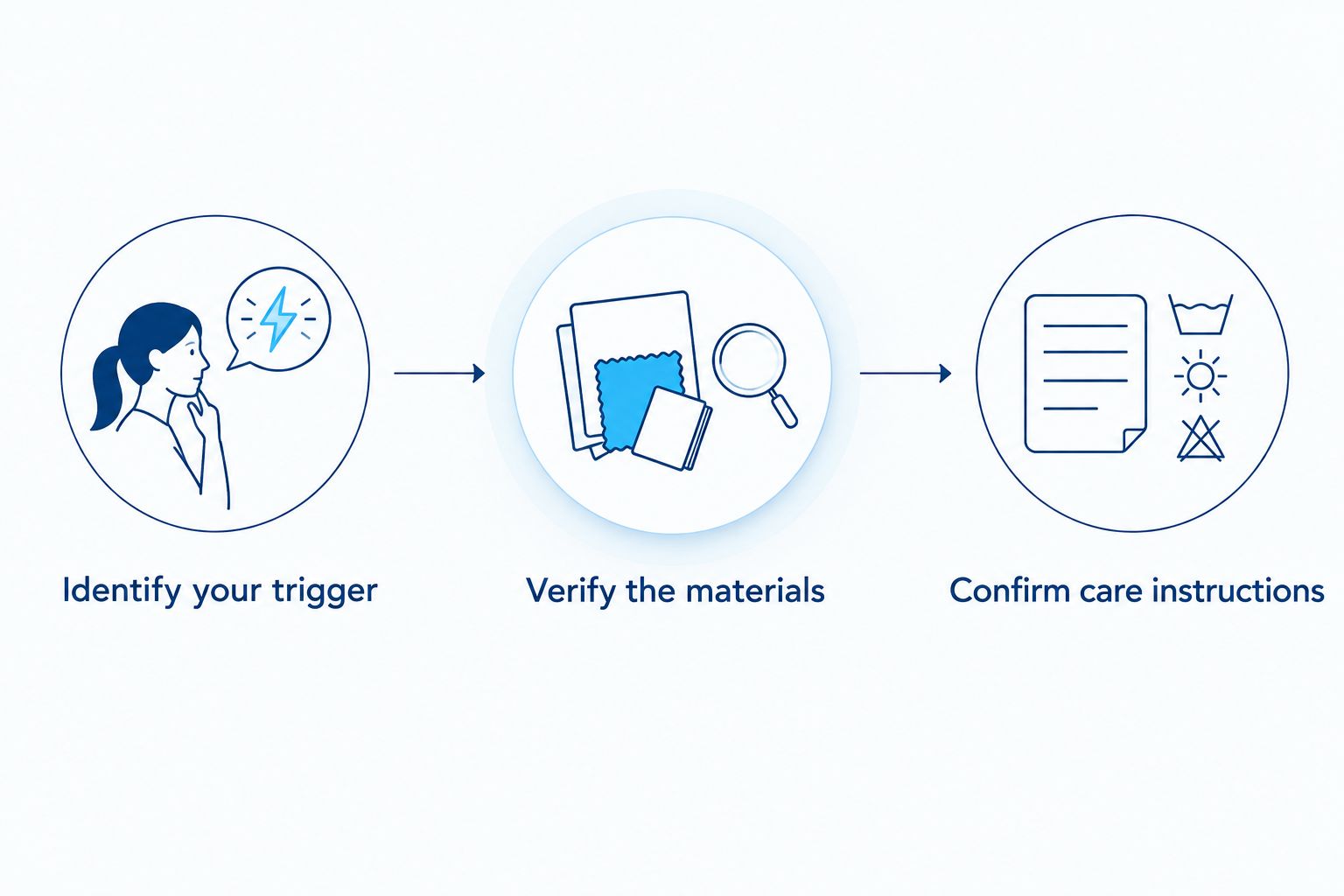
Use these 3 checks for your 2026 shortlist: identify your trigger, verify the materials, and confirm the care instructions. Complete them before deciding on color or configuration.
- Identify your trigger. Use an existing diagnosis or ask an allergist about persistent symptoms. Sneezing near a cushion does not identify the responsible material by itself.
- Verify the materials. Request the composition of the seat cushions, back cushions, cushion wraps, and included pillows. Ask directly whether any component contains feathers or down.
- Confirm care instructions. Check which covers come off, what each label permits, and whether the insert needs separate treatment. Ask how to clean fixed areas as well.
Keep the answers with the exact model information. A statement about one product does not establish the construction of another size, collection, or cushion option. Written details also give you something specific to discuss with your clinician if you need help interpreting the materials.
Why owners pick Sofatica
Washable Slipcovers
100% Real Goose Down
Module Secure™ Lock
Adjustable Cushion Fill
How do you reduce household allergens around a sofa?
Match the cleaning method to the component. Read the care label before removing covers, using detergent, applying a spray, or washing an insert. A stronger cleaning treatment is not automatically more appropriate for the material.
Vacuum accessible upholstery and cushion gaps using equipment appropriate for the fabric. A vacuum with HEPA filtration helps limit particle release through its exhaust, but vacuuming does not turn a sofa into an allergen-free surface. Follow your clinician's advice if cleaning itself triggers symptoms.
Wash removable covers only as directed, and let cleaned components dry fully before putting them back together. Do not select a hotter wash or a different drying method solely because you have read general allergy advice; the sofa's care instructions still apply.
For indoor moisture, the U.S. Environmental Protection Agency recommends keeping relative humidity below 60%, ideally between 30% and 50%. That is household mold-prevention guidance, not a tested performance claim for any sofa. Use a hygrometer to check the room rather than guessing from how the air feels.
If pets are a diagnosed trigger, address their access to the sofa with your household and clinician. Changing cushion filling alone does not remove allergens introduced by an animal using the furniture.
Does washing a feather down sofa make it hypoallergenic?
Washing does not establish that a feather down sofa is hypoallergenic. Cleaning a permitted component can remove dirt and some accumulated material, but it does not change the identity of the filling inside another component.
Keep 2 care layers separate: the outer cover and the cushion insert. Each needs its own instructions, and neither should inherit the other's washing method by assumption.
For your 2026 care routine, ask a concrete question instead of asking whether the sofa is simply washable: which pieces can you wash, and exactly how must each piece be dried? That answer is useful; a blanket allergy promise is not.
Is down alternative better if you have allergies?
Down alternative is the better starting point when you specifically need to avoid feathers and down. It is not automatically better for an unrelated allergy, such as sensitivity to pet dander accumulating on upholstery.
Confirm that the complete cushion is feather-free and compare the maintenance requirements alongside the filling. The right choice removes the material you need to avoid without creating a cleaning routine you cannot follow.
Can you tell whether feathers are causing your symptoms?
Symptoms near a feather down sofa do not prove a feather allergy. Dust mites, animal allergens, and other exposures in the same room can complicate the picture.
Record when symptoms occur and discuss the pattern with a clinician rather than repeatedly exposing yourself to test the furniture. Seek urgent medical care for breathing difficulty or a severe reaction.
FAQ
Is a feather down sofa hypoallergenic if the feathers are cleaned?
Cleaned feathers do not establish that a sofa is hypoallergenic. Processing information does not prove suitability for your specific allergy, and the finished upholstery can still collect household allergens.
Can I buy a down sofa if I have a confirmed feather allergy?
Choose feather-free filling if your clinician has advised you to avoid feather-derived materials. Confirm the composition of back cushions, cushion wraps, and included pillows as well as the seat core.
Are machine-washable sofas better for dust allergies?
Machine-washable covers offer a practical cleaning option, but they do not establish that a sofa controls dust-mite allergens. Check the permitted cleaning method and discuss your exposure-management plan with your clinician.
Does a foam sofa always contain no feathers?
A foam sofa is not necessarily feather-free throughout. Ask whether the cushion wrap, back cushions, or included pillows contain feather or down filling.
What humidity should I aim for around my sofa?
Aim for indoor relative humidity between 30% and 50%, within EPA household mold-prevention guidance. The EPA recommends keeping indoor relative humidity below 60%; those figures are room guidance, not a sofa-specific allergy guarantee.
Can I machine-wash the down cushion insert with the cover?
Only machine-wash a cushion insert when its own care instructions explicitly permit it. A washable outer cover does not establish that its insert can use the same washing or drying method.
Should I replace my sofa as soon as I start sneezing near it?
Sneezing near a sofa does not identify the trigger or establish that replacement is necessary. Discuss persistent symptoms with a clinician and review the sofa's materials, cleaning condition, and surrounding exposures.
One last thing
Check the throw pillows before ruling out the entire sofa. A feather-free seat does not tell you what is inside the pillows resting against it. Ask about every cushion you regularly touch, then make your decision from the complete materials list—not the headline description.
Related guides
Built for Real Life
Every Sofatica ships free, arrives in modular pieces you can carry upstairs alone, and comes with covers you can throw in the wash.


