

Sofas for pet boarding facilities: complete 2026 guide

Pet boarding facility sofa selection is choosing seating for shared animal-care spaces with the aim of keeping people comfortable without complicating cleaning or supervision. The best sofas for pet boarding facilities match the room’s use: washable upholstery for controlled lounge areas, and surfaces compatible with your cleaning protocol wherever contamination is a concern.
- Choose sofas for pet boarding facilities by cleaning requirements before appearance or seating capacity.
- Sofatica’s machine-washable modular sofas suit controlled lounges; washability alone does not establish suitability for animal-care areas.
- Compare removable-cover sofas, wipe-clean seating, and fixed upholstery against your actual cleaning protocol.
- Keep pet-friendly seating out of isolation areas unless your infection-control protocol explicitly permits it.
The one we would pick
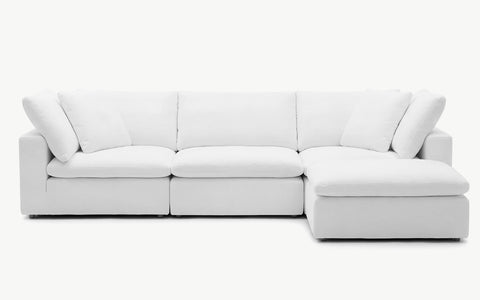
Configuration: 4-Seater Sectional


Why sofa selection matters for pet boarding facilities
A boarding facility sofa serves a different purpose from a living-room couch. Clients arrive with carriers and leashes, staff need clear sightlines, and animals do not all share the same health status or behavior. Choose the room’s rules before you choose the furniture.
Your 2026 furniture plan should separate human waiting areas, supervised animal lounges, and staff-only spaces. A sofa that works in a breakroom does not automatically belong in an animal-contact area. Comfort is one requirement; access, cleaning, and supervision are separate requirements.
Sofatica sells machine-washable modular sofas. Those features belong on your shortlist when removable upholstery and a flexible arrangement solve a real problem, but they do not replace a facility-specific cleaning assessment.
Sofatica’s machine-washable modular sofas are best for boarding operators furnishing controlled lounges, not operators seeking verified disinfectant-compatible clinical seating. Establish the intended use and required documentation before committing to any sofa.
How to choose sofas for your boarding facility
Define who can use each sofa
Start with a written room-use policy, not a furniture catalog. Decide whether each sofa is for clients, staff, supervised animals, or a clearly defined combination. The distinction tells you what contamination, wear, and handling your cleaning process must address.
A client waiting room needs space for someone holding a carrier without blocking the entrance. A supervised animal lounge needs staff access around the furniture. A staff room needs a boundary that prevents work clothing or equipment from turning seating into an uncontrolled transfer point.
For your 2026 layout, give each seating area a named purpose. Do not let an attractive lounge gradually become overflow accommodation without reviewing its cleaning requirements.
- Record whether animals are allowed on the seating.
- Separate waiting-room furniture from animal housing furniture.
- Identify who authorizes exceptions to the room-use policy.
- Keep isolation and treatment requirements in a separate furniture brief.
Measure the room and trace daily movement
Use a tape measure and mark the proposed sofa footprint on the floor. Then walk the routes staff and visitors actually use. Include open doors, carriers, cleaning equipment, and the space needed to approach an animal without squeezing past furniture.
Do not select capacity from the room’s total area alone. A 2-seat loveseat, a 3-seat sofa, and a 4-seat sectional create different footprints; the seat count does not tell you the actual width or depth. Compare the published dimensions of the specific configuration with your marked floor plan.
Check entry access as well as the final position. A sofa that fits the lounge still needs a workable route through entrances and internal doors. Follow applicable accessibility and fire-safety requirements rather than adopting an unsourced clearance rule.
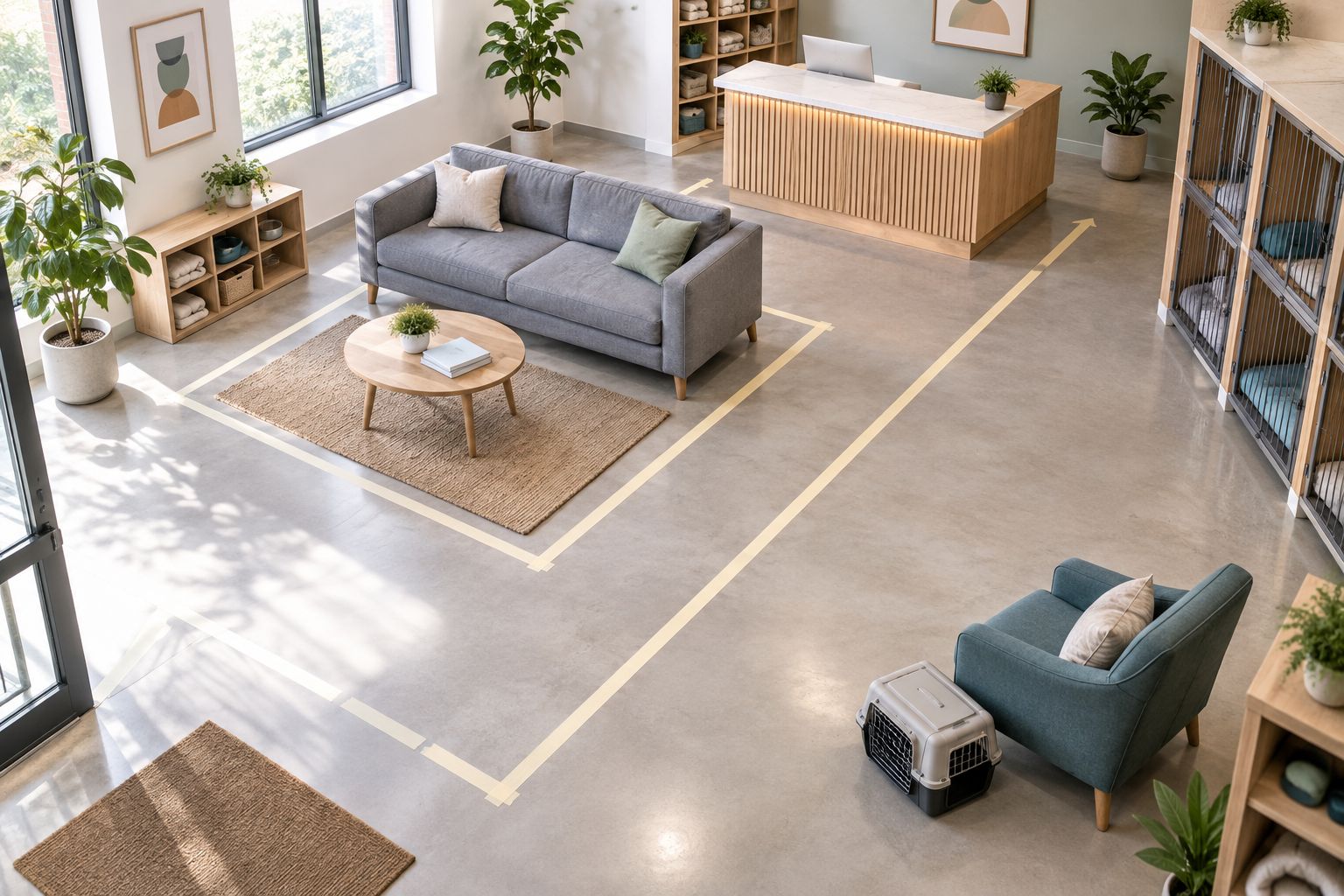
- Mark the complete footprint, including arms and projections.
- Test entrance routes with the equipment you normally move.
- Check doors and storage access in their open positions.
- Preserve staff sightlines across supervised animal areas.
- Measure cleaning access beside and behind the sofa.
Match upholstery to your cleaning protocol
Write down the cleaning method your staff can perform before comparing fabric descriptions. A manual assessment starts with the care label, the removable components, and the cleaning products your facility uses. Ask the supplier for written guidance where those requirements intersect.
Machine-washable upholstery offers a way to remove covers for laundering. It does not mean that every component is washable, that liquids cannot reach the interior, or that laundering meets every infection-control requirement. Check each of those points separately.
Sofatica’s machine-washable modular sofas offer a removable-upholstery route for suitable lounge settings. Treat washability as a maintenance feature, not a sanitation certification. For animal-contact seating, your veterinary or infection-control adviser should define the acceptable process before you approve a material.
- Read washing and drying instructions for each removable component.
- Confirm which cushions, covers, and structural parts need separate care.
- Check compatibility with your approved cleaning products.
- Establish what happens after liquid reaches the cushion interior.
- Keep written care instructions with the cleaning procedure.
Inspect seams, gaps, and cushion access
Inspect a sample or detailed photographs before choosing upholstery for a pet-accessible room. Look beyond color. Seams, cushion joins, exposed fasteners, and spaces beneath furniture affect where hair and debris collect and what staff can reach during cleaning.
Removable cushions can improve access, but they also create another handling task. Check how staff remove and refit them, where components go during cleaning, and whether the arrangement remains secure during normal use. Do not assume that modular construction establishes connector strength or commercial-use suitability.
Ask for a fabric sample if one is offered, then use the supplier-approved care method to assess handling and appearance. A sample helps you judge the material; it does not prove resistance to chewing, scratching, or every accident.
- Inspect seam placement and cushion joins.
- Check access beneath and between seating sections.
- Identify exposed parts an animal can reach.
- Test cover removal and refitting where a demonstration is possible.
- Request written answers about commercial use and component replacement.
Build a cleaning and reopening routine
Use a written checklist before adding software or extra equipment. Staff need to know when a sofa closes, where used covers go, and what must happen before seating returns to use. A repeatable handoff matters more than an attractive care label.
For your 2026 operating procedure, separate ordinary cleaning from contamination events. The response to loose hair is not the response to bodily fluids or a suspected infectious illness. Define the latter with your veterinary adviser and the relevant product instructions.
A washable sofa can still be unavailable while components dry or while staff assess internal contamination. Plan an alternative waiting seat instead of assuming every cleaning task finishes between arrivals. Do not reopen seating just because its visible surface looks clean.
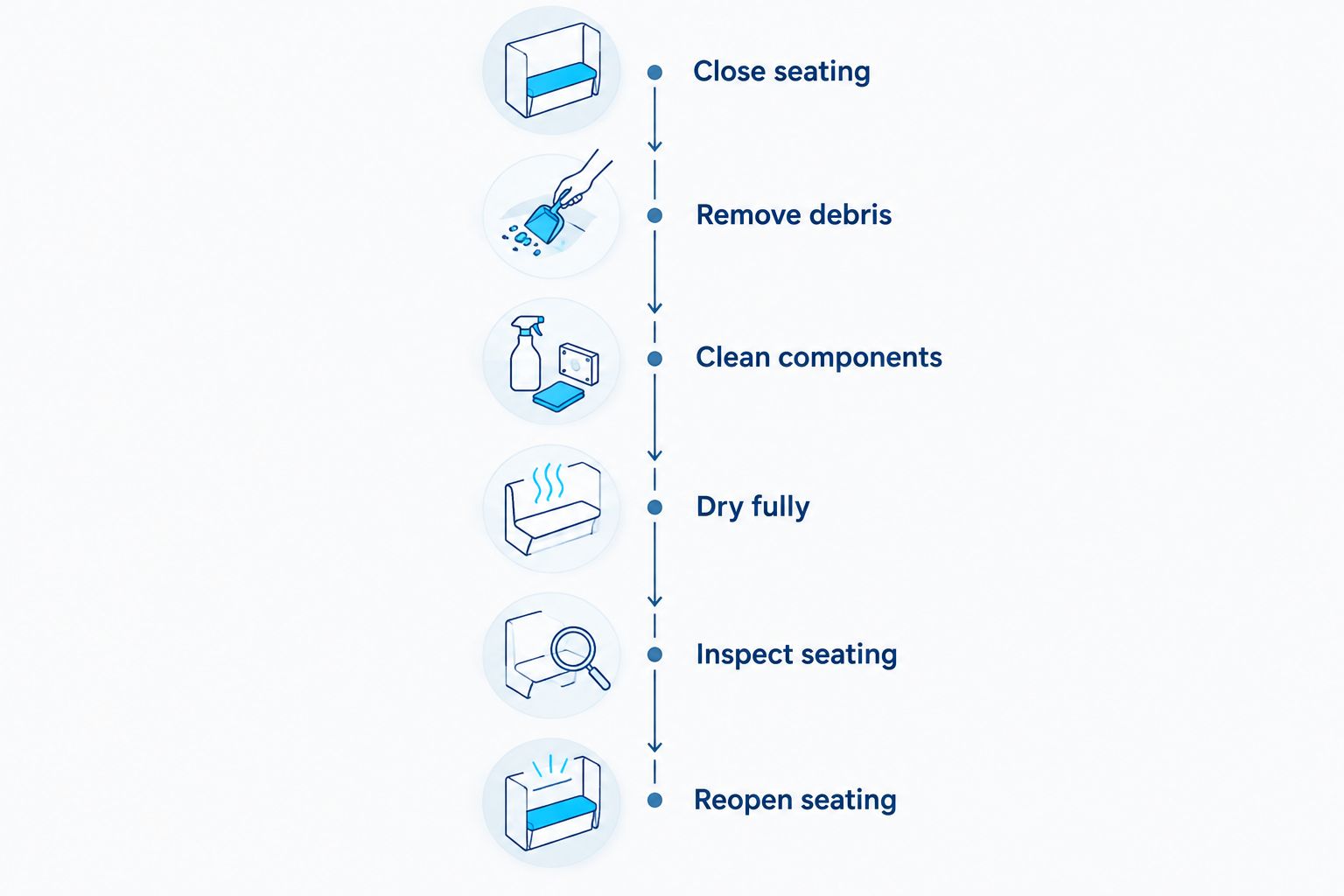
Organize the routine around these phases:
- Close seating: Prevent use while cleaning is underway.
- Remove debris: Follow the approved routine for loose contamination.
- Clean components: Use the correct method for each material.
- Dry fully: Check the applicable care instructions before reassembly.
- Inspect seating: Confirm cleanliness, condition, and correct refitting.
- Reopen seating: Record completion and return the area to use.
Assign seating by behavior and supervision
Choose access rules based on the animals using the room, not on a broad pet-friendly label. Staff should decide whether an individual animal belongs on upholstered seating. Known chewing, scratching, guarding, or toileting concerns need an appropriate management plan rather than a different cushion color.
Arrange furniture so staff can observe interactions and approach without trapping an animal between people and a wall. Do not use a sectional to create an unsupervised enclosure. Seating is furniture, not containment equipment.
For your 2026 room plan, distinguish a calm, supervised lounge from an active play area. Keep seating optional for animals: a sofa should not be the only resting surface available where your care plan requires other accommodation.
- Document which animals can access upholstered seating.
- Provide an approved alternative resting location.
- Keep leads and equipment from creating furniture-side trip hazards.
- Remove damaged seating from animal access.
- Review the layout when the room’s purpose changes.
Check purchasing terms and long-term maintenance
Build a purchasing checklist from your operating requirements. Confirm intended-use restrictions, care requirements, assembly instructions, and the process for obtaining replacement components. Do not treat a residential product description as permission for boarding-facility use.
Modularity can help you consider a different arrangement, but compatibility depends on the specific components. Verify the connection method and approved configurations before assuming sections can be rearranged freely. Also establish where staff will store removed parts without blocking circulation.
For your 2026 purchase, prioritize documented suitability over a broad durability claim. Ask precise questions and keep the answers with the furniture record. If a critical requirement remains unanswered, select another option rather than filling the gap with an assumption.
- Confirm whether the proposed commercial use is permitted.
- Request written component-care instructions.
- Verify the configuration and its complete dimensions.
- Ask how damaged covers or sections are handled.
- Record who owns inspection and maintenance tasks.
Compare seating options by room use
There is no single upholstery choice that solves every boarding-facility requirement. Select the cleaning process first, then choose the seating that supports it. The comparison below separates useful features from the checks each option still requires.
| Option | Best for | Practical advantage | Key limitation |
|---|---|---|---|
| Washable Cloud Couch 2-Seater Modular Loveseat White | Controlled reception lounges needing a smaller seating configuration | Washable modular format with 2-seat capacity | Verify dimensions, component care, and intended-use terms; capacity alone does not establish fit |
| Washable Cloud Couch 3-Seater Modular Beige | Controlled lounges needing a 3-seat configuration | Washable upholstery and modular construction | Confirm the full footprint and cleaning workflow before allowing animal access |
| Wipe-clean seating with documented cleaning-product compatibility | Areas whose protocol requires a specified surface-cleaning process | Supports surface cleaning when the manufacturer approves the method | Seams, joints, damage, and upholstery interiors still need assessment |
| Fixed upholstered sofa | Staff-only rooms with a suitable upholstery-cleaning routine | Provides conventional upholstered seating without cover-refitting tasks | Fixed upholstery cannot be removed for laundering; cleaning needs another approved method |
| Non-upholstered seating | Waiting areas prioritizing accessible surfaces | Removes fabric cushions from the maintenance process | Comfort and surface compatibility still depend on the specific construction |
Neither washable fabric nor a wipe-clean surface is automatically appropriate for isolation or treatment spaces. Those areas require a separate assessment. Likewise, a residential lounge sofa should not be described as commercial-grade without supporting documentation.


Common mistakes boarding operators make
Buying for reception photos rather than daily use
A large sectional can dominate a waiting room even when it looks proportionate in a photograph. Check the marked footprint with carriers, open doors, and staff movement before approving the layout. Buy for the working room, not the empty room.
Treating machine-washable as disinfectant-compatible
Laundering and disinfectant compatibility answer different questions. Confirm the approved method for each component and the facility’s contamination protocol. Do not apply an animal-area chemical to upholstery simply because the product is washable.
Allowing the lounge to become overflow housing
A supervised lounge and an accommodation area need different operating decisions. If animals start spending unsupervised time on the sofa, review containment, behavior, cleaning, and room designation before continuing that use.
Choosing color as the main cleanliness measure
Color changes how some marks appear; it does not establish cleanliness. Inspect upholstery consistently and document accidents even when they leave no obvious stain. Select color after resolving care and access requirements.
Forgetting the sofa during staff handoffs
A cover in the laundry does not tell the next shift whether the cushion interior was affected. Record the incident, the completed care steps, and the reopening decision. Clear ownership prevents an unfinished cleaning task from becoming someone else’s assumption.
Why owners pick Sofatica
Washable Slipcovers
100% Real Goose Down
Module Secure™ Lock
Adjustable Cushion Fill
FAQ
What are the best sofas for pet boarding facilities?
The best sofas for pet boarding facilities match the room’s cleaning protocol and access rules. Consider removable-cover upholstery for controlled lounges and documented cleaning-product-compatible seating where your protocol requires it.
Are Sofatica sofas suitable for a pet boarding reception area?
Sofatica’s machine-washable modular sofas are an option for a controlled reception lounge. Confirm dimensions, component-care instructions, and intended-use terms before purchasing; washability alone does not establish commercial or infection-control suitability.
Is a washable sofa better than wipe-clean seating for boarding facilities?
A washable sofa is not automatically better than wipe-clean seating. Removable covers support laundering, while a compatible wipe-clean surface supports its approved surface-cleaning method; choose according to the room’s protocol.
Can boarding dogs sit on the reception sofa?
Dogs should access reception upholstery only under your facility’s explicit supervision and cleaning policy. Decide access by behavior, health considerations, and room use rather than treating every animal as suitable for shared seating.
Does machine-washable upholstery mean the cushions are waterproof?
Machine-washable upholstery does not establish that cushions are waterproof. Confirm liquid protection and the care process for internal components separately from the cover’s washing instructions.
Should I choose a loveseat or a sectional for a boarding waiting room?
Choose the configuration that fits the measured room without obstructing movement or supervision. A loveseat offers fewer seats than a larger sectional, but published dimensions—not seat count—determine whether either fits.
Can I use a lounge sofa in an isolation room?
Do not select a lounge sofa for an isolation room unless your infection-control protocol explicitly permits it. Have your veterinary adviser define the furniture and cleaning requirements for that room before evaluating products.
One last thing
Make one person responsible for deciding when the sofa reopens. A washable cover is only one part of the job: the cushion, surrounding floor, refitting, and incident record all need attention when your protocol calls for them.
Before you buy, ask that person to walk through a realistic accident response using the proposed care instructions. If the process has an unresolved step, resolve it before the furniture arrives. That exercise tells you more about operational fit than choosing a darker fabric.
Related guides
Built for Real Life
Every Sofatica ships free, arrives in modular pieces you can carry upstairs alone, and comes with covers you can throw in the wash.


