


L-Shaped Living Room: Best Furniture Placement Strategies

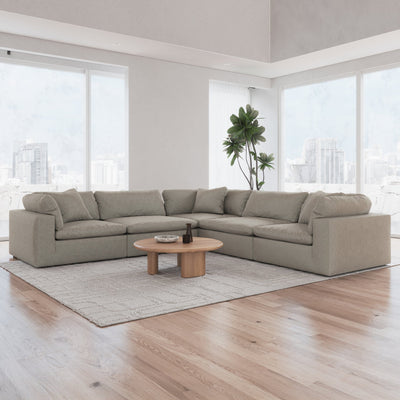

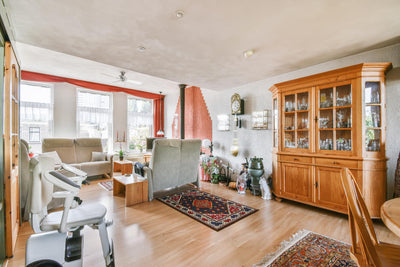
L-shaped living rooms have an advantage most people waste. The L naturally creates two zones: the main seating area and a smaller adjacent nook. Used correctly, the L-shape delivers more function per square foot than a rectangular room of the same size. Used poorly, the smaller leg becomes a dead zone where furniture goes to die.
This guide covers the 5 best furniture placement strategies for L-shaped rooms, plus how to handle awkward corners and transition points.
Why the L-Shape Works in Your Favor
- Built-in zoning: the L naturally creates two distinct areas
- Multi-function: main seating plus a secondary function (dining, reading, office) fit without wall-building
- Privacy with openness: the corner can provide visual separation without a full wall
- Scales better than rectangles: a single rectangular room of equal square footage often feels more cramped
Anatomy of an L-Shaped Room
Every L-shaped room has:
- Long leg: the main portion where the primary seating goes
- Short leg: the secondary portion that needs a dedicated function
- Inside corner: where the two legs meet; a prime spot for a sectional or accent piece
- Outside corner: an architectural feature; use for built-ins or a large plant
Map your L before placing furniture. Knowing which leg is which simplifies every decision.
Strategy 1: Main Zone and Reading Nook
The long leg holds the main seating: a sofa, coffee table, and TV or fireplace. The short leg becomes a reading nook with a lounge chair, floor lamp, and small table. Each zone has a dedicated function.
This is the simplest and most popular approach. It respects the L-shape rather than fighting it.
Strategy 2: Sectional Wrapping the Inside Corner
An L-sectional placed at the inside corner wraps both legs of the room. The chaise extends into the short leg. Everyone in the room faces inward toward a central coffee table.
This maximizes seating and visually unifies the two legs. Confirm sectional orientation before ordering. See our sectional orientation guide.
Strategy 3: Dining on the Short Leg
The long leg is the living zone. The short leg becomes a dining area with a table for 4 to 6 people. A low-back sofa on the long leg preserves sightlines between the two zones. This is efficient use of square footage and works in open-plan homes.
Use a rug in each zone to define the boundary. A wood floor runs through both zones for visual continuity.
Strategy 4: Home Office on the Short Leg
Post-2020 home offices landed in many L-shaped living rooms. The short leg gets a desk, chair, and bookshelf. The long leg remains the living zone. A bookshelf or console on the inside corner softens the visual transition.
This is ideal for apartment living where dedicated office space is not an option. The L-shape lets you have both.
Strategy 5: Media Zone Plus Conversation Zone
The long leg is a TV-watching zone with a deep sofa facing a mounted TV. The short leg is a conversation zone with two chairs and a small table. The two zones serve different uses and accommodate guests who prefer one over the other.
For media-zone layouts, see our TV above the fireplace guide.
Handling the Transition
The transition from the long leg to the short leg needs visual treatment. Options:
- A narrow console parked at the inside corner, facing into the long leg
- A bookshelf floor-to-ceiling, creating a soft boundary
- A large floor plant marking the transition
- A change in lighting (different pendant in each zone)
- A rug boundary with a different rug in each zone
For rug strategy, see our rug size guide.
Common Mistakes
- Letting the short leg become a catch-all. Assign it a function and commit.
- Forcing a single rug to span both legs. Usually looks awkward; use two.
- Placing furniture that blocks the L-transition. Keep the transition open for flow.
- Ignoring sightlines from the main zone into the short leg. What looks like a mess from the sofa ruins the space.
- Over-furnishing the short leg. Keep it simple; three pieces maximum.
For broader layout principles, see our small living room layout ideas and open-plan zoning guide.
Modular Cloud Couches for L-Shaped Rooms
Sofatica modular cloud couches configure into L-sectionals that wrap the inside corner of L-shaped rooms. Reconfigure as your needs evolve.
Shop Modular Cloud Couches


