

Sofas for community centers and worship spaces: complete 2026 guide

Community-center and worship-space sofa seating is upholstered seating for shared gathering rooms, with the aim of supporting welcoming, practical conversation areas. Choosing sofas for community centers and worship spaces in 2026 means balancing comfort with cleaning, circulation, and the needs of visitors who use the same room differently.
- Choose sofas for community centers and worship spaces by room use, cleaning requirements, and visitor access—not appearance alone.
- Sofatica offers machine-washable modular sofas; confirm institutional-use suitability before selecting one for a shared room.
- Pair relaxed sofa seating with upright seating so visitors can choose how they sit.
- Approve the layout and cleaning plan before committing to a sectional.
The one we would pick

Configuration: 4-Seater Sectional


Why sofas matter for community centers and worship spaces
A sofa serves a different purpose from rows of meeting chairs. It creates a place for conversation before an event, a parent waiting during an activity, or a small group gathering outside the main program. Choose it for that purpose, not as a substitute for every seat in the building.
Shared spaces also need a clear maintenance plan. When staff and volunteers both handle room resets, cleaning instructions must work without specialist knowledge. Sofatica offers machine-washable modular sofas, a feature to consider alongside the room's access requirements and purchasing rules.
For your 2026 purchasing plan, define the room's job before choosing the sofa's shape. A welcoming lobby, a supervised youth room, and a private conversation room need different seating arrangements. The same sectional does not automatically suit all three.
The buying decision should answer practical questions: Who sits here? Who cleans it? Who moves it? What happens when part of the seating needs attention? Those answers give your committee useful criteria instead of competing opinions about color.
How to choose seating that works between events
Define the room's main use
Start with a simple observation sheet. Watch how visitors use the room during ordinary activities and during a busy event, then write down what the seating must support. Separate essential uses from occasional ones.
A foyer sofa supports short conversations and waiting. A small-group room needs seating that lets people face one another. A room used for confidential conversations needs a location away from through-traffic; upholstery alone does not create privacy.
Best for multipurpose rooms: choose the layout around the most frequent activity, then test the alternatives. Do not let an occasional gathering dictate furniture that gets in the way during everyday use.
- Record whether visitors wait, converse, read, or attend organized activities.
- Identify who uses the room, including children and visitors with mobility needs.
- Mark areas that must remain available for activities rather than furniture.
- Assign one person to approve the final room-use brief.
Measure the room and test visitor routes
Use a tape measure and mark the proposed sofa footprint on the floor with removable tape. Include the furniture's full depth, not just the cushions. Walk the room with the arrangement marked before placing an order.
Check the delivery route separately. Doorways, turns, stairs, and elevators can limit what reaches the room, even when the final footprint fits. For a modular sofa, request the dimensions of each delivered component rather than assuming every piece passes through.
For a 2026 layout review, check the applicable accessibility, building, and fire requirements with the responsible facilities professional. A furniture plan does not establish code compliance. Keep seating out of required routes and confirm the rules that apply to your building and use.
- Mark the sofa footprint and surrounding walking routes.
- Check door swings, storage access, and nearby room entrances.
- Leave places where wheelchair users can join conversations without blocking circulation.
- Measure the delivery route and compare it with component dimensions.
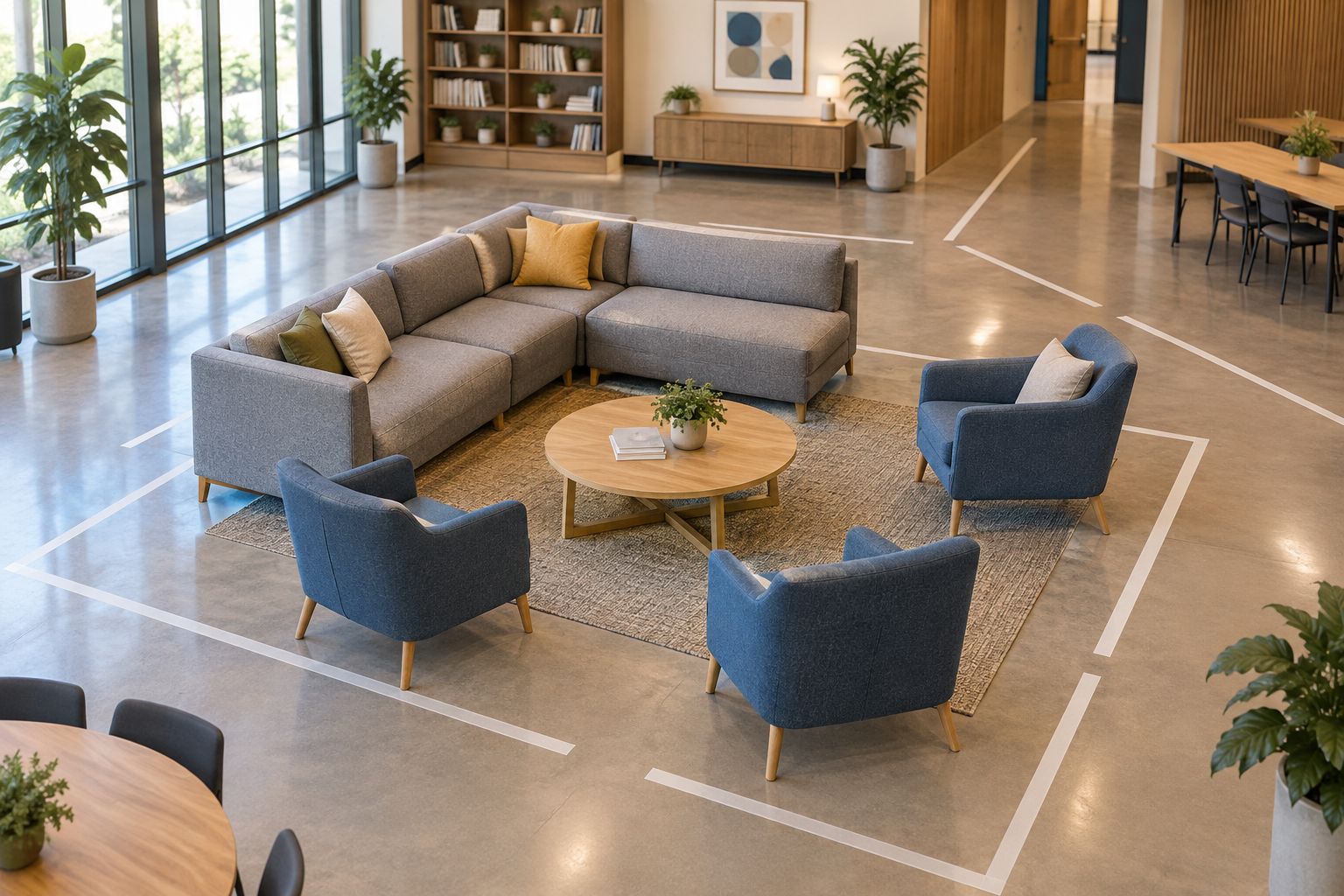
Choose the seating format before the fabric
Sketch the room using your existing furniture first. Move chairs into the proposed arrangement and ask visitors to try it. This manual test exposes awkward conversation distances and blocked routes without requiring new furniture.
Then compare fixed seating with modular seating. Sofatica is best for buyers prioritizing machine-washable modular sofas over fixed-layout seating. That feature makes the brand relevant to your shortlist; it does not establish commercial-use approval, cleaning turnaround, or suitability for every visitor.
A listed 2-seater loveseat, 3-seater sofa, and 4-seater sectional provide different starting points. Those labels describe advertised seating formats, not dimensions or a promise that every visitor will sit comfortably. Check the actual measurements and how people sit before deciding.
- Use existing chairs to test the conversation arrangement.
- Compare a straight sofa, corner arrangement, and separate seating pieces.
- Check module connections and movement instructions before planning frequent resets.
- Confirm whether the intended institutional use is covered by the seller's terms.
Build a cleaning plan around the actual care instructions
Start with the manufacturer's care label and write a plain-language cleaning checklist. Identify what staff can clean in place and what must be removed. Assign responsibility before the sofa enters service.
Machine-washable does not mean every part of a sofa goes into a washing machine. Confirm which components are washable, the required washing method, and how they must dry. Check that your laundry equipment can handle the relevant pieces without disregarding the instructions.
Best for volunteer-managed rooms: select seating whose care process your team can actually complete. Removable covers help only when someone knows how to remove, wash, dry, and refit them. Make the downtime part of your 2026 room schedule rather than treating cleaning as an invisible task.
- Keep the current care instructions with the facilities checklist.
- Confirm washable components, detergent restrictions, and drying requirements.
- Decide who handles spills and who performs scheduled cleaning.
- Plan where visitors will sit while affected components are out of service.
Test comfort with different visitors
Invite people who represent the room's users to test the seating. Ask them to sit, stand, and hold a short conversation—not simply judge softness by pressing a cushion. Record what they find easy or difficult.
A relaxed sofa is not the right seat for everyone. Visitors who prefer an upright posture or need dependable arm support should have another seating choice. Avoid claiming that any sofa provides medical benefits or universal accessibility.
Pair the sofa with appropriate upright chairs rather than filling the whole room with one seating type. That gives visitors a choice without requiring them to explain a personal need. Ask your facilities or accessibility adviser to review the arrangement where necessary.
- Test sitting down and standing up, not just cushion feel.
- Include visitors with different heights and mobility needs.
- Provide upright seating with arm support as an alternative.
- Check whether conversation partners can face one another comfortably.
Verify purchasing requirements before approval
Create a short written specification, then request documentation for the actual furniture under consideration. Your 2026 approval should identify the exact configuration, upholstery, intended room, and care requirements. General product descriptions are not a substitute for the documents your organization requires.
Ask the responsible purchasing or facilities team which fire-performance requirements, insurance conditions, and institutional-use terms apply. Do not assume residential furniture is accepted simply because it is sold online or described as durable.
Best for committee purchases: approve against a written specification, not a photograph. Record unanswered questions and resolve them before authorization. Keep the seller's replies with the order documents so a future facilities lead can understand the decision.
- Confirm the intended use with the seller in writing.
- Request documentation required by your facilities and purchasing teams.
- Review care requirements and applicable warranty terms for the intended setting.
- Record the approved configuration and who authorized it.
Assign ownership for resets and maintenance
Write a room-reset checklist using the approved floor plan. A photograph of the correct arrangement can help volunteers restore the room without guessing. Keep the checklist where the people resetting the space can find it.
For modular seating, confirm how connections work and how pieces should be moved. Do not assume modules can be dragged or rearranged by one person. Follow the handling instructions and identify who is responsible for checking the arrangement after a reset.
Use the first scheduled review to compare the purchase with actual use. Look for blocked routes, difficult cleaning tasks, and seats visitors avoid. In your 2026 facilities records, document changes to the layout rather than allowing an approved arrangement to drift unnoticed.
- Name a person responsible for the seating and its care records.
- Keep a reference photograph of the approved arrangement.
- Check connections and walking routes after furniture moves.
- Record damage, cleaning issues, and changes in room use.
Compare seating options for shared spaces
The best option depends on the room's purpose. Use this comparison to narrow the format, then check the actual furniture's dimensions, documentation, and care instructions. None of these formats establishes institutional suitability by itself.
| Option | Best for | Main advantage | Key limitation |
|---|---|---|---|
| Sofatica Washable Cloud Couch 3-Seater Modular Beige | Buyers seeking a washable modular sofa for a conversation area | Combines the stated washable and modular format | Confirm dimensions, applicable use terms, and required documentation before purchase |
| Fixed-layout upholstered sofa | Rooms where the seating arrangement stays consistent | Offers a defined footprint without a module arrangement to manage | The fixed shape limits layout changes; cleaning depends on the actual upholstery |
| Upright armchairs | Visitors who prefer separate seats and arm support | Gives each visitor an individual seating position | Several chairs introduce more separate pieces to position and maintain |
| Existing seating in a revised layout | Teams testing the room before buying | Lets you assess conversation and circulation with furniture already on hand | Rearrangement does not resolve unsuitable seat comfort or existing damage |
Choose the format first, then compare individual products. A modular sofa's flexibility is useful only if the room needs it and the team can manage it. A fixed sofa's simpler layout is useful only if that shape fits the room's recurring activities.


Common mistakes community centers and worship spaces make
Treating a welcoming appearance as proof of suitability
A sofa can look right in a foyer and still fail your purchasing requirements. Review use terms, care instructions, and required documentation before approving the appearance. Keep the decision grounded in the actual room.
Filling the entire room with relaxed seating
Matching sofas create a consistent appearance but remove seating choice. Include upright alternatives for visitors who do not want a deep or relaxed seat. Comfort should be an option, not an expectation imposed on everyone.
Planning laundry without planning downtime
Washable components still need removal, cleaning, drying, and refitting according to their instructions. Decide how the room operates during that process. Do not build an event schedule around an assumed turnaround.
Forgetting who restores the layout
A modular arrangement does not reset itself after a youth activity or small-group meeting. Assign responsibility and keep the approved floor plan available. Check routes whenever the furniture moves.
Why owners pick Sofatica
Washable Slipcovers
100% Real Goose Down
Module Secure™ Lock
Adjustable Cushion Fill
FAQ
What's the best sofa for a community center or worship space?
The best sofa fits the room's use, cleaning process, visitor needs, and purchasing requirements. Choose the seating format first, then verify the actual product's dimensions and documentation.
Are modular sofas better than fixed sofas for shared rooms?
Modular sofas are better when the room needs approved layout changes; fixed sofas suit arrangements that stay consistent. Check connections and handling instructions before planning regular moves.
Is Sofatica a good choice for a worship-space lounge?
Sofatica belongs on the shortlist when machine-washable modular seating is a priority. Confirm the specific configuration's dimensions, care instructions, intended-use terms, and required documentation before approval.
Can a machine-washable sofa handle every kind of spill?
Machine-washable does not mean every component or stain can be treated the same way. Follow the manufacturer's instructions for the affected material and confirm which components are washable.
Should we choose a loveseat or a sectional for a church foyer?
Choose a loveseat or sectional by testing its actual footprint against the foyer's circulation and conversation needs. A larger advertised seating format is not automatically a better fit.
How do we make sofa seating accessible to more visitors?
Provide seating choices, preserve required routes, and include space for wheelchair users within conversation groups. Have the applicable requirements and proposed arrangement reviewed by the responsible facilities or accessibility professional.
What should a committee check before ordering shared-space furniture?
The committee should check the room brief, dimensions, delivery route, care instructions, and intended-use documentation. Record the approved configuration and resolve unanswered requirements before authorizing the purchase.
One last thing
Ask the person who will clean the sofa to review it before the committee approves it. Give that person the actual care instructions, not a summary of the selling points. A cleaning process that does not fit your team's equipment or schedule is a reason to reconsider the furniture, even when everyone likes its appearance.
Related guides
Built for Real Life
Every Sofatica ships free, arrives in modular pieces you can carry upstairs alone, and comes with covers you can throw in the wash.


