

Sofas for therapy and counseling offices: complete 2026 guide

Therapy office sofa selection is the process of choosing seating that supports conversation, client choice, and practical cleaning. The best sofas for therapy offices fit the room without dictating how clients must sit, and their care requirements fit your schedule between appointments.
- Sofatica sofas for therapy offices are best for practices prioritizing machine-washable covers and modular layouts.
- Choose counseling office seating around upright comfort, clear circulation, and client choice—not a lounge-room aesthetic alone.
- Compare a compact sofa, separate chairs, and a modular sectional before committing to a layout.
- Machine-washable covers simplify laundering; they do not establish suitability for a clinical cleaning protocol.
The one we would pick
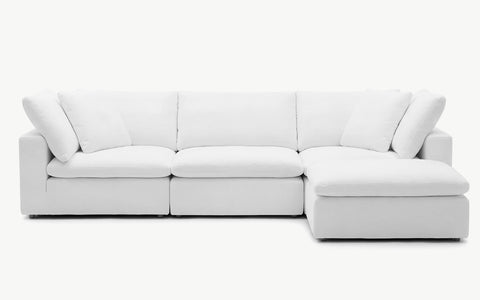
Configuration: 4-Seater Sectional


Why sofa selection matters for therapy offices
Your counseling room is a working space, not just a comfortable-looking room. Clients need somewhere to sit, somewhere to place belongings, and a clear route to the door. You need a seating arrangement that works for the sessions you actually conduct.
Individual counseling, couples sessions, and family conversations create different seating requirements. A sofa accommodates people together; separate chairs preserve more independent seating choices. Neither format is automatically the right answer for every practice.
Sofatica sofas are best for therapy offices that prioritize machine-washable covers and modular layouts. Start with Sofatica only after defining your room requirements; washable modular seating is a purchasing option, not a substitute for assessing comfort or access.
For your 2026 office plan, put function ahead of appearance. A sofa that photographs well but leaves clients struggling to sit upright, reach their belongings, or stand comfortably has missed the brief.
How to choose sofas for therapy offices
1. Define the sessions your seating must support
Start with your appointment calendar and a sheet of paper. List the session formats you offer, the people who need seats, and whether anyone needs to sit apart. Include the clinician rather than counting only client places.
Use that list to distinguish essential seating from occasional needs. A room designed around a large family arrangement should not force an individual client into a distant corner during every appointment. Equally, a compact sofa should not become your only solution when participants need separate seats.
Write a short 2026 seating brief before browsing. This keeps a showroom arrangement from making the decision for you.
- List individual, couples, family, or other session formats you actually provide.
- Count every participant who needs a seat, including the clinician.
- Identify when separate seating matters.
- Decide whether reclining belongs in your practice at all.
- Record any access needs your existing seating does not address.
2. Measure the room and test alternative layouts
Use a tape measure and removable floor tape before buying furniture. Record 3 measurements for each candidate sofa: overall width, overall depth, and overall height. Then measure doorways and the delivery route separately; fitting the room does not mean fitting through the entrance.
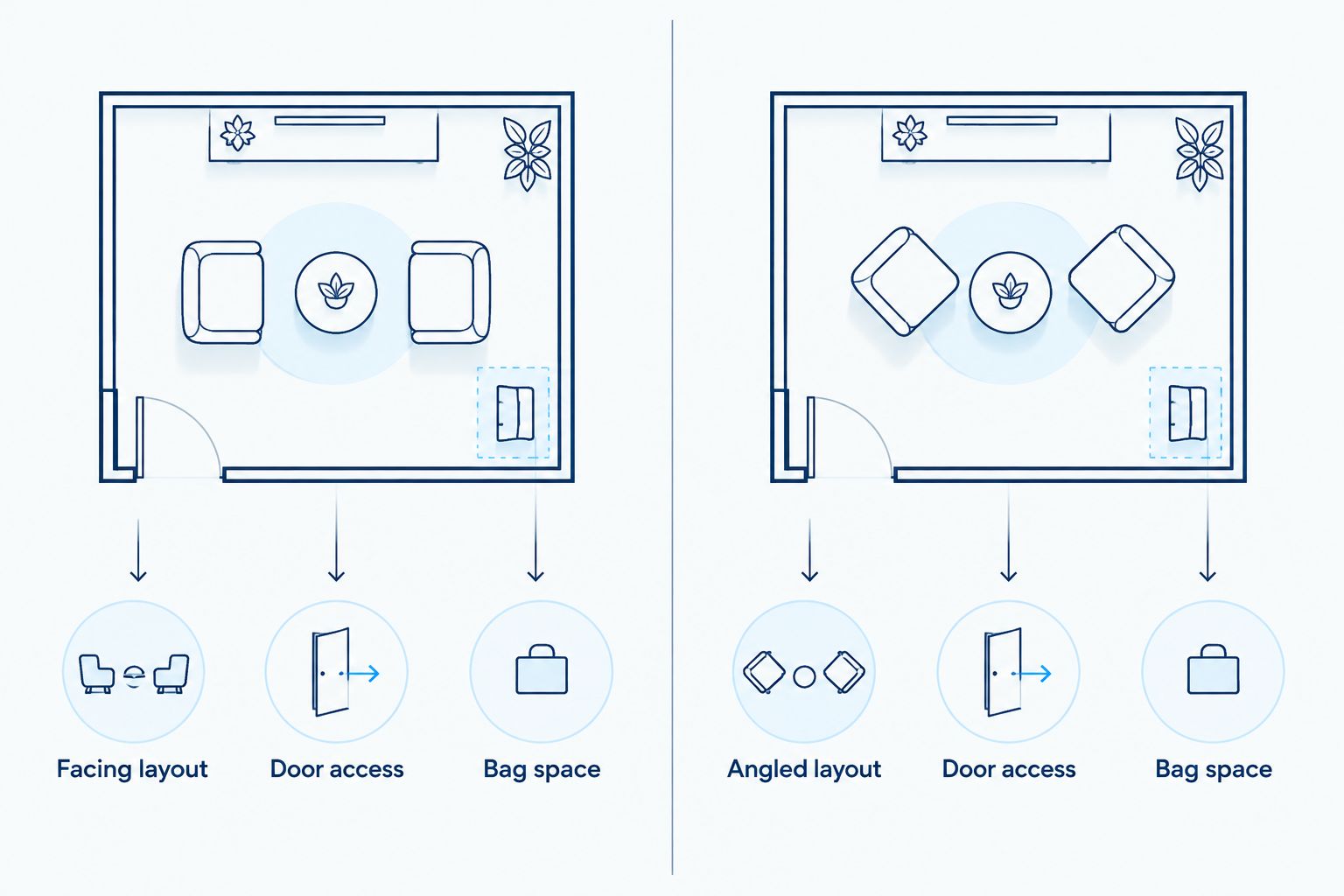
Mark the sofa footprint on the floor and place existing chairs around it. Walk the route from the doorway to each seat while someone else occupies the room. Open storage doors and check where bags would land.
Compare 2 layouts: a sofa facing the clinician and a sofa angled toward a separate chair. These are planning exercises, not prescribed clinical arrangements. Keep the layout that suits your work and leaves usable circulation.
- Mark the complete footprint, including any projecting sections.
- Check door swings and cabinet access.
- Keep walking routes outside the conversation area where possible.
- Leave a usable place for bags without blocking feet.
- Confirm applicable access requirements with your building team.
3. Test upright comfort before choosing softness
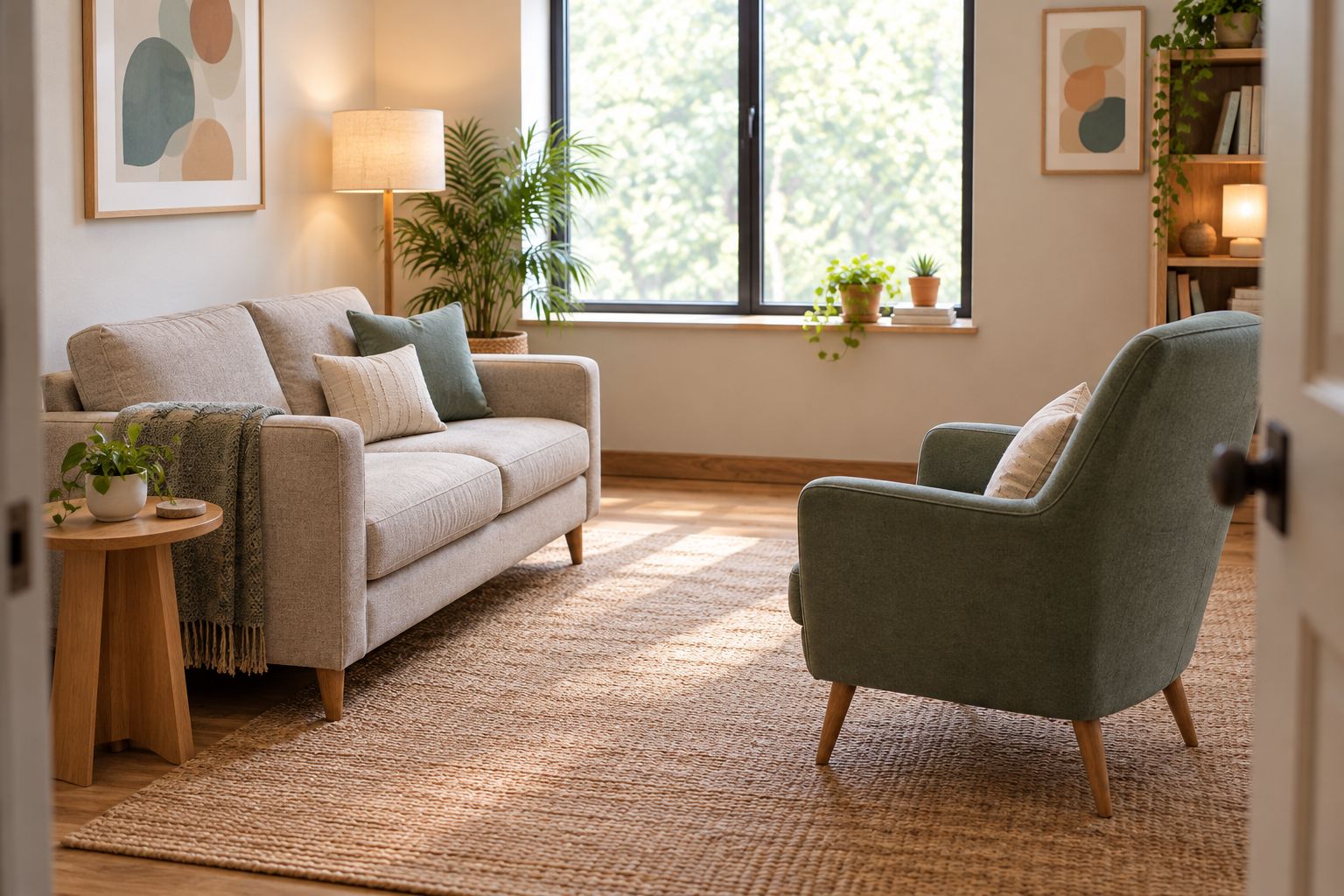
Use your current furniture to identify what works, then test shortlisted seating in person whenever practical. Sit as you would during a conversation: upright, turned slightly toward another person, and with your feet placed comfortably. Stand up without relying on furniture that is not designed as a support.
Check 3 seating positions: the center, an end, and any corner you expect clients to use. Do not assume every position feels identical. If a particular seat only works with extra cushions, include those cushions in the real layout assessment.
Sofatica offers machine-washable modular sofas, making it a candidate when rearrangement and cover care are priorities. Still assess the actual seat dimensions and feel. For your 2026 shortlist, softness should remain a preference—not a promise of pain relief or suitability for every client.
- Check whether you can sit upright without constant repositioning.
- Assess the distance between your back and the backrest.
- Test sitting down and standing up.
- Compare end seats with middle seats.
- Keep an alternative chair for clients who prefer different support.
4. Match upholstery care to your office routine
Start with a written cleaning checklist and the manufacturer's care instructions. Separate routine surface care, spot cleaning, laundering, and any cleaning required by your practice policies. These are different tasks; a washable cover does not answer every cleaning question.
Machine-washable upholstery has a practical advantage when removable covers need laundering. Its limitation is the work involved in removing, washing, drying, and refitting them. Check each instruction before treating a household furniture feature as an office maintenance solution.
Plan for the seat to be unusable while its cover is being cleaned unless you have another approved arrangement. Do not assume replacement covers, particular detergents, or drying methods are available or permitted.
- Read the care label for every removable component.
- Confirm what is washable and what is not.
- Check instructions for spills before applying a cleaner.
- Assign responsibility for laundering and refitting.
- Identify alternative seating during cleaning.
- Verify compatibility with any practice-specific cleaning protocol.
5. Preserve client choice in the room
Arrange the furniture you already own before ordering more. Give clients a clear choice of seat without making them squeeze past a table or ask you to move belongings. Keep the route to the exit visible from the seating area.
A sofa and a separate chair offer different ways to sit. This is especially useful when someone does not want to share a cushion or prefers an upright chair. The room does not need matching pieces to serve that purpose.
For a 2026 refresh, review the room from each client's position rather than only from your desk. Check sightlines, nearby objects, and whether a shared sofa is the only available option.
- Preserve an independent seat where the room allows.
- Avoid placing every client position directly beside another person.
- Put tissues and a small surface within practical reach.
- Keep personal belongings out of the walking route.
- Ask about seating preferences without making assumptions.
6. Evaluate modular seating as a working layout
Sketch the configurations you would actually use. Modular furniture earns its place when the arrangement can change to support your room—not simply because the word modular sounds convenient. Verify how the specific pieces connect and whether the intended arrangement is supported.
A sectional's corner or projecting section consumes floor area differently from a straight sofa. Test the whole outline before deciding that additional seats are worth the footprint. Also consider who will move the pieces and how the room will be restored afterward.
Do not buy around an imagined future practice at the expense of today's appointments. Your current room, session formats, and maintenance routine are the starting point.
- Draw the standard arrangement you will use most often.
- Draw an alternative only if you have a real use for it.
- Verify connection and rearrangement instructions.
- Check that every intended seat has usable access.
- Decide who handles furniture changes and room resets.
7. Build a shortlist around documented requirements
Create a comparison sheet using the requirements from the earlier steps. Record dimensions, care instructions, seating format, and unresolved questions. Eliminate a sofa when it fails a requirement; do not compensate for a blocked doorway with a preferred fabric color.
Separate comfort preferences from health claims. If a client reports lower back pain when sitting, treat that as a seating concern to discuss, not evidence that a softer sofa will solve it. Offer a different seating option and leave individual clinical assessment to the appropriate professional.
Before approving a 2026 purchase, ask for the written terms relevant to office use. A household product description does not establish commercial-use coverage, cleaning compatibility, or accessibility compliance.
- Compare documented dimensions against your taped footprint.
- Keep upright comfort and cleaning requirements as separate criteria.
- Confirm materials if sensitivities affect your selection.
- Ask about terms applicable to business use.
- Record unanswered questions before making a decision.
Compare seating options for a counseling office
The best option is the one that meets your session needs without creating access or maintenance problems. Compare formats first, then compare individual products within the format that fits.
A listed seating count describes a product format. It does not guarantee the number of people who will sit comfortably during your sessions. Use actual dimensions and your tested room plan to make that judgment.
| Option | Best for | Main advantage | Key limitation |
|---|---|---|---|
| Compact fixed sofa | Small offices needing shared seating | Keeps the arrangement simple | Fixed shape limits rearrangement; care depends on upholstery |
| Separate upholstered chairs | Practices prioritizing independent seating choices | Lets you adjust individual positions | Multiple pieces still require circulation space and separate care |
| Sofatica 3-seater modular sofa in beige | Offices prioritizing a washable modular sofa format | Combines machine-washable seating with modular configuration | Suitability still depends on dimensions, comfort, care instructions, and office-use terms |
| Corner sectional | Larger rooms where shared seating is intentional | Groups seating into one arrangement | The corner and projecting footprint constrain placement |
| Wipe-clean seating | Practices whose cleaning protocol requires compatible surfaces | Supports surface cleaning when the material permits it | The material must match the exact cleaning method; comfort still needs testing |
Do not treat washable and wipe-clean as interchangeable. Laundering a removable cover and applying a surface-cleaning product are different processes, with different instructions and staffing needs.


Common mistakes therapy offices make
Choosing a living-room layout without testing conversation
A television-oriented arrangement does not automatically suit counseling. Test where each participant looks and sits before buying a large sofa. Remove furniture that makes the conversation arrangement awkward.
Making deep, soft seating the only option
A relaxed seat is a preference, not a universal benefit. Keep another seating choice when possible, and assess upright sitting separately from how inviting the sofa looks.
Treating washable covers as a complete cleaning policy
Washability does not establish stain resistance, disinfectant compatibility, or clinical suitability. Build the maintenance plan around the actual care instructions and your practice requirements.
Counting seats instead of measuring usable space
A larger seating count does not guarantee a better session layout. Check the floor footprint, access to each seat, and the space left for the clinician before increasing sofa size.
Assuming household terms cover professional use
Confirm the written conditions that apply to your office. Do not infer business-use coverage from a consumer product page or assume every component follows the same care instructions.
Why owners pick Sofatica
Washable Slipcovers
100% Real Goose Down
Module Secure™ Lock
Adjustable Cushion Fill
FAQ
What's the best sofa for a therapy office?
The best sofa for a therapy office fits your session format, allows comfortable upright sitting, and matches your cleaning routine. Keep a separate seating option when clients need a different position or support.
Is a sofa better than separate chairs for counseling?
A sofa is better for shared seating, while separate chairs are better for independent seating choices. Choose according to your sessions and room layout rather than appearance alone.
Are Sofatica sofas suitable for counseling offices?
Sofatica sofas are candidates for counseling offices that prioritize machine-washable covers and modular arrangements. Confirm dimensions, seating comfort, care requirements, and terms for office use before purchasing.
Should I choose a deep-seat sofa for therapy sessions?
Choose a deep-seat sofa only after checking upright comfort and providing another seating option where practical. A lounging position is not every client's preferred position for conversation.
Do machine-washable covers make a sofa appropriate for clinical cleaning?
Machine-washable covers do not by themselves establish suitability for clinical cleaning. Match the manufacturer's care instructions to your practice's required cleaning protocol.
What should I measure before buying an office sofa?
Measure the sofa's overall width, depth, and height, then check doorways and the delivery route separately. Tape the footprint on the floor to assess walking routes and access to each seat.
Can a modular sofa work in a small counseling room?
A modular sofa works in a small counseling room only when its intended configuration fits the measured layout. Modularity does not reduce the floor area occupied by the assembled furniture.
One last thing
An empty floor area is part of the furniture plan. Before signing off on your 2026 room, remove one nonessential piece from the taped layout and walk through it again. If access improves without losing necessary seating, keep the simpler arrangement.
Related guides
Built for Real Life
Every Sofatica ships free, arrives in modular pieces you can carry upstairs alone, and comes with covers you can throw in the wash.


