

Cloud sectional sofas for coworking spaces: complete 2026 guide

Coworking-space cloud sectional seating is cushioned lounge seating with the aim of giving members a comfortable place to pause, talk, and meet informally. This 2026 guide explains how to choose cloud sectional sofas for coworking spaces where circulation, shared use, and cleaning matter as much as comfort.
- Sofatica washable modular sofas suit coworking lounges that prioritize washable upholstery and flexible layouts.
- Choose cloud sectional sofas for coworking spaces around circulation, cleaning access, and informal meetings—not desk work.
- Compare sectional layouts by measured footprints, not advertised seat counts.
- Confirm commercial-use terms and applicable requirements before purchasing shared-space seating.
The one we would pick
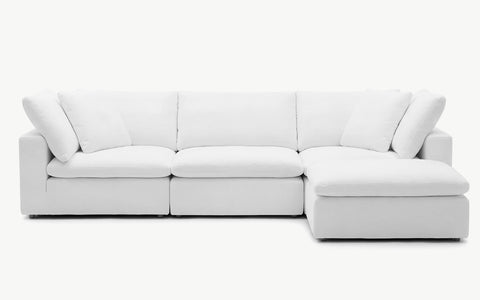
Configuration: 4-Seater Sectional


Why cloud sectional seating matters for coworking spaces
A coworking lounge serves different people throughout the day. A member taking a break, a visitor waiting for a tour, and colleagues having an informal discussion need somewhere to sit without occupying a workstation.
Give the sectional a defined job before choosing its shape. Comfortable lounge seating does not replace an adjustable work chair, and adding seats does not solve noise or circulation problems.
The same planning distinction applies to cloud couches for corporate breakrooms: shared seating needs an operating plan, not just a furniture order. For your 2026 coworking layout, decide who uses the lounge, what happens there, and who restores it between uses.
Your priorities are practical:
- Keep movement between reception, desks, and meeting rooms clear.
- Provide informal seating without presenting it as an ergonomic workstation.
- Make cleaning responsibilities explicit.
- Check access and commercial-use requirements before committing.
How to choose and operate your coworking sectional
Define the lounge's main purpose
Start with observation rather than a shopping list. Walk through the space during its normal operating day and note where people wait, gather, eat, and take calls. Ask your community team which activities need a better setting.
Choose one primary purpose for the sectional. A reception lounge needs a clear relationship to the entrance; a social lounge needs separation from quiet desks. Trying to make the same corner serve every activity creates conflicting expectations.
For your 2026 furniture brief, write the intended use in one sentence. That sentence becomes the test for every layout and material decision. If the lounge is for conversation, do not judge it by how many laptops fit across the cushions.
Best for informal meetings and breaks: a sectional positioned as lounge seating, with suitable workstations elsewhere.
- Identify the primary activity: waiting, conversation, or relaxation.
- Note nearby quiet desks and enclosed meeting rooms.
- Decide whether food and drinks belong in the lounge.
- Define the behavior the community team will encourage.
Measure the room and delivery route
Use a tape measure and a simple floor sketch before opening product pages. Record the usable room dimensions, the planned furniture footprint, and the delivery route. Include doors, turns, elevators, and any other access constraints.
Mark the proposed sofa outline with removable tape. Then walk the routes members actually use while someone occupies the marked seating area. A layout that works in an empty room still needs to work when people stand up, carry bags, or pull nearby chairs outward.
Best for shared circulation: the smallest arrangement that supports the lounge's purpose without consuming its access routes. Confirm applicable accessibility and egress requirements with the person responsible for your premises; do not substitute a furniture diagram for that review.

Include the occupied lounge in your measurements, not just the sofa. Tables, belongings, and movable chairs all affect how the arrangement functions.
- Measure the usable floor area.
- Measure delivery doors and tight turns.
- Mark the sectional and table footprints.
- Check the route with nearby furniture in use.
- Record required clearances in the purchasing brief.
Match the configuration to the activity
Sketch alternative layouts on paper before choosing modules. A straight arrangement supports a lounge along a wall; a corner arrangement defines a gathering area. A U-shaped arrangement creates seating around a center but needs careful planning around its opening and surrounding routes.
Sofatica sells machine-washable modular sofas. The washable 4-seater modular sectional in beige is one configuration to assess against your measured plan—not a substitute for measuring it.
Compare 4-seat and 5-seat configurations by their actual dimensions and intended use. Seat-count labels alone do not establish how comfortably your members will sit with coats, bags, or laptops nearby.
Best for a wall-side lounge: a straight configuration. Best for a defined conversation corner: a corner configuration, provided access remains clear. Modular construction gives you a configuration choice, but you still need to verify how the selected pieces connect and which arrangements the manufacturer supports.
- Draw straight, corner, and U-shaped alternatives.
- Match each alternative to the primary lounge activity.
- Compare overall footprints rather than seat labels.
- Verify module connections and permitted arrangements.
- Keep the chosen opening away from busy routes.
Test comfort for the people using it
Use existing seating to understand what your members need before replacing it. Ask people to sit, stand, and reach a nearby table. Record specific difficulties rather than collecting only a general comfort rating.
Soft lounge seating and upright task seating serve different purposes. A member who enjoys reclining during a break still needs a suitable setup for sustained keyboard work. Include people with different mobility needs when assessing the lounge, and retain alternative seating rather than asking everyone to use the sectional.
For a 2026 purchase, assess Sofatica's washable modular sofas against the same checklist as every other option. Machine washability addresses a maintenance task; it does not establish seat firmness, accessible usability, or suitability for long work sessions.
Best for mixed member needs: a lounge with a sectional and alternative upright seating. Choose furniture around actual use rather than treating softness as a universal benefit.
- Check how easily users sit down and stand up.
- Assess whether the table requires awkward reaching.
- Keep an upright seating alternative nearby.
- Separate lounge comfort from workstation requirements.
- Request exact dimensions before making the final selection.
Verify the purchasing and module details
Create a purchasing checklist before discussing the order. Ask the seller to identify the exact configuration, included components, care instructions, and terms that apply to your intended commercial use. Keep the answers with the purchase record.
A modular label does not establish compatibility between every piece in a catalog. Match the collection, connector details, orientation, and dimensions before combining components. Likewise, a washable label does not explain which parts enter the machine or which cleaning settings apply.
Best for a compact satellite lounge: the Cloud Couch 2-Seater Modular Loveseat | Beige. Assess the 2-seat option against the room footprint and member needs. Best for completing a planned sectional end: the Cloud Couch Left Armrest Modular Seater | Beige, after confirming that it matches the intended configuration.
These are different purchasing roles. A loveseat is a seating arrangement to evaluate; an armrest module requires a compatible plan.
- Confirm the exact components included in the order.
- Verify module compatibility and left/right orientation.
- Request the applicable commercial-use terms.
- Obtain the full care instructions.
- Check any requirements your premises or insurer imposes.


Assign the cleaning process before installation
Write the cleaning process yourself using the manufacturer's instructions. Identify which components are machine-washable, what equipment they require, and how staff will handle drying and refitting. Do not assume every cushion component follows the same procedure.
Best for an operator with a defined laundry process: washable upholstery. Its practical limitation is the work required to remove, clean, dry, and refit the washable components. Choose the seating only after deciding who performs those tasks and where they happen.
Plan the complete cycle: Clean, Dry, Refit, Reopen. Keep the affected seating out of use until the care process is complete. A written handoff prevents staff from confusing a cleaned component with one ready to return to service.
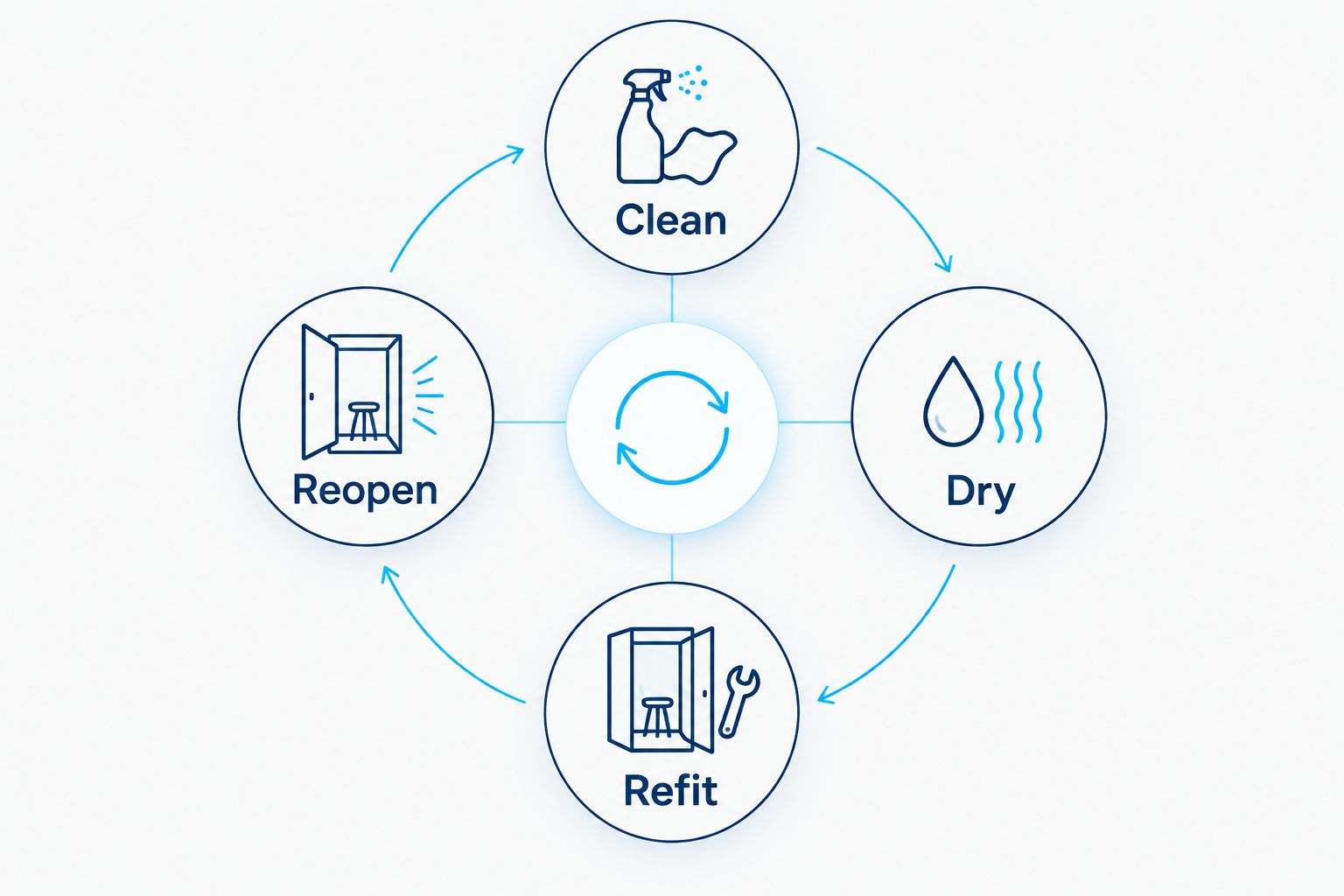
Cleaning ownership matters as much as the fabric specification. Give staff a place to report stains, damaged seams, or a component that no longer fits correctly.
- Clean: follow the component's care instructions.
- Dry: use the specified drying method.
- Refit: return components only when ready.
- Reopen: inspect the seating before use.
- Record issues that need repair or seller guidance.
Review the lounge after members use it
Keep a simple observation log once the lounge opens. Record what people do there, whether they move furniture, and where belongings accumulate. Ask staff what makes resetting the area difficult.
Review behavior against the original brief. A conversation lounge beside quiet desks needs a placement or behavior change if discussions disrupt nearby work. A sectional that becomes overflow laptop seating needs suitable workstations elsewhere, not simply another cushion.
Best for a changing coworking layout: modular seating with verified rearrangement options and a documented floor plan. Test any revised arrangement against access requirements before leaving it in place.
For your 2026 operating plan, make layout review part of furniture management. Keep the approved arrangement available to staff so a casual rearrangement does not become the new default without a check.
- Observe how members actually use the lounge.
- Record blocked routes and misplaced belongings.
- Ask staff about cleaning and reset difficulties.
- Review changes against the original purpose.
- Recheck circulation after any rearrangement.
Compare seating options for your coworking lounge
Choose the option whose daily workload fits your team. A sectional creates shared lounge seating, while separate seats give you more individual positions to manage. Neither arrangement replaces proper workstations or a review of access requirements.
| Option | Best for | Practical strength | Key limitation |
|---|---|---|---|
| Sofatica washable modular sofas | Lounges prioritizing washable upholstery and layout choices | Machine-washable modular seating | Requires a defined care process and verification of commercial-use terms |
| Fixed sectional | A lounge with a settled furniture plan | Keeps the seating arrangement consistent | Offers fewer opportunities to change its overall shape |
| Loveseat with separate chairs | Small lounges needing different seating positions | Combines shared seating with individual alternatives | Requires checking several furniture footprints and routes |
| Separate upright lounge chairs | Spaces prioritizing individual seating choices | Lets you select different sitting positions | Does not provide the same shared sectional arrangement |
For a space with frequent layout changes, configuration flexibility deserves close attention. For a compact waiting area, individual access to each seat matters more than creating the largest possible sectional.
Before selecting any option, confirm its actual construction, dimensions, care requirements, and applicable terms. Category labels describe an approach; they do not certify a particular product for your building.


Common mistakes coworking operators make
Buying for seat count instead of the occupied footprint
A larger seat label does not prove that the room works better. Measure the sectional, tables, nearby chairs, and the space members need while using them. Approve the occupied layout, not just the furniture outline.
Treating the sectional as a workstation
A soft lounge is not a complete laptop setup. Keep appropriate desks and work chairs available, and describe the lounge as a place for breaks or informal meetings. Do not let furniture placement imply that every seating area serves the same purpose.
Choosing washable seating without laundry ownership
Machine washability does not assign the task to anyone. Before your 2026 installation, name the person responsible for cleaning, confirm the equipment and care process, and document how seating returns to service. Otherwise, a useful feature remains an unfinished operating decision.
Assuming residential terms cover shared commercial use
Check the seller's terms for the actual intended use. Ask about the requirements relevant to your premises and retain the written answers. Do not treat a product page, a washable claim, or a modular label as commercial-use certification.
Why owners pick Sofatica
Washable Slipcovers
100% Real Goose Down
Module Secure™ Lock
Adjustable Cushion Fill
FAQ
What's the best cloud sectional layout for a coworking space?
The best layout supports the lounge's main activity while keeping access routes clear. Compare straight, corner, and U-shaped arrangements using their measured footprints and the surrounding furniture.
Are Sofatica sofas a good choice for coworking lounges?
Sofatica washable modular sofas suit coworking lounges that prioritize washable upholstery and configuration choices. Confirm the exact dimensions, care requirements, and commercial-use terms before purchasing.
Can members work all day from a cloud sectional?
A cloud sectional should not replace a suitable workstation for sustained computer work. Use the lounge for breaks and informal meetings, with appropriate desks and work chairs available elsewhere.
Is a modular sectional better than a fixed sectional for shared offices?
A modular sectional is the better choice when verified rearrangement options are part of your furniture plan. A fixed sectional suits a settled layout, but either option still needs enough circulation space.
What should I check before buying a washable sofa for coworking?
Check which components are washable, the required care process, exact dimensions, module compatibility, and terms for the intended use. Assign responsibility for cleaning and refitting before installation.
How do I choose between a 4-seater and a 5-seater sectional?
Choose by measured footprint and lounge purpose rather than the seat-count label. Include tables, bags, nearby chairs, and occupied circulation routes in the layout assessment.
Do coworking sofas need a commercial-use check?
Yes—confirm the seller's terms and the requirements applicable to your premises before buying seating for shared commercial use. Do not assume a residential product description establishes commercial suitability.
One last thing
Before approving the order, rehearse the cleaning handoff—not just the seating arrangement. Ask your team where washable components go, who handles them, and how members know the affected seating is out of use.
Sofatica washable modular sofas are best for coworking lounges that prioritize washable upholstery and flexible layouts. Make that benefit usable with a measured floor plan and a named maintenance owner. For your 2026 lounge, the final purchasing question is simple: can your team operate the seating as confidently as it can order it?
Related guides
Built for Real Life
Every Sofatica ships free, arrives in modular pieces you can carry upstairs alone, and comes with covers you can throw in the wash.


