

Japandi Living Room: Where Japanese Meets Scandinavian


Japandi living room with low profile sofa and muted palette
Japandi is not a compromise between Japanese and Scandinavian styles. It is the strongest parts of both combined: the Japanese discipline around minimalism and the Scandinavian talent for warmth and light. The result is a living room that feels serene and lived-in at once. The styling rules are specific, and missing them turns Japandi into generic beige minimalism.
This guide covers what makes Japandi work, what to pick for your sofa, and how to balance the two cultural traditions without diluting either.
The one we would pick
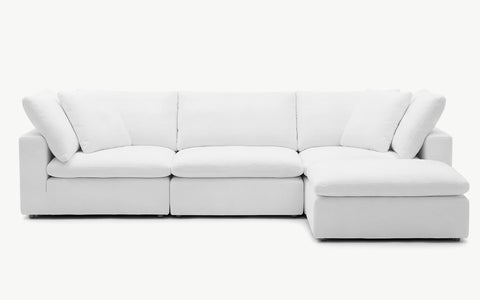
Configuration: 4-Seater Sectional


The Essence of Japandi
Japandi rooms feel:
- Quiet but alive. Few pieces, each intentional.
- Warm but restrained. Natural materials without excess.
- Timeless. Not trendy, not dated.
- Functional. Every object earns its place.
The Shared Principles
Japanese and Scandinavian design share:
- Minimalism (fewer, better items)
- Natural materials
- Craft and quality
- Respect for space and negative space
- Warm wood tones
What Each Style Brings
- Japan contributes: low furniture, darker wood, rigor in line, shibui (subtle elegance)
- Scandinavia contributes: hygge coziness, textiles, pale wood, light walls
A well-designed Japandi room uses Japanese shapes with Scandinavian warmth.
Picking a Japandi Sofa
Look for:
- Low profile (under 30 inches back height)
- Clean silhouette with no ornate details
- Wood or upholstered legs (no chrome or polished metal)
- Oatmeal, cream, warm gray, or soft sage color
- Linen, boucle, or performance linen fabric
See our low-profile sofas guide for silhouette options, linen sofas guide for fabric options, and Scandinavian living room guide for related styling.


Materials and Finishes
- Wood: mix pale (Scandinavian oak) with medium (Japanese walnut or teak)
- Textiles: linen, wool, cotton; avoid shiny synthetics
- Ceramics: hand-thrown pottery in muted tones
- Metals: matte black (Japanese) or natural brass (Scandinavian); avoid chrome
- Stone: pebble, river stone, small natural elements
Why owners pick Sofatica
Washable Slipcovers
100% Real Goose Down
Module Secure™ Lock
Adjustable Cushion Fill
Color Palette
- Base: warm white, oatmeal, soft beige
- Mid: warm gray, pale wood, soft sage
- Accents: charcoal, muted terracotta, muted black
The palette stays muted. No saturated colors. No primary colors. For color pairing, see our neutral living room ideas.
Minimal Decor Approach
Japandi is more Japanese than Scandinavian in decor volume. Very few pieces. Each one significant. Typical items:
- One piece of art (ink painting, photograph, or woven tapestry)
- One sculptural object (ceramic vase, wooden bowl, small sculpture)
- One plant (bonsai, single orchid, or branch in a vase)
- One textile (throw on the sofa)
- One lighting statement (paper lantern, minimal pendant)
Lighting
Paper lanterns (Japanese) or clean pendants (Scandinavian) both work. Warm light (2700K) throughout. Layer three light sources. Dimmers mandatory.
Common Mistakes
- Going too empty (Japandi is minimal but lived-in, not staged)
- Too many colors (stay muted)
- Mixing in bright modern pieces
- Cool lighting (breaks the warm mood)
- Chrome or shiny metal accents
For adjacent style guidance, see our minimalist living room sofa guide, Scandinavian living room guide, and earth tone living room guide.
Cloud Couches for Japandi Rooms
Sofatica low-profile cloud couches in oatmeal, warm gray, and soft sage pair with pale and medium wood furniture for authentic Japandi restraint.
Shop Japandi-Friendly Cloud CouchesFAQ
What is the difference between Japandi and Japanese style?
Does Japandi work in small apartments?
Can I add color to a Japandi room?
What wood tone is best for Japandi?
Is Japandi just a trend?
Built for Real Life
Every Sofatica ships free, arrives in modular pieces you can carry upstairs alone, and comes with covers you can throw in the wash.


