

Minimalist Living Room Sofa: Less Look, More Feel


Minimalist living room with clean-silhouette white sofa
Minimalist living rooms fail when they are just empty. The best minimalist spaces feel intentional rather than stripped. The sofa is the anchor. Get the sofa right and the room reads as considered. Miss on the sofa and the whole aesthetic collapses into sparse and cold.
This guide covers exactly what to look for in a minimalist sofa, plus the styling principles that keep a minimalist living room feeling warm rather than empty.
The one we would pick
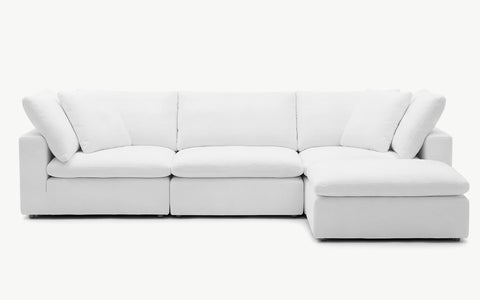
Configuration: 4-Seater Sectional


The Minimalist Living Room Principles
- Fewer pieces, higher quality. Each piece earns its place.
- Function first. Form follows.
- Restraint with color. Usually 3 colors or fewer.
- Texture as warmth. The minimalism of objects is balanced by the richness of material.
- Considered negative space. Empty space is intentional, not accidental.
The Right Sofa
A minimalist sofa should be:
- Clean silhouette (no ornate details, no tufting, no rolled arms)
- Simple legs (tapered wood or hidden plinth base)
- Neutral color (warm white, gray, or black)
- High-quality fabric (linen, boucle, leather)
- Proportioned to the room (not oversized, not undersized)
For low-profile options that fit minimalist aesthetics, see our low-profile sofas guide, armless sofas guide, and linen sofas guide.
Silhouette Rules
In minimalist rooms, the silhouette does the work of style. Look for:
- Low-to-medium back (28 to 34 inches)
- Track arms or armless
- Tight cushions or single-cushion design
- No visible hardware
Skip rolled arms, tufted backs, nailhead trim, skirted bases, and channel tufting. These read as traditional or transitional, not minimalist.
Color Approach
- Warm minimalism: cream, beige, oatmeal with black accents
- Cool minimalism: white, cool gray, black
- Monochrome black: black sofa, dark walls, limited contrast
- Pure white: only works in rooms with abundant natural light
For color strategy, see our warm vs cool white sofa guide and monochrome living room guide.


Fabric Choices
- Linen: natural texture, relaxed minimalism
- Boucle: textural interest without pattern
- Performance fabric: practical, works with any minimalist palette
- Leather: timeless, ages well (see leather sofas guide)
- Velvet: only in deep tones, for more luxurious minimalism
Avoid slippery synthetics, busy patterns, and shiny finishes. Texture is the minimalist's ally.
Why owners pick Sofatica
Washable Slipcovers
100% Real Goose Down
Module Secure™ Lock
Adjustable Cushion Fill
Styling Around the Sofa
Minimalist styling rules:
- One art piece on the wall behind (oversized, single, centered)
- One or two throw pillows (not five)
- One wool or cashmere throw
- One coffee table styled with 3 objects maximum
- One large plant or sculpture
- One floor lamp or pendant
Everything else is unnecessary. For coffee table sizing, see our coffee table size guide.
Keeping It Warm
Minimalism without warmth reads as cold. Add warmth through:
- Natural wood (oak, walnut, or teak coffee table)
- Warm lighting (2700K throughout)
- Textural fabrics (boucle pillow, wool throw)
- One plant (brings life)
- A curated personal object (vase, small sculpture, book stack)
For related aesthetics, see our Scandinavian guide and Japandi guide.
Common Mistakes
- Too empty (minimalism is not bareness; it is curation)
- Cool lighting (makes minimalism feel clinical)
- All-matte finishes (add one glossy piece for contrast)
- Missing texture (the room reads as flat)
- Oversized or undersized sofa (proportion matters more in minimalism)
Clean-Silhouette Cloud Couches
Sofatica cloud couches come in minimalist-friendly silhouettes: clean lines, no ornate details, simple legs. Available in warm white, gray, and black for any minimalist palette.
Shop Minimalist Cloud CouchesFAQ
What sofa silhouette is most minimalist?
Can a minimalist sofa be colorful?
How many pillows should a minimalist sofa have?
Is minimalism cold?
Do I need a large room for minimalism?
Built for Real Life
Every Sofatica ships free, arrives in modular pieces you can carry upstairs alone, and comes with covers you can throw in the wash.


