

Scandinavian Living Room: Sofa and Styling Essentials


Scandinavian living room with white sofa and pale wood
Scandinavian style is defined by restraint, light, and utility. The living room is the test case for whether the whole aesthetic works. Get the sofa right, get the lighting right, and get the wood tones right, and the rest follows. Miss any of those and a Scandinavian living room becomes a generic white room with random furniture.
This guide covers the essentials of a proper Scandinavian living room, sofa to styling.
The one we would pick
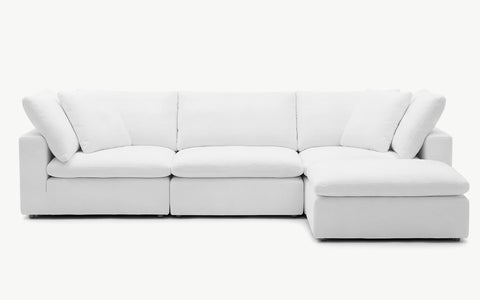
Configuration: 4-Seater Sectional


The 5 Scandinavian Principles
- Light: maximize natural light; supplement with warm artificial light
- Function: every piece has a purpose
- Warmth: the minimalism is softened by natural materials and warm tones
- Hygge: coziness through textiles, candlelight, and soft fabrics
- Restraint: fewer pieces, higher quality
The Right Sofa
A Scandinavian sofa is:
- Understated in silhouette (clean lines, tapered wooden legs)
- Upholstered in linen, wool, or performance fabric
- In a warm white, cream, warm gray, or soft sage
- Low to medium in back height
- Not overly deep (22 to 25 inches)
Mid-century modern silhouettes work well in Scandinavian rooms. For pure Scandinavian, go cleaner than mid-century; skip ornate piping or tufted backs. For sofa selection guidance, see our low-profile sofas guide and linen sofas guide.
Wood Tones That Define the Style
Scandinavian rooms use pale wood: beech, birch, ash, and light oak. Mid-tone and dark wood read as other styles. The pale wood ties the room to Nordic forest origins.
Match the floor wood to the furniture wood for a unified look. Contrasting wood tones creates an eclectic feel that drifts away from pure Scandinavian.
Color Palette
- White walls (warm white): the default
- Pale wood floors: light oak or ash
- Warm neutral sofa: cream, soft gray, or muted sage
- Soft black accents: lamps, frames, hardware
- One natural pop: sage, dusty rose, or muted mustard
For broader palette advice, see our neutral living room ideas.


Lighting (The Secret)
Scandinavian countries have long winters with limited daylight. Lighting became the design obsession. Layer multiple warm light sources:
- Ceiling pendant over the main seating
- Floor lamp near the sofa
- Table lamp on a side table
- Candles (real candles, not electric)
Use 2700K bulbs throughout. Cool lighting breaks the aesthetic immediately.
Why owners pick Sofatica
Washable Slipcovers
100% Real Goose Down
Module Secure™ Lock
Adjustable Cushion Fill
Textiles and Layering
The minimalism is balanced by soft textiles:
- A wool throw across the sofa arm
- Sheepskin draped over a chair
- Linen cushions in neutral or soft tones
- A jute or wool rug under the seating
For rug strategy, see our rug size guide.
Keeping It Minimal Without Feeling Empty
The line between minimalist and empty is the quality of each piece. A Scandinavian room has few objects, but each one is considered. A well-designed chair, a single bold piece of art, a sculptural plant. Avoid scattered small decor; commit to fewer, larger, more intentional pieces.
Common Mistakes
- White + pale wood = generic; need textural variety to be Scandinavian
- Cool lighting (breaks hygge)
- Too many small decor pieces
- Dark wood or black floors
- Ornate or traditional furniture shapes
For adjacent styles that share DNA, see our Japandi guide, minimalist sofa guide, and mid-century modern guide.
Cloud Couches for Scandinavian Living Rooms
Sofatica cloud couches in warm white and cream pair naturally with pale wood floors and soft textiles. Clean silhouettes that respect the Scandinavian restraint.
Shop Scandinavian-Friendly Cloud CouchesFAQ
What makes a sofa Scandinavian style?
What is hygge and how does it affect the living room?
Does Scandinavian style require white walls?
Can I mix Scandinavian and other styles?
What color sofa works best in Scandinavian rooms?
Built for Real Life
Every Sofatica ships free, arrives in modular pieces you can carry upstairs alone, and comes with covers you can throw in the wash.


